Day Twenty-Two: Brain, Little Voice, and Me


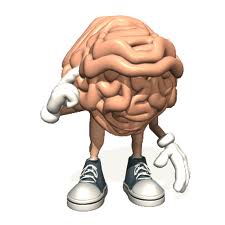
Have you ever been in one of those relationships where the person is highly intriguing, passionate, and overall seems like a very likeable gal, but for some reason, you can’t stand to be around her? That’s the type of relationship I’m currently in. Only it’s not exactly with a person….. It’s with my brain!

Brain and I, we go a long way back. Yet, I’m still trying to figure him out. Sometimes I try to understand Brain more by comparing him to other brains.

For instance, just the other day, I asked my husband, “What are you thinking about?”  He responded, “Nothing.” And I said, “What? You’re joking. Really? Absolutely nothing?”

He thought (or did something) for awhile, and then answered, adamantly, “Nope. Nothing.” Now, by this time I’m laughing, in that annoying I-do-know-better way, wanting to knock my knuckle on his head, and say: “Hello, in there!”

Later, I asked my eldest son, the same question. And his answer mirrored his father’s. “Well, what were you thinking about a few minutes ago, then?” I queried. “I don’t know, Mom. Leave me alone. Nothing important.” (He’s fourteen.)

Now, get this. When I asked my middle son, “What are you thinking about?”, he gave me a thirty-minute dissertation. Can you guess which one has Aspergers?

I didn’t bother to ask my baby-boy, Robert; he was too busy securing plastic wrap over a clear plastic cup that he’d carefully filled with the blood he’d collected from his bloody nose. He was saving the blood for future science experiments. I easily guessed what he was thinking about.

Movies are interestingly-annoying with Brain. There are times I  have to press the pause button on the remote during a film, because I’m so excited by the fact that I was actually enjoying the show for five minutes strait without brain interruption!

This is a super big explanation mark deal in my book, because usually when a movie is playing, some 99.99 % of the time, LV (Little interior Voice in my head) and I are carrying on an entire conversation.

I noticed today that LV is starting to have a full personality. Which causes my stomach to rumble, somewhat in fear. Because I fret I may end up with yet another neurological disorder. And there’s only so many LV and I can keep track of.

I picture LV like Laverne, from the show Laverne and Shirley. Like Laverne, LV has letters monogrammed onto her tight sweater (LV), and she’s totally clueless that her sweater is too tight. So she looks like a loosey-goosey, even though she doesn’t mean to appear that way. She’s like me, when I wore those glossy yellow shorts, during freshman class physical education, that were way too short; yet, I hadn’t a clue why the boys and girls were calling me those names. I’m picturing Rudolph the reindeer crying. I’m fine. Santa and the elves loved Rudolph.

Not to should on LV, but she should have a question mark right along side her LV monogram. It’s all about inquiry with that chick. Here’s the typical repertoire of clauses she choses from, while I attempt to watch a romantic, carefree comedy:

Is this the director’s first movie? I wonder how much that actress got paid? Do you think Shakespeare knew actresses would be idols one day?  Is this a box office hit, for real? Wow, nice hair; maybe I should get my haircut. Look, did you see her pause for a whole fricken five minutes to let the other person talk?  How does she do that? Is that normal? Is that what I’m supposed to do? Oh my goodness, do you think she realizes what the plastic surgery did to her face? That can’t be her? Is that her? Should I pause the movie and ask? I want that table wear. Is that materialistic of me? The blue is so pretty. What color is that? Cobalt. Cobalt is a strong sounding word…

Which leads me back to the whole: I wouldn’t want to be my brain’s friend argument. Not that LV is my brain; my brain is mostly a man. LV’s more like the cute cuddly ambassador of my brain. And I have no idea why my brain is not homogenous, probably because he/she has a right and left hemisphere, but I feel invaded by one side—if you must know.

You might have noticed, beyond the rambling, that I used the word  fricken, earlier. That’s because LV doesn’t like to swear, beyond crap and poop head. She does have fun turning harsh “bad words” into less offensive words that sound dorky. Oh, and she does call our little female labradoodle the B-word, only because that’s logical. She also calls the dog spastic-colon!

LV kept me awake last night. Her and the caffeine I had after the noon hour. Anyone, who’s had that can’t sleep ‘cause I’m caffeinated experience, knows the agony.  Now add LV to the picture. Well, I’m twisting and turning in bed, illogically trying do to the same thing over and over again, while expecting a different outcome; even thinking if I fluffed the pillow just right, I’d suddenly slumber, when bam! Smack out of nowhere, a parade of words and numbers start drumming in my head.

They were in a row, all these words and numbers, flashing at me, like the letters and digits in the television show The Electric Company.

I just made a whammy of a flashback-connection: I loved Electric Company because the show was all about words and numbers! And all these years, I thought I liked the show for the Gorilla and his bananas.

Here are some of the words I saw as I tried to fall asleep:

Pretty Sure, Maybe, Kind of, Almost Certain, Could Be, Probably, Perchance, Most Likely, We’ll See, Perhaps

LV, obviously awake from the caffeine as well, was trying to figure out how to assign a statistical number to each word to determine which word/phrase indicated a more likelihood of occurrence. For instance, when parents say, “We could be going to get ice cream later,” is that a more probable chance than parents saying, “I’m pretty sure we’re going to get ice cream later.”

LV reasoned Pretty Sure earned a 95.5% and Could be was very open to interpretation, perhaps a 51%—dependent upon tone of voice and inflection.

LV was going on and on with this theoretical rhetoric, until she concluded that all the words are ambiguous and confusing. All this while I’m side-kicking my husband for snoring and shoving my earplugs into what had to be my eardrums.

In the television series House, during one episode, this genius-type male patient is deathly ill, and the reason for his sickness turns out to be cough syrup. He had been drinking (and hiding) a large amount of cough syrup to stop himself from having complex and profound thoughts. Primarily, he wanted to stop the thoughts, so he could stay with his hot babe of a wife (who was clueless-brained) without being bored to death.

LV is reminding me of this episode and encouraging grape-flavored cough syrup. Like that’s even a feasible idea? Like I said, LV is not the type of friend one chooses. No offense LV.

I had another thought, but I can’t remember now—probably, because LV is upset.

I did want to share that I realized something about music and my relationship to music. A song was playing on the radio this morning, and immediately I became lost in my mind. Which makes me wonder, if I should be driving.

The experience was similar to stepping into a music video, only without all the sexy clothes and makeup, and weird body movements that ooze of I’m cheap, (or maybe drunk).

While I was one with the song, (Ommmmm), I was still me, but had Santa Claus powers enabling me to magically stop time. In the musical experience I visited everyone in the entire world who was sad and lonely. I saw myself stepping into strangers’ homes and staring into their eyes. I saw myself releasing mass amounts of pain and misgivings, and lifting many in spirit, so they could recognize their inner beauty. It was amazing! In moments like that, when my brain enables me to be in the music, I forgive him/her for all transgressions.

One more thing, before I head out to pick up my son and take him to Thai food… Can you hear my tummy cheering! Thai food! Thai food! He (tummy) is wearing a cheerleading skirt and looks completely (avoiding totally) dorky.  Oh no, I think my tummy is forming a personality, too.  Shootness, I just realized all my internal organs have genders! Please Google that and tell me if that’s another neurological disorder. No, don’t.

I better stop myself now, before I make this the longest post in blog history. (Thinking of the end of the Rudolph song: You’ll go down in history.) Have a good one. I’ll be chowing down on Pad Thai and assigning Sir Names to all my internal organs. I’m thinking the most of me is masculine internally. What’s that mean?

Aspergers Traits (Women, Females, Girls)


Hello All.

I hope you are well during these challenging times.

I am writing to provide a few updates (2020) for anyone who happens upon this homepage.

My third blog is a bit hard to find, since I changed the domain name. Here is the direct link to Everyday Autistic. My artist’s blog is Belly of a Star.

Here is the Autistic Trait’s List.

Here is my company website Spectrum Suite LLC, which includes 100s of resources and our services page.

Here is a link to one of my Linkedin Articles that will bring you to my profile and some articles there!

My new works include much advocacy for Universal Design in the Workplace, which equates to true inclusivity, where all employees are given opportunity to the same support measures and community engagement, such as the same best-practices interviews, job coaches, support team; not just one marginalized minority, e.g., autistic individuals.

I am working on a book on empowerment on the autism spectrum.

I am my waving from afar, and wishing you so very well! I cannot believe it’s been 8 YEARS!

Feel free to connect on twitter or Facebook.

I’m on the bottom right, in the photo below, speaking at the Stanford Neurodiversity Summit. You can find out what we’ve been up to on the website. Here is a 10 hr.+ video of Day 2 at the Summit!

My book is now available around the world in paperback! Check out Barnes and Noble or Amazon.

Everyday Aspergers is an unusual and powerful exploration of one woman’s marvelously lived life. Reminiscent of the best of Anne Lamott, Everyday Aspergers jumps back and forth in time through a series of interlocking vignettes that give insight and context to her lived experience as an autistic woman. The humor and light touch is disarming, because underneath light observations and quirky moments are buried deep truths about the human experience and about her own work as an autistic woman discerning how to live her best life. From learning how to make eye contact to finding ways to communicate her needs to being a dyslexic cheerleader and a fraught mother of also-autistic son, Samantha Craft gives us a marvelous spectrum of experiences. Highly recommended for everyone to read — especially those who love people who are just a little different.”~ Ned Hayes, bestselling author of The Eagle Tree

https://www.book2look.com/book/KRksrIxTxr

Ten Traits

1) We are deep philosophical thinkers and writers; gifted in the sense of our level of thinking. Perhaps poets, professors, authors, or avid readers of nonfictional genre. I don’t believe you can have Aspergers without being highly-intelligent by mainstream standards. Perhaps that is part of the issue at hand, the extreme intelligence leading to an over-active mind and high anxiety. We see things at multiple levels, including our own place in the world and our own thinking processes. We analyze our existence, the meaning of life, the meaning of everything continually. We are serious and matter-of-fact. Nothing is taken for granted, simplified, or easy. Everything is complex.

2) We are innocent, naive, and honest. Do we lie? Yes. Do we like to lie? No. Things that are hard for us to understand: manipulation, disloyalty, vindictive behavior, and retaliation. Are we easily fooled and conned, particularly before we grow wiser to the ways of the world? Absolutely, yes. Confusion, feeling misplaced, isolated, overwhelmed, and simply plopped down on the wrong universe, are all parts of the Aspie experience. Can we learn to adapt? Yes. Is it always hard to fit in at some level? Yes. Can we out grow our character traits? No.

3) We are escape artists. We know how to escape. It’s the way we survive this place. We escape through our fixations, obsessions, over-interest in a subject, our imaginings, and even made up reality. We escape and make sense of our world through mental processing, in spoken or written form. We escape in the rhythm of words. We escape in our philosophizing.  As children, we had pretend friends or animals, maybe witches or spirit friends, even extraterrestrial buddies. We escaped in our play, imitating what we’d seen on television or in walking life, taking on the role of a teacher, actress in a play, movie star. If we had friends, we were either their instructor or boss, telling them what to do, where to stand, and how to talk, or we were the “baby,” blindly following our friends wherever they went. We saw friends as “pawn” like; similar to a chess game, we moved them into the best position for us. We escaped our own identity by taking on one friend’s identity. We dressed like her, spoke like her, adapted our own self to her (or his) likes and dislikes. We became masters at imitation, without recognizing what we were doing. We escaped through music. Through the repeated lyrics or rhythm of a song–through everything that song stirred in us. We escaped into fantasies, what could be, projections, dreams, and fairy-tale-endings. We obsessed over collecting objects, maybe stickers, mystical unicorns, or books. We may have escaped through a relationship with a lover. We delve into an alternate state of mind, so we could breathe, maybe momentarily taking on another dialect, personality, or view of the world. Numbers brought ease. Counting, categorizing, organizing, rearranging. At parties, if we went, we might have escaped into a closet, the outskirts, outdoors, or at the side of our best friend. We may have escaped through substance abuse, including food, or through hiding in our homes. What did it mean to relax? To rest? To play without structure or goal? Nothing was for fun, everything had to have purpose. When we resurfaced, we became confused. What had we missed? What had we left behind? What would we cling to next?

4) We have comorbid attributes of other syndromes/disorders/conditions. We often have OCD tendencies (Obsessive Compulsive Disorder), sensory issues (with sight, sound, texture, smells, taste), generalized anxiety and/or a sense we are always unsafe or in pending danger, particularly in crowded public places. We may have been labeled with seemingly polar extremes: depressed/over-joyed, lazy/over-active, inconsiderate/over-sensitive, lacking awareness/attention to detail, low-focus/high-focus. We may have poor muscle tone, be double-jointed, and lack in our motor-skills. We may hold our pencil “incorrectly.” We may have eating disorders, food obsessions, and struggles with diet. We may have irritable bowel, Fibromyalgia, chronic fatigue, and other immune-challenges. We may have sought out answers to why we seemed to see the world differently than others we knew, only to be told we were attention seekers, paranoid, hypochondriacs, or too focused on diagnoses and labels. Our personhood was challenged on the sole basis that we “knew” we were different but couldn’t prove it to the world and/or our personhood was oppressed as we attempted to be and act like someone we were not. We still question our place in the world, who we are, who we are expected to be, searching for the “rights” and “wrongs;” and then, as we grow and realize there are no true answers, that everything is theory-based and limited, we wonder where to search.

5) We learn that to fit in we have to “fake” it. Through trial and error we lost friends. We over-shared, spilling out intimate details to strangers; we raised our hand too much in class, or didn’t raise our hand at all; we had little impulse control with our speaking, monopolizing conversations and bringing the subject back to ourselves. We aren’t narcissistic and controlling–we know we are not, but we come across that way. We bring the subject back to ourselves because that is how we make sense of our world, that is how we believe we connect. We use our grasp of the world as our foundation, our way of making sense of another. We share our feelings and understandings in order to reach out. We don’t mean to sound ego-centered or over zealous. It’s all we know. We can’t change how we see the world. But we do change what we say. We hold a lot inside. A lot of what we see going on about us, a lot of what our bodies feel, what our minds conjecture. We hold so much inside, as we attempt to communicate correctly. We push back the conversational difficulties we experience, e.g., the concepts of acceptable and accurate eye contact, tone of voice, proximity of body, stance, posture–push it all back, and try to focus on what someone is saying with all the do’s and don’ts hammering in our mind. We come out of a conversation exhausted, questioning if we “acted” the socially acceptable way, wondering if we have offended, contradicted, hurt, or embarrassed others or ourselves. We learn that people aren’t as open or trusting as we are. That others hold back and filter their thoughts. We learn that our brains are different. We learn to survive means we must pretend.

6) We seek refuge at home or at a safe place. The days we know we don’t have to be anywhere, talk to anyone, answer any calls, or leave the house, are the days we take a deep breath and relax. If one person will be visiting, we perceive the visit as a threat; knowing logically the threat isn’t real, doesn’t relieve a drop of the anxiety. We have feelings of dread about even one event on the calendar. Even something as simple as a self-imposed obligation, such as leaving the house to walk the dog, can cause extreme anxiety. It’s more than going out into society; it’s all the steps that are involved in leaving–all the rules, routines, and norms. Choices can be overwhelming: what to wear, to shower or not, what to eat, what time to be back, how to organize time, how to act outside the house….all these thoughts can pop up. Sensory processing can go into overload; the shirt might be scratchy, the bra pokey, the shoes too tight. Even the steps to getting ready can seem boggled with choices–should I brush my teeth or shower first, should I finish that email, should I call her back now or when I return, should I go at all? Maybe staying home feels better, but by adulthood we know it is socially “healthier” to get out of the house, to interact, to take in fresh air, to exercise, to share. But going out doesn’t feel healthy to us, because it doesn’t feel safe. For those of us that have tried CBT (Cognitive Behavior Therapy), we try to tell ourselves all the “right” words, to convince ourselves our thought patterns are simply wired incorrectly, to reassure ourself we are safe…the problem then becomes this other layer of rules we should apply, that of the cognitive-behavior set of rules. So even the supposed therapeutic self-talk becomes yet another set of hoops to jump through before stepping foot out of the house. To curl up on the couch with a clean pet, a cotton blanket, a warm cup of tea, and a movie or good book may become our refuge. At least for the moment, we can stop the thoughts associated with having to make decisions and having to face the world. A simple task has simple rules.

7) We are sensitive. We are sensitive when we sleep, maybe needing a certain mattress, pillow, and earplugs, and particularly comfortable clothing. Some need long-sleaves, some short. Temperature needs to be just so. No air blowing from the heater vent, no traffic noise, no noise period. We are sensitive even in our dream state, perhaps having intense and colorful dreams, anxiety-ridden dreams, or maybe precognitive dreams. Our sensitivity might expand to being highly-intuitive of others’ feelings, which is a paradox, considering the limitations of our social communication skills. We seek out information in written or verbally spoken form, sometimes over-thinking something someone said and reliving the ways we ought to have responded. We take criticism to heart, not necessarily longing for perfection, but for the opportunity to be understood and accepted. It seems we have inferiority complexes, but with careful analysis, we don’t feel inferior, but rather unseen, unheard, and misunderstood. Definitely misunderstood. At one point or another, we question if in fact we are genetic hybrids, mutations, aliens, or  displaced spirits–as we simply feel like we’ve landed on the wrong planet. We are highly susceptible to outsiders’ view points and opinions. If someone tells us this or that, we may adapt our view of life to this or that, continually in search of the “right” and “correct” way. We may jump from one religious realm to another, in search of the “right” path or may run away from aspects of religion because of all the questions that arise in theorizing. As we grow older, we understand more of how our minds work, which makes living sometimes even more difficult; because now we can step outside ourselves and see what we are doing, know how we our feeling, yet still recognize our limitations.  We work hard and produce a lot in a small amount of time. When others question our works, we may become hurt, as our work we perceive as an extension of ourselves. Isn’t everything an extension of ourselves–at least our perception and illusion of reality? Sometimes we stop sharing our work in hopes of avoiding opinions, criticism, and judgment. We dislike words and events that hurt others and hurt animals. We may have collected insects, saved a fallen bird, or rescued pets. We have a huge compassion for suffering, as we have experienced deep levels of suffering. We are very sensitive to substances, such as foods, caffeine, alcohol, medications, environmental toxins, and perfumes; a little amount of one substance can have extreme effects on our emotional and/or physical state.

8) We are ourselves and we aren’t ourselves. Between imitating others and copying the ways of the world, and trying to be honest, and having no choice but to be “real,” we find ourselves trapped between pretending to be normal and showing all our cards. It’s a difficult state. Sometimes we don’t realize when we are imitating someone else or taking on their interests, or when we are suppressing our true wishes in order to avoid ridicule. We have an odd sense of self. We know we are an individual with unique traits and attributes, with uniques feelings, desires, passions, goals, and interests, but at the same time we recognize we so desperately want to fit in that we might have adapted or conformed many aspects about ourselves. Some of us might reject societal norms and expectations all together, embracing their oddities and individuality, only to find themselves extremely isolated. There is an in between place where an aspie girl can be herself and fit in, but finding that place and staying in that place takes a lot of work and processing. Some of us have a hard time recognizing facial features and memorize people by their clothes, tone of voice and hairstyle. Some of us have a hard time understanding what we physically look like. We might switch our preference in hairstyles, clothes, interests, and hobbies frequently, as we attempt to manage to keep up with our changing sense of self and our place. We can gain the ability to love ourselves, accept ourselves, and be happy with our lives, but this usually takes much inner-work and self-analysis. Part of self-acceptance comes with the recognition that everyone is unique, everyone has challenges, and everyone is struggling to find this invented norm. When we recognize there are no rules, and no guide map to life, we may be able to breathe easier, and finally explore what makes us happy.

9) Feelings and other people’s actions are confusing. Others’ feelings and our own feelings are confusing to the extent there are no set rules to feelings. We think logically, and even though we are (despite what others think) sensitive, compassionate, intuitive, and understanding, many emotions remain illogical and unpredictable. We may expect that by acting a certain way we can achieve a certain result, but in dealing with emotions, we find the intended results don’t manifest. We speak frankly and literally. In our youth, jokes go over our heads; we are the last to laugh, if we laugh at all, and sometimes ourselves the subject of the joke. We are confused when others make fun of us, ostracize us, decide they don’t want to be our friend, shun us, belittle us, trick us, and especially betray us. We may have trouble identifying feelings unless they are extremes. We might have trouble with the emotion of hate and dislike. We may hold grudges and feel pain from a situation years later, but at the same time find it easier to forgive than hold a grudge. We might feel sorry for someone who has persecuted or hurt us. Personal feelings of anger, outrage, deep love, fear, giddiness, and anticipation seem to be easier to identify than emotions of joy, satisfaction, calmness, and serenity. Sometimes situations, conversations, or events are perceived as black or white, one way or another, and the middle spectrum is overlooked or misunderstood. A small fight might signal the end of a relationship and collapse of one’s world, where a small compliment might boost us into a state of bliss.

10) We have difficulty with executive functioning. The way we process the world is different. Tasks that others take for granted, can cause us extreme hardship. Learning to drive a car, to tuck in the sheets of a bed, to even round the corner of a hallway, can be troublesome. Our spacial awareness and depth-awareness seems off. Some will never drive on a freeway, never parallel park, and/or never drive. Others will panic following directions while driving. New places offer their own set of challenges. Elevators, turning on and off faucets, unlocking doors, finding our car in a parking lot, (even our keys in our purse), and managing computers, electronic devices, or anything that requires a reasonable amount of steps, dexterity, or know-how can rouse in us a sense of panic. While we might be grand organizers, as organizing brings us a sense of comfort, the thought of repairing, fixing, or locating something causes distress. Doing the bills, cleaning the house, sorting through school papers, scheduling appointments, keeping track of times on the calendar, and preparing for a party can cause anxiety. Tasks may be avoided. Cleaning may seem insurmountable. Where to begin? How long should I do something? Is this the right way? Are all questions that might come to mind. Sometimes we step outside of ourselves and imagine a stranger entering our home, and question what they would do if they were in our shoes. We reach out to others’ rules of what is right, even in isolation, even to do the simplest of things. Sometimes we reorganize in an attempt to make things right or to make things easier. Only life doesn’t seem to get easier. Some of us are affected in the way we calculate numbers or in reading. We may have dyslexia or other learning disabilities. We may solve problems and sort out situations much differently than most others. We like to categorize in our mind and find patterns, and when ideas don’t fit, we don’t know where to put them. Putting on shoes, zipping or buttoning clothes, carrying or packing groceries, all of these actions can pose trouble. We might leave the house with mismatched socks, our shirt buttoned incorrectly, and our sweater inside out. We find the simple act of going grocery shopping hard: getting dressed, making a list, leaving the house, driving to the store, and choosing objects on the shelves is overwhelming.

EVERYDAY ASPERGERS THE BOOK WILL BE AVAILABLE IN EARLY 2016!

This list is based on workshops, videos, literature, personal accounts, and my own experience. Females with Asperger’s Syndrome present themselves very differently than males. This is not an all-encompassing list. It’s not a criteria. It’s limiting and bias-based, as it’s only my view. It is my current truth. I don’t claim to be an expert or professional….but I do know an awful lot about the subject. I hold a Masters Degree in Education, have Aspergers, one of my sons has Aspergers, and I have several graduate-level classes in counseling psychology…I guess I am sort of an expert, after all. ~ Sam Craft

© Everyday Aspergers, 2012. Unauthorized use and/or duplication of this material without express and written permission from this blog’s author and/or owner is strictly prohibited.
This is the only blog where this article should be found. 

Photo on 1-20-13 at 9.29 AM

116 Reasons I Know I Have Aspergers

116 Reasons I Know I have Asperger’s Syndrome

1.  Writing this list.

2.  Enjoying writing this list.

3.  Love, love, love animals and bugs.

4.  Do I have to leave the house?

5.  Nature is heavenly as long as I can stay clean.

6. Collector

7. Toys are objects to be organized, stacked, categorized, or cleaned.

8. Friday the 13th in 3-D three times because I think the number 3 is awesome!

9. Red fluffy socks with high-heels

10. Sweater on inside out, again.

11. Memorized how to spell and sing supercalifragilisticexpialidocious in an attempt to qualify for speech class.

12. I was Jacqueline Smith; never Farah.

13. Every stuffed animal named, categorized by birth, and kept until after college.

14. Snoopy in a chair looking out the back of the window of my first car.

15.  Seven days straight perfecting my penmanship before I began teaching.

16. Clever Clyde was a famous humanistic caterpillar in the stories I wrote.

17. Buddy One was my imaginary ghost friend.

18. Entering poetry (scam) contests.

19. Hamsters aren’t stuffed animals.

20.  Goldfish do die when left under the hot sun in a small bowl of water.

21. Childhood friends were students, the members of my club, customers, or placed in another subordinate position.

22. Backgammon pro by age nine. Cribbage pro by age fifteen.

23. Perfected Pac Man and Space Invaders while watching every episode of Three’s Company.

24. Called dumb blonde, in regards to getting jokes; I’m a brunette.

25. You do not sit with your legs spread while wearing a cheerleading skirt.

26. If I’m her best friend, why does she need more friends than me?

27. I have a confession to make, I was thinking about lying, but I didn’t.

28. Naïve, sweet, gullible, unique, hyper, interesting, odd…

29. I have 120 flaws; should I list them?

30. Don’t answer the phone!!!

31. Note to self: Read the birthday card before grabbing the money and jumping up and down.

32. Hello? Your toenails do need to be cleaned occasionally.

33. “Snob! You always look away.”

34. Victim, with her head down.

35. Statistically speaking your chances of dying from that are slim; I researched it for five days.

36. Website built, 100 pages total, in 5 weeks. Go baby.

37. Months and months on freebie websites equals toothbrushes, baskets, lotions, and much more.

38. I had the coolest property on Farmville.

39. Why do fantastic ideas the night before, not seem so fantastic in the morning?

40. Don’t answer the door!

41. I don’t want to go…It’s too much work for me to put on a bra.

42. Monopolize a conversation? Who me?

43. Depression, Anxiety, blah…blah….blah

44. Verbal processing

45. Can you say manuscript?

46. What exactly is a guilty pleasure? And why would people do something that makes them feel guilty?

47. I don’t understand, it’s old wives’ tales? Not old wise tale?

48.  Just Relax. Not comprehending. What does it feel like to relax?

49. Non-fiction galore.

50. Twitching and jumping because it’s museum time!

51. Oh no! You did not just change the plan.

52. Carpet, dirt, germs, clutter, blemishes, lips, breath….Yuck!

53. Don’t hug me right now.

54. Okay, you can hug me, but not too tight, that hurts.

55. Are my shoes on the right feet?

56. I wish I hadn’t sent them that garage sale crystal for their wedding present; what was I thinking?

57. Do you think she’ll like these earrings I never wore or a gift certificate?

58. What do you mean this letter might offend my professor?

59. Here’s a bruise, and another one. Look at this one.

60. Let’s drive around the block again and look for a spot. I can’t parallel park.

61. Group sports? Swinging a bat? Dressing for PE? Run in fear!

62. All the fun is in the planning. The party itself is terrifying.

63. Why do people bully and tease?

64. Give me a role or a part, and I’ll perfect it.

65. Should I dress like my best friend, my spiritual counselor, or the lady on my favorite soap opera?

66. I love having friends my mom’s age.

67. Monthly Bunco with the Episcopalian Retirement Group? Why not?

68. After-social-event debrief time: When I said this, do you think it was offensive? Why did she look at me that way? Should I have kept my mouth closed? Was that appropriate. I’m quitting Bunco; it’s too stressful.

69. My only friends in second grade, two twin boys, Chris and Jimmy.

70. My only friend in kindergarten, Keith. He moved to Hawaii.

71. Sure, I can write for ten hours straight. Can’t you?

72. Doesn’t everyone have a voice reminding them what to do during a conversation: make more eye contact, step closer, nod your head, smile, but not too big, insert giggle, let them talk more.

73.  Give me a passion and give me a week to learn everything there is to know about it.

74. Hypochondriac

75. Stop talking; you’re hurting my ears.

76. You smell funny.

77. Is that your natural hair color and how old are you?

78. Camping sucks.

79. Criteria for boyfriends? Criteria for friends? What?

80. Name an object. I can tell you 100 uses for it.

81. Let me fix the situation.

82. Just because the thought is in my head doesn’t mean it needs to get out. Or does it?

83. Crossing the street, so I don’t have to pass the stranger on the sidewalk.

84. How do you turn around at the halfway point of a walk without looking silly?

85. No events in college. One friend in college – before she stopped answering my calls.

86. ADHD, PTSD….blah, blah, blah

87. Therapists, psychologists, priests, reverends, psychiatrists, hypnotists, and the like are kind of clueless about recognizing Asperger’s in females.

88. I’ll just hang out in this closet until the party is over.

89. I’ll be in the backroom writing until the party is over.

90. I’ll be reading in the bathroom until the party is over.

91. Why do you ask me how I am when you don’t want to hear the answer?

92. IBS

93. Funerals are confusing.

94. Let’s practice small talk; the ritual is intriguing.

95. Queen of evaluation

96. Stopped eating lamb at age four, pork at age eleven.

97. Words are beautiful or painful.

98. Fixations, obsessions…blah, blah, blah

99. Let me organize your pantry.

100. I should have asked before buying a puppy?

101. What can I eat that doesn’t have pesticides, hormones, mutations, cancer-

causing ingredients, sugar, sugar-substitutes, dairy, preservatives, chemicals,

bleach…..I’m watching too many documentaries

102. Time for another organic juice fast. Time for more organic chocolate.

103. Either no one has ever flirted with me in my entire life or I don’t recognize

flirting.

104. Give me a visual, a guideline, a rule, and stop all the jabber.

105. I can tell you exactly where anything is on my kitchen shelves; but don’t ask me where my keys are.

106. Imaginary play is confusing unless there is a script.

107. I like to analyze the sentence structure and grammar in fictional books.

108. It’s hard to recognize faces.

109. Do you want to hear this record for the fiftieth time?

110. I’m the one reading the Buddhist book at my son’s baseball game.

111. Listen to what I wrote. I edited it.

112. Grownups shouldn’t lie about Santa or that the government is looking out for our best interest.

113. I trust you.

114. I over-share.

115. I would be happy to eat the same meal everyday.

116.That fixation to write this list is gone. I don’t know why, it just is. (It really bugs me this isn’t number 113.)

I invite you to take a look inside of my book Everyday Aspergers.

Take a look here.

(I just deleted an entire paragraph explaining why I am uncomfortable with self-promotion. I’ll spare you the details!)

My publisher, Your Stories Matter, took great care to provide this ‘book-to-look’ version of the second edition of Everyday Aspergers.

(I’ve truly failed at promoting my own book. I usually promote Steve Silberman’s book in my travels and teachings. Typical me!)

Over a year ago, I decided to move my memoir from one agency to another. I made this decision to ensure the paperback was available outside of the USA. Here are ten facts you might not know about E.A.

The second edition of Everyday Aspergers : A Journey on the Autism Spectrum can be purchased on Amazon in several countries. It makes a great gift!

The new book cover is by a talented autistic author and writer. The pages, of the new edition, have photos and images from my childhood. I added a new end chapter. The layout, pages, and style are different. It’s the same story in an enhanced casing.

https://www.book2look.com/book/KRksrIxTxr

(I know. This is only MY story. Not yours.)

© Everyday Aspergers, 2012. Unauthorized use and/or duplication of this material without express and written permission from this blog’s author and/or owner is strictly prohibited. https://aspergersgirls.wordpress.com

Hello All.

I hope you are well during these challenging times.

I am writing to provide a few updates (2020) for anyone who happens upon this homepage.

My third blog is a bit hard to find, since I changed the domain name. Here is the direct link to Everyday Autistic. My artist’s blog is Belly of a Star.

Here is the Autistic Trait’s List.

Here is my company website Spectrum Suite LLC, which includes 100s of resources and our services page.

Here is a link to one of my Linkedin Articles that will bring you to my profile and some articles there!

My new works include much advocacy for Universal Design in the Workplace, which equates to true inclusivity, where all employees are given opportunity to the same support measures and community engagement, such as the same best-practices interviews, job coaches, support team; not just one marginalized minority, e.g., autistic individuals.

I am working on a book on empowerment on the autism spectrum.

I am my waving from afar, and wishing you so very well! I cannot believe it’s been 8 YEARS!

I now call myself a ‘neuro-minoriy’ (coined by Judy Singer) and consider myself a neurodivergent-blend (coined by me!). I am neurodivergent-blend because of my autistic profile, gifted-intellect diagnosis, dyslexia, dyspraxia, OCD, etc. etc. etc.

Feel free to connect on twitter or Facebook.

I’m on the bottom right, in the photo below, speaking at the Stanford Neurodiversity Summit. You can find out what we’ve been up to on the website. Here is a 10 hr.+ video of Day 2 at the Summit!

My book is now available around the world in paperback! Check out Barnes and Noble or Amazon.

Everyday Aspergers is an unusual and powerful exploration of one woman’s marvelously lived life. Reminiscent of the best of Anne Lamott, Everyday Aspergers jumps back and forth in time through a series of interlocking vignettes that give insight and context to her lived experience as an autistic woman. The humor and light touch is disarming, because underneath light observations and quirky moments are buried deep truths about the human experience and about her own work as an autistic woman discerning how to live her best life. From learning how to make eye contact to finding ways to communicate her needs to being a dyslexic cheerleader and a fraught mother of also-autistic son, Samantha Craft gives us a marvelous spectrum of experiences. Highly recommended for everyone to read — especially those who love people who are just a little different.”~ Ned Hayes, bestselling author of The Eagle Tree