Day 210: Almost First Kiss

It was low tide and the sun had almost tucked itself beneath the waves of flickering cobalt. After a quick introduction, idle chit-chat and three or four bouts of nervous giggles on my account, a cute dark-eyed boy pointed to me, and said with a wink, “I choose you!”

I leaned in closer to Renny and grabbed hold of her warm hand.  I knew instantly, out of the three boys, I liked this dark-eyed boy the best.  Even as my knees knocked and my mouth grew dry, I was beginning to think that the whole meeting-at-the-beach-in-secrecy-plan wasn’t such a bad idea after all.

I crossed the fingers of my free hand, just as my favorite boy approached and casually brushed his shoulder against mine.

Yes, this would work.

I began dreaming about my first lover’s embrace.  I imagined this boy would want to know everything about me, then perhaps stroll me  home and ask me for a good night kiss.  As my mind played out a romantic episode, more suitable for an after school television special than real life, I heard from a distance my boy say, “First you.”

I looked to my side to find him tilting his head sideways in the direction of the shack on the edge of the concrete pier.  I was processing what he had said, when he spoke again.  “And then her.”  He pointed straight at Renny.

All of the sudden, I wished I had bigger boobs.

I crossed my arms across my chest and then heard the words Oh Crap shouting in my head.  Renny curled into herself with a blushing giggle and the boys appeared to be salivating.  Oh Crap my mind repeated.

Soon the circled boys shouted, “I’m next!”

Okay, so by now I was in a bit of trouble, but before I could think to say anything, my boy gleamed his full set of braces my direction, grabbed hold of my trembling hand and led me swiftly down the concrete pier.  For a fleeting second I believed he loved me.  Right up to the point, that is, when I glanced behind and eyed two boys nodding their heads, barking like sea lions, and flaunting a huge thumb-up.  Right about then my stomach, as well as my hopes, dropped a good ten stories.

The thought of slut crossed my mind, roller-skated back and forth, and then plopped down with its wide butt and sat there.

Out on the edge of the pier, with the sound of the waves crashing, I shook crazily inside the dark shed.  I tried not to breathe too heavily.  And I tried not to move my feet on the tacky floor.  There was just enough light trickling in that I could see the boy’s tinsel-smile.

With the door shut, the boy shuffled forward and set his hands on my shoulders, from there he slid them down my side to my waist.   His scent was that of the beach air: the smell of cypress, suntan lotion, and salt.

This is it

This will be my first kiss

I let out a deep breath and the boy’s hands touched down.

I felt him there, touching my hips, caressing me through the layers. In the next few seconds I forgot all else.

But then, something inside shifted, and my heart started beating so fast I could barely breathe, and I’ll I wanted to do was escape.

I pushed his hands off of me, and without thought yelped an adamant, “STOP!”

On my word, the boy leaped back, almost tripping.

I could see  his eyes narrowing and his left brow arching in question.  And I could visualize my pitiful look as I bit down on my bottom lip and made a sound like a puppy that had been stepped on.

I counted ten hard-heartbeats.  Then the words stumbled out of me, bumping here and there, so my voice sounded uncertain and unnatural.   “I can’t because…” I paused for a split-second.  “I can’t because our…”  I thought as hard as I could, so much that my head hurt, and then I closed my eyes and said, “Because our braces might get stuck together!”

That was all I said.  All I could say.  Because before the last syllable left my lips, I opened my eyes, burst open the shed door, darted up the pier, sprinted past the astonished boys and Renny, and raced the entire two-miles back home.

Day 209: Checking Out Men

I was going to write about this awesome salad I made…….that’s guacamole along the edges, and beets I peeled and steamed, and all organic!

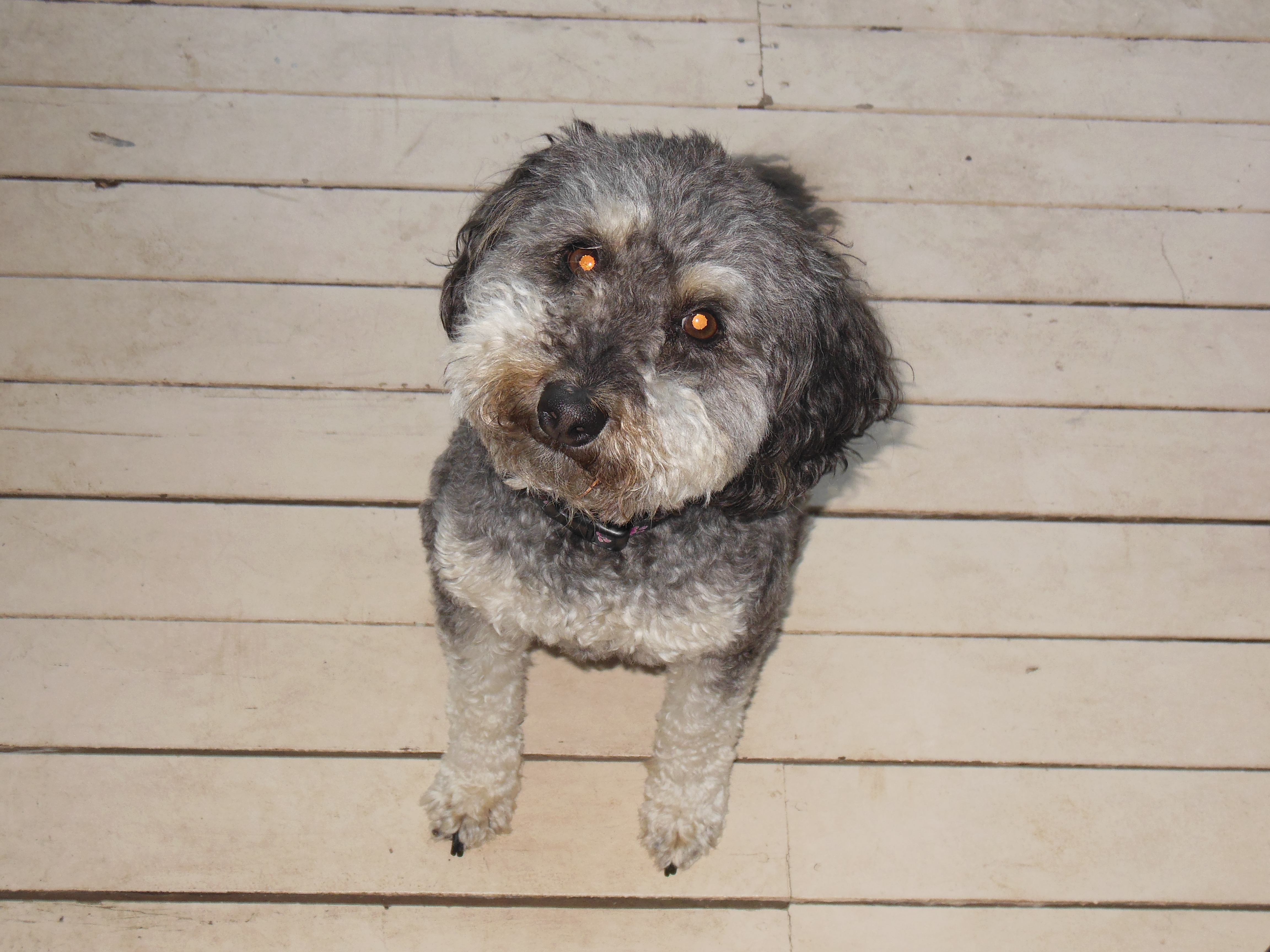
Or my adorable Violet (aka Spastic Colon) that I overfed with people-food so much that she threw up all over the house. This is her looking at me wondering why I didn’t take her on my walk to the lake. It was 95 degrees outside, that’s why. And you, Violet, poop out after one lap when it gets over 70 degrees. You no longer like the sun. She didn’t understand.

Well, I guess, I just did write about both, but not at length. Here’s the real scoop….

I’ve been walking around the lake near our house, once or twice a day. While I’m walking, I practice eye contact. Eye contact is not something I learn naturally, and not something I ever feel comfortable with. Not something I enjoy. And not something that I like practicing.

I “taught” myself how to make eye contact with strangers at the age of thirty-five. I realized I was having a hard time at it (eye contact), and needed to make a change, the time I was attempting to look up at a male sales clerk at a local take-and-go pizza parlor, and I got so nervous, that I wrote a check for $400 instead of $14. He wasn’t eye candy or even close to my age. But pretty much all males under 80 and over 10 make me nervous. I didn’t realize the error in my ways, until the establishment cashed my check.

I get nervous looking at anyone I do not know well. Especially men. I have become much more comfortable with women my age and older, small children, and senior citizens. They feel safe to me. Every other age group, when I think about locking eyes, I squirm inside from nervousness.

I now set my eyes just beyond a person or on a person’s forehead, in an attempt to appear friendly and approachable. I’d say I make eye contact with 80% of the females I pass (like in a store) and about 40% of males, well maybe 20%.

Lately, I’ve been wearing sunglasses when I walk the lake, and a plastered on real-looking smile. I listen to music and this helps me smile. And I remember all the smiles I’ve been practicing in the mirror and on camera. My face fidgets all over the place, while my smile tries to find a home. I am more comfortable with my mouth closed. Though I think my teethy smile is prettier. So I probably look perplexed and intense when I smile.

My hugest practice-smiling comes when a man my age approaches me while passing me on the jogging/walking trail at the lake. There are typically a couple dozen of men my age any given day that pass me. I have learned, through trial and error, to stare down the female, if a couple approaches, before I glance very quickly at HER male with a smile. If I smile at the male first, I tend to get a very shifty-darty eyed look from the female. I find this interesting, but logical.

I have also found that men about ten years my senior or more, tend to smile at me first, and even nod or say hello, while men my age look suspicious. This could be me jumping to conclusions. I wonder if I should start taking notes.

With every person that passes me,  I stand up straighter, glance slightly that person’s way, and then look at the forehead. With sunglasses on, I can hover there longer. Sometimes I get nervous and move down to the chest or legs. Which in retrospect, maybe isn’t such a good path for my eyes to follow. The whole time I’m looking I have a cheesy closed-lip smile and I hold my breath.

I’ve been practicing really super hard, and was feeling fairly pleased with my progress. Until tonight. Now I’m going back to the proverbial drawing board in my mind and trying to connect the eye contact dots.

At the lake, on my last loop around, a man my age approached me. He came up real close. I think he ran up to me from his car. He said, “Hey,” grabbed my wrist gently, and placed a folded small piece of paper in my hand. Between the “Hey” and hand grabbing, I figured this guy had special needs and needed my help.

He didn’t. But that was my first thought—trusting soul I am.

And so I smiled big, wanting him to feel safe, if indeed he had special needs.

As he stood there, I unfolded the note and read it quickly. Kind of in shock, and not fully comprehending what I’d read, I fell back on habit and manners, smiled again, and said with a giddy voice, “Thank you!”

The note??

James. Phone number.

I saw you checking me out!

Text me your name.

Hmmmm…..I think I might need some more practice….

Day 197: Ten Traits

This post has never had the honor of its own day. So for day 197 I am reposting this. This post has brought hundreds of people together, and has been viewed by thousands and thousands of people all over the world. To see hundreds of comments go to this link, where the original post can be found. https://aspergersgirls.wordpress.com/2012/02/10/aspergers-traits-women-females-girls/

Ten Traits

1) We are deep philosophical thinkers and writers; gifted in the sense of our level of thinking. Perhaps poets, professors, authors, or avid readers of nonfictional genre. I don’t believe you can have Aspergers without being highly-intelligent by mainstream standards. Perhaps that is part of the issue at hand, the extreme intelligence leading to an over-active mind and high anxiety. We see things at multiple levels, including our own place in the world and our own thinking processes. We analyze our existence, the meaning of life, the meaning of everything continually. We are serious and matter-of-fact. Nothing is taken for granted, simplified, or easy. Everything is complex.

2) We are innocent, naive, and honest. Do we lie? Yes. Do we like to lie? No. Things that are hard for us to understand: manipulation, disloyalty, vindictive behavior, and retaliation. Are we easily fooled and conned, particularly before we grow wiser to the ways of the world? Absolutely, yes. Confusion, feeling misplaced, isolated, overwhelmed, and simply plopped down on the wrong universe, are all parts of the Aspie experience. Can we learn to adapt? Yes. Is it always hard to fit in at some level? Yes. Can we out grow our character traits? No.

3) We are escape artists. We know how to escape. It’s the way we survive this place. We escape through our fixations, obsessions, over-interest in a subject, our imaginings, and even made up reality. We escape and make sense of our world through mental processing, in spoken or written form. We escape in the rhythm of words. We escape in our philosophizing.  As children, we had pretend friends or animals, maybe witches or spirit friends, even extraterrestrial buddies. We escaped in our play, imitating what we’d seen on television or in walking life, taking on the role of a teacher, actress in a play, movie star. If we had friends, we were either their instructor or boss, telling them what to do, where to stand, and how to talk, or we were the “baby,” blindly following our friends wherever they went. We saw friends as “pawn” like; similar to a chess game, we moved them into the best position for us. We escaped our own identity by taking on one friend’s identity. We dressed like her, spoke like her, adapted our own self to her (or his) likes and dislikes. We became masters at imitation, without recognizing what we were doing. We escaped through music. Through the repeated lyrics or rhythm of a song–through everything that song stirred in us. We escaped into fantasies, what cold be, projections, dreams, and fairy-tale-endings. We obsessed over collecting objects, maybe stickers, mystical unicorns, or books. We may have escaped through a relationship with a lover. We delve into an alternate state of mind, so we could breathe, maybe momentarily taking on another dialect, personality, or view of the world. Numbers brought ease. Counting, categorizing, organizing, rearranging. At parties, if we went, we might have escaped into a closet, the outskirts, outdoors, or at the side of our best friend. We may have escaped through substance abuse, including food, or through hiding in our homes. What did it mean to relax? To rest? To play without structure or goal? Nothing was for fun, everything had to have purpose. When we resurfaced, we became confused. What had we missed? What had we left behind? What would we cling to next?

4) We have comorbid attributes of other syndromes/disorders/conditions. We often have OCD tendencies (Obsessive Compulsive Disorder), sensory issues (with sight, sound, texture, smells, taste), generalized anxiety and/or a sense we are always unsafe or in pending danger, particularly in crowded public places. We may have been labeled with seemingly polar extremes: depressed/over-joyed, lazy/over-active, inconsiderate/over-sensitive, lacking awareness/attention to detail, low-focus/high-focus. We may have poor muscle tone, be double-jointed, and lack in our motor-skills. We may hold our pencil “incorrectly.” We may have eating disorders, food obsessions, and struggles with diet. We may have irritable bowel, Fibromyalgia, chronic fatigue, and other immune-challenges. We may have sought out answers to why we seemed to see the world differently than others we knew, only to be told we were attention seekers, paranoid, hypochondriacs, or too focused on diagnoses and labels. Our personhood was challenged on the sole basis that we “knew” we were different but couldn’t prove it to the world and/or our personhood was oppressed as we attempted to be and act like someone we were not. We still question our place in the world, who we are, who we are expected to be, searching for the “rights” and “wrongs;” and then, as we grow and realize there are no true answers, that everything is theory-based and limited, we wonder where to search.

5) We learn that to fit in we have to “fake” it. Through trial and error we lost friends. We over-shared, spilling out intimate details to strangers; we raised our hand too much in class, or didn’t raise our hand at all; we had little impulse control with our speaking, monopolizing conversations and bringing the subject back to ourselves. We aren’t narcissistic and controlling–we know we are not, but we come across that way. We bring the subject back to ourselves because that is how we make sense of our world, that is how we believe we connect. We use our grasp of the world as our foundation, our way of making sense of another. We share our feelings and understandings in order to reach out. We don’t mean to sound ego-centered or over zealous. It’s all we know. We can’t change how we see the world. But we do change what we say. We hold a lot inside. A lot of what we see going on about us, a lot of what our bodies feel, what our minds conjecture. We hold so much inside, as we attempt to communicate correctly. We push back the conversational difficulties we experience, e.g., the concepts of acceptable and accurate eye contact, tone of voice, proximity of body, stance, posture–push it all back, and try to focus on what someone is saying with all the do’s and don’ts hammering in our mind. We come out of a conversation exhausted, questioning if we “acted” the socially acceptable way, wondering if we have offended, contradicted, hurt, or embarrassed others or ourselves. We learn that people aren’t as open or trusting as we are. That others hold back and filter their thoughts. We learn that our brains are different. We learn to survive means we must pretend.

6) We seek refuge at home or at a safe place. The days we know we don’t have to be anywhere, talk to anyone, answer any calls, or leave the house, are the days we take a deep breath and relax. If one person will be visiting, we perceive the visit as a threat; knowing logically the threat isn’t real, doesn’t relieve a drop of the anxiety. We have feelings of dread about even one event on the calendar. Even something as simple as a self-imposed obligation, such as leaving the house to walk the dog, can cause extreme anxiety. It’s more than going out into society; it’s all the steps that are involved in leaving–all the rules, routines, and norms. Choices can be overwhelming: what to wear, to shower or not, what to eat, what time to be back, how to organize time, how to act outside the house….all these thoughts can pop up. Sensory processing can go into overload; the shirt might be scratchy, the bra pokey, the shoes too tight. Even the steps to getting ready can seem boggled with choices–should I brush my teeth or shower first, should I finish that email, should I call her back now or when I return, should I go at all? Maybe staying home feels better, but by adulthood we know it is socially “healthier” to get out of the house, to interact, to take in fresh air, to exercise, to share. But going out doesn’t feel healthy to us, because it doesn’t feel safe. For those of us that have tried CBT (Cognitive Behavior Therapy), we try to tell ourselves all the “right” words, to convince ourselves our thought patterns are simply wired incorrectly, to reassure ourself we are safe…the problem then becomes this other layer of rules we should apply, that of the cognitive-behavior set of rules. So even the supposed therapeutic self-talk becomes yet another set of hoops to jump through before stepping foot out of the house. To curl up on the couch with a clean pet, a cotton blanket, a warm cup of tea, and a movie or good book may become our refuge. At least for the moment, we can stop the thoughts associated with having to make decisions and having to face the world. A simple task has simple rules.

7) We are sensitive. We are sensitive when we sleep, maybe needing a certain mattress, pillow, and earplugs, and particularly comfortable clothing. Some need long-sleaves, some short. Temperature needs to be just so. No air blowing from the heater vent, no traffic noise, no noise period. We are sensitive even in our dream state, perhaps having intense and colorful dreams, anxiety-ridden dreams, or maybe precognitive dreams. Our sensitivity might expand to being highly-intuitive of others’ feelings, which is a paradox, considering the limitations of our social communication skills. We seek out information in written or verbally spoken form, sometimes over-thinking something someone said and reliving the ways we ought to have responded. We take criticism to heart, not necessarily longing for perfection, but for the opportunity to be understood and accepted. It seems we have inferiority complexes, but with careful analysis, we don’t feel inferior, but rather unseen, unheard, and misunderstood. Definitely misunderstood. At one point or another, we question if in fact we are genetic hybrids, mutations, aliens, or  displaced spirits–as we simply feel like we’ve landed on the wrong planet. We are highly susceptible to outsiders’ view points and opinions. If someone tells us this or that, we may adapt our view of life to this or that, continually in search of the “right” and “correct” way. We may jump from one religious realm to another, in search of the “right” path or may run away from aspects of religion because of all the questions that arise in theorizing. As we grow older, we understand more of how our minds work, which makes living sometimes even more difficult; because now we can step outside ourselves and see what we are doing, know how we our feeling, yet still recognize our limitations.  We work hard and produce a lot in a small amount of time. When others question our works, we may become hurt, as our work we perceive as an extension of ourselves. Isn’t everything an extension of ourselves–at least our perception and illusion of reality? Sometimes we stop sharing our work in hopes of avoiding opinions, criticism, and judgment. We dislike words and events that hurt others and hurt animals. We may have collected insects, saved a fallen bird, or rescued pets. We have a huge compassion for suffering, as we have experienced deep levels of suffering. We are very sensitive to substances, such as foods, caffeine, alcohol, medications, environmental toxins, and perfumes; a little amount of one substance can have extreme effects on our emotional and/or physical state.

8) We are ourselves and we aren’t ourselves. Between imitating others and copying the ways of the world, and trying to be honest, and having no choice but to be “real,” we find ourselves trapped between pretending to be normal and showing all our cards. It’s a difficult state. Sometimes we don’t realize when we are imitating someone else or taking on their interests, or when we are suppressing our true wishes in order to avoid ridicule. We have an odd sense of self. We know we are an individual with unique traits and attributes, with uniques feelings, desires, passions, goals, and interests, but at the same time we recognize we so desperately want to fit in that we might have adapted or conformed many aspects about ourselves. Some of us might reject societal norms and expectations all together, embracing their oddities and individuality, only to find themselves extremely isolated. There is an in between place where an aspie girl can be herself and fit in, but finding that place and staying in that place takes a lot of work and processing. Some of us have a hard time recognizing facial features and memorize people by their clothes, tone of voice and hairstyle. Some of us have a hard time understanding what we physically look like. We might switch our preference in hairstyles, clothes, interests, and hobbies frequently, as we attempt to manage to keep up with our changing sense of self and our place. We can gain the ability to love ourselves, accept ourselves, and be happy with our lives, but this usually takes much inner-work and self-analysis. Part of self-acceptance comes with the recognition that everyone is unique, everyone has challenges, and everyone is struggling to find this invented norm. When we recognize there are no rules, and no guide map to life, we may be able to breathe easier, and finally explore what makes us happy.

9) Feelings and other people’s actions are confusing. Others’ feelings and our own feelings are confusing to the extent there are no set rules to feelings. We think logically, and even though we are (despite what others think) sensitive, compassionate, intuitive, and understanding, many emotions remain illogical and unpredictable. We may expect that by acting a certain way we can achieve a certain result, but in dealing with emotions, we find the intended results don’t manifest. We speak frankly and literally. In our youth, jokes go over our heads; we are the last to laugh, if we laugh at all, and sometimes ourselves the subject of the joke. We are confused when others make fun of us, ostracize us, decide they don’t want to be our friend, shun us, belittle us, trick us, and especially betray us. We may have trouble identifying feelings unless they are extremes. We might have trouble with the emotion of hate and dislike. We may hold grudges and feel pain from a situation years later, but at the same time find it easier to forgive than hold a grudge. We might feel sorry for someone who has persecuted or hurt us. Personal feelings of anger, outrage, deep love, fear, giddiness, and anticipation seem to be easier to identify than emotions of joy, satisfaction, calmness, and serenity. Sometimes situations, conversations, or events are perceived as black or white, one way or another, and the middle spectrum is overlooked or misunderstood. A small fight might signal the end of a relationship and collapse of one’s world, where a small compliment might boost us into a state of bliss.

10) We have difficulty with executive functioning. The way we process the world is different. Tasks that others take for granted, can cause us extreme hardship. Learning to drive a car, to tuck in the sheets of a bed, to even round the corner of a hallway, can be troublesome. Our spacial awareness and depth-awareness seems off. Some will never drive on a freeway, never parallel park, and/or never drive. Others will panic following directions while driving. New places offer their own set of challenges. Elevators, turning on and off faucets, unlocking doors, finding our car in a parking lot, (even our keys in our purse), and managing computers, electronic devices, or anything that requires a reasonable amount of steps, dexterity, or know-how can rouse in us a sense of panic. While we might be grand organizers, as organizing brings us a sense of comfort, the thought of repairing, fixing, or locating something causes distress. Doing the bills, cleaning the house, sorting through school papers, scheduling appointments, keeping track of times on the calendar, and preparing for a party can cause anxiety. Tasks may be avoided. Cleaning may seem insurmountable. Where to begin? How long should I do something? Is this the right way? Are all questions that might come to mind. Sometimes we step outside of ourselves and imagine a stranger entering our home, and question what they would do if they were in our shoes. We reach out to others’ rules of what is right, even in isolation, even to do the simplest of things. Sometimes we reorganize in an attempt to make things right or to make things easier. Only life doesn’t seem to get easier. Some of us are affected in the way we calculate numbers or in reading. We may have dyslexia or other learning disabilities. We may solve problems and sort out situations much differently than most others. We like to categorize in our mind and find patterns, and when ideas don’t fit, we don’t know where to put them. Putting on shoes, zipping or buttoning clothes, carrying or packing groceries, all of these actions can pose trouble. We might leave the house with mismatched socks, our shirt buttoned incorrectly, and our sweater inside out. We find the simple act of going grocery shopping hard: getting dressed, making a list, leaving the house, driving to the store, and choosing objects on the shelves is overwhelming.

This list is based on workshops, videos, literature, personal accounts, and my own experience. Females with Asperger’s Syndrome present themselves very differently than males. This is not an all-encompassing list. It’s not a criteria. It’s limiting and bias-based, as it’s only my view. It is my current truth. I don’t claim to be an expert or professional….but I do know an awful lot about the subject. I hold a Masters Degree in Education, have Aspergers, one of my sons has Aspergers, and I have several graduate-level classes in counseling psychology…I guess I am sort of an expert, after all. ~ Sam Craft

© Everyday Aspergers, 2012. Unauthorized use and/or duplication of this material without express and written permission from this blog’s author and/or owner is strictly prohibited.
~~~~~~
Day 149: Carved Delicate

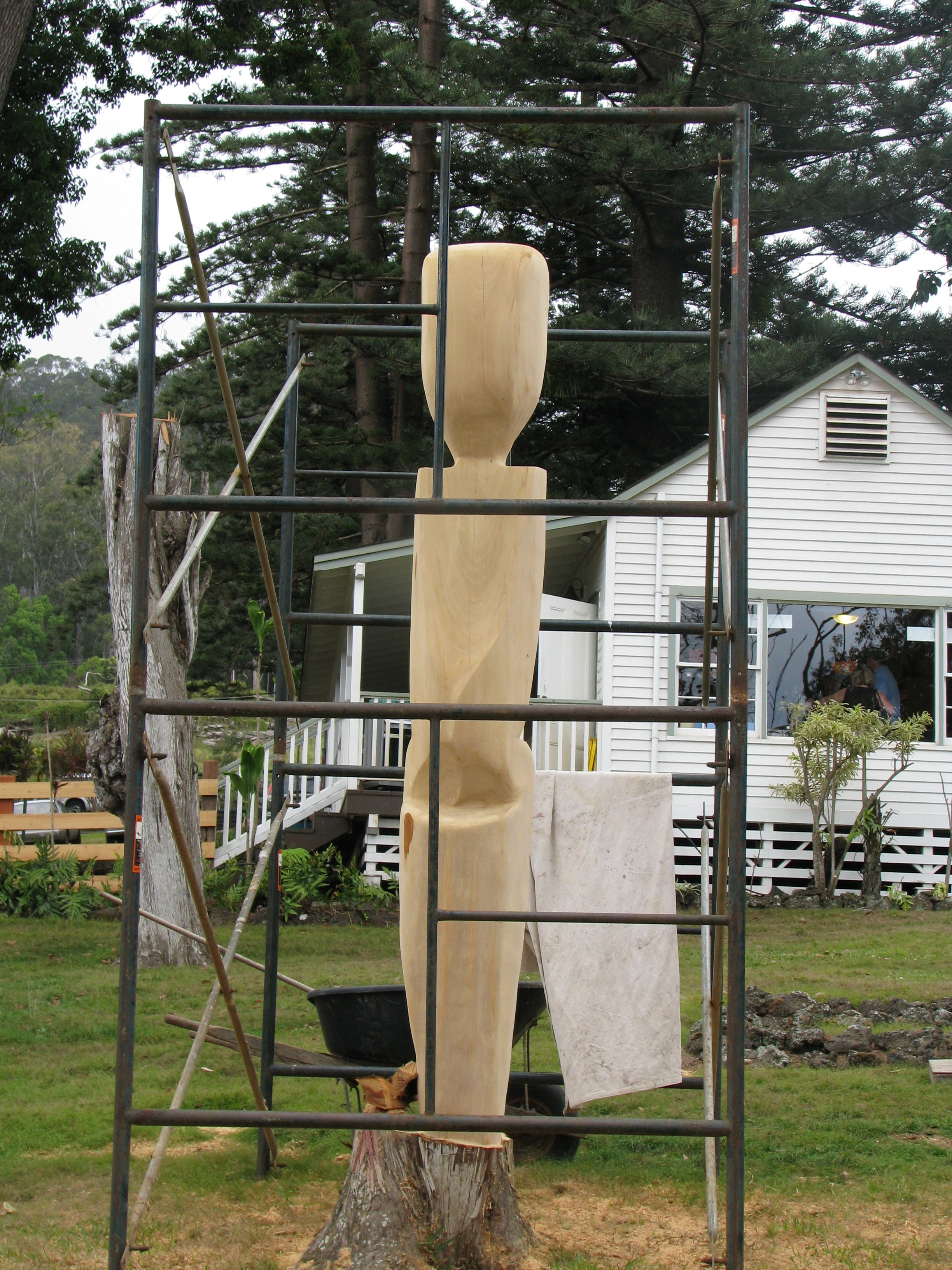
Carved Tree
Maui 2012

http://www.youtube.com/watch?v=huDIF–HmPU

Carved Delicate

I used to dream of the life

I lost while I stood

Up high in the night

A lamb in the woods

My light shining strong

My fear kept within

The clang of my heart

Beat places I’d been

I used to dream of the life

I lost while I stared

From the highest peak

Surrounded and scared

Watching below

As entities came

Prowling at dusk

And howling my name

I used to dream of the life

I lost while I cried

Alone in the open

With no place to hide

Demons haunting

Where I did slumber

Fire lit eyes

Pulling me under

I used to dream of the life

I lost while I screamed

A victim of fate

Or so it did seem

That all my plans withered

Dried up in the drought

And left me parched-starving

And fed with death’s doubt

I used to dream of the life

I lost while I ran

Afraid of the days

Afraid of each man

A woman of black

Whose shadow had risen

All broken and wounded

And locked in her prison

I used to dream of the life

I lost while I broke

Wasting the days

Before I awoke

Dreading the times

And what was to be

Questioning my purpose

And past misery

I used to dream of the life I lost

But I don’t dream loss anymore

For deep from within

Mercy opened her door

So wide and so grand

Did joy’s entrance appear

A threshold to serenity

Carved delicate through tears

by Samantha Craft

June 2012

Day 131: The Crow in Me

I have recently formed a friendship with a woman with Aspergers, and I have to say, it is the easiest friendship I have ever had. Though it is long distance, we chat every day, sometimes for hours. What I notice about her are the same traits I notice about me. Our lives and our thinking are so parallel, it is almost creepy.

Essentially, we think and process the same way. We have the same worries. We see things in the same light. We both require the same  security in conversation. We need validation, and we give out the whole of ourselves. We are able to focus on one another entirely. Everything else can stop. We become priority. Talking to her is the easiest thing I’ve done in my life. She is genuine, open, and entirely honest. She analyzes everything she says before writing, and then analyzes it again after writing—just as I do. She frets over her words, as I do. She wonders whether she is good enough for a friend, too intense, too different. She over-compensates with love and compassion to be certain I feel safe and understood. She offers advice straight from the heart, only because she has a calling from God to do so. She sits on every word, measuring the potentiality for miscommunication and the probable consequences of her message. She spins and loops about what she has said, and how the words might affect our relationship. She thinks about me often throughout her day; I am never an afterthought. She loves me whole-heartedly. She knows when I need her to sit and be with me, and puts aside everything else in her life to show me she cares. She takes the time to write to me, no matter what is happening in her life. As soon as she knows I am available to chat, she comes my way with a smile, heart, or message. She is my soul-sister, mirroring me in every way, and I so love what I see.

Through my friendship with this special lady and through her comforting words expressing her own experience with friends, I am just beginning to understanding the difference between the way I communicate to friends I am passionate about and the way people without Aspergers communicate back to me. I am realizing that many times in my life, I was ultimately not rejected, but that my friends didn’t understand my communication style, misinterpreted my words and actions, and were actually incapable of duplicating my enthusiasm and dedicated attention.

I find this true today with another friendship I have formed with a very kind and loving person. Though this person is one of the sweetest souls I have met, at the same time, we communicate so entirely differently. This is no fault of anyone’s—and is solely the result of our brains being wired differently. Where I am as eager as a puppy to jump all over the conversation, day or night, anytime, anywhere, my new friend prioritizes, plans, evaluates, and places me within a schedule. Aspies generally don’t do that! We have this gift of focusing entirely on what we are interested in and what are hearts want at the moment. Everything, and I mean everything else in our world, disappears when we are wrapped up in our passion. Bills might not get paid, beds not made, pets not fed—we don’t neglect, we just forget as we are sucked into another realm.

To me this is a form of escape. I can do this with certain people, and my communication with them becomes my temporary haven away from all the stresses of the world—away from the constant overload of sensory input, and worries of everything that is shouting to be done, the continual spinning of thoughts, ideas, emotions, and need, the pounding fear of the world’s expectations and anticipated actions. In having a special friend, I am able to forget myself momentarily and be only a part of his or her world: just me on a stage with them, with everything else on hold. I’ve done this my entire life. And I do believe this aspect is a primary part of me, nothing to be fixed or changed; this is just me. Living on this planet, if I did not have opportunity to escape, I would surely hovel in a corner and never leave. This world is ultimately a very scary place for me.

I am also realizing that I hurt much more inside when I talk to people than when I talk to my new friend with Aspergers. This, again, is no one’s fault, and purely reflects the dynamics of two people with like minds joining verses two people with very different minds connecting. It does not matter how sensitive, caring, loving, pure and honest a friend is, if he or she doesn’t have Aspergers, he or she will never truly get me. That’s not to say I can’t have very fulfilling friendships with all types of people; it just means I know deep down inside that unless a person has a brain that functions like me, there will always be this piece about me that the other person will not understand. Whether he or she is aware of this makes no difference, because I am aware of this.

I am working through some hurt now. Trying to understand why my needs are entirely different than most people’s needs in a relationship. Backtracking through all the past times I overwhelmed, confused, or was misunderstood. I am acknowledging that broken relationship were not because of whom I am as a person. Broken relationships were a result of me communicating the only way I knew how.

Some of the things I’ve noticed happening in the new relationship I have with someone that does not have Aspergers:

1)      I am sad that my friend is not always able to talk to me at every moment of the day.

2)      I continually worry I over-shared, and at the same time cannot help myself from over-sharing. I get this overwhelming urge to share. And have this urgency about me to expose my truths, as if the world shall end tomorrow and if I don’t get my thoughts out, I shall die unknown and unheard.

3)      I want to know EVERYTHING about my friend. Every fear, love, past event, thought, experience.

4)      I wonder why the person has not answered my message in a timely fashion. (For me that would mean within a second of when I wrote the message, because I ought to be number one priority! Insert laughter here.)

5)      I question why the person wants to be my friend, as I am so intense, so prone to having my feelings hurt, in continual need of validation, and questioning my worth.

6)      I worry beyond worry that my friend does not see the purity of my heart. And when I am misunderstood a thousand daggers pierce my soul. For if my friend sees me as mean, manipulative, a liar, lacking compassion, closed-minded, angry, vengeful, demeaning, or the like, than I know he or she is not seeing me.

7)      I want to be seen. I want to open myself up like a book so the friend can read every single page and know my beauty. I want to shine so bright that my friend believes me when I say I love unconditionally.

8)      I try constantly to say the exact word. I fret over every sentence. If I am chatting online, I reread everything I wrote ten times, wondering if I chose the wrong words, wondering how the person will interpret, wondering if I am expressing the heart of me.

9)      I want to delete most of what I say. I sometimes have an odd sense of humor, or don’t get something, like a simple word, or simple explanation. My friend’s innocent comment can send me off the deep end, send me spiraling down to earth, with a heavy landing, so that I feel deadened and crushed inside.

10)   I find that I am so very innocent and naïve compared to other people. In conversation, I feel as if I am about the age of ten or even younger. A little girl still searching the eyes of the person I adore and wondering if he or she adores me. A little girl needed to be swept up and hugged and told how beautiful she is, how special, how loved. To know that I am unconditional accepted and very much appreciated. I long to be told, I love you, every few minutes, in order to feel safe, in order to understand I am not being judged, misinterpreted, or thought about in a “bad” light.

http://vi.sualize.us/

11)   I am just realizing I don’t really understand love at all. Love to me means something entirely different than to most people. I don’t understand the degrees of love, how love builds, how friendship starts out at one level, and then grows into love. I love all at once. This huge bundle of love. And I plop this love right down at my friend’s feet. If I didn’t feel that bundle of love, I wouldn’t be the person’s friend. It’s very simple to me. Of course I love you, you are my friend. What does like you a lot even mean? Does that mean I like you for now, and might always like you, but if you prove to be more special, I might consider loving you? That hurts me. The word like hurts me. If love is the end point, then why am I placed at the starting line? Why wouldn’t a friend love me from the very beginning? Can he or she not feel the same connection, bond, and love as me?

12)   I sometimes say things, hint things, and describe things that are very clear to me, and the other person doesn’t get what I am saying at all. I sometimes do things that take the whole of me, take so much risk, preparation, and forethought, but my actions aren’t met with the same extreme of emotions. Speaking to my friend sometimes is akin to tearing out my bleeding heart, setting my heart pounding on the table for my friend to see, and my friend casually walking by and saying, “Oh, that’s nice.” Only to then continue walking. I take out my heart and think the person will know, but my friend does not. My friend does not know that everything I say is a dynamic risk.

13)   I don’t know how to turn down my intensity. I don’t have light and carefree days. I don’t have a way to shut me down or dim my emotion. I don’t even have waves of love. Everything remains level at a very high extreme. Nothing is little or unimportant. Nothing downplayed. Nothing forgotten. Everything remembered and brought back up to the surface over and over for reanalysis. Scenarios are played out in the mind of how I could have said something better. How I could communicate clearer. How I should communicate less. How I should be less enthusiastic. I swing a harsh whip at my mind, slash and slash with should haves and could haves.

14)   Simple statements from my friend can send me spinning. What does that mean? Did I do something wrong? Did I blow this friendship? Was I too intense? What does my friend want me to say? How should I say this? What if I am wrong? What if I am misjudged? Did I say too much already? Should I laugh now? Should I offer support? Is advice okay? Am I a bore, a nuisance, a weirdo, too odd to keep around? Why is the conversation over? Why not talk more? Why am I not a priority? Am I not nice enough? Not kind enough? Not pretty enough?

15)   I cherish my friend to no end. I would walk the end of the earth for my friend. I love my friend. I hold my friend up high. I see the light within. I see the purity of heart. I go straight to the soul and relish in the beauty. I see the love within. I see the potentiality for greater communication and connection. I see so much, but am standing across a bridge with a cavernous pit between us. I long to cross the bridge, but the bridge is broken, and I can only stand alone and stare out into the distance, reaching, and longing to touch.

http://www.back-yard-birding.com/crows-in-indiana/

The crows are among the world’s most intelligent birds. Crows can be aggressive, quarrelsome, and sometimes playful. The voice once heard is not easily forgotten. They have an astounding range of calls. There language is complicated and still being discovered. They are excellent puzzle-sovers, have good memory, and quickly learn. They live in community, support their own, and love for life. They hold the spirit of kings.

http://www.youtube.com/watch?v=hyr5WdrEvGI