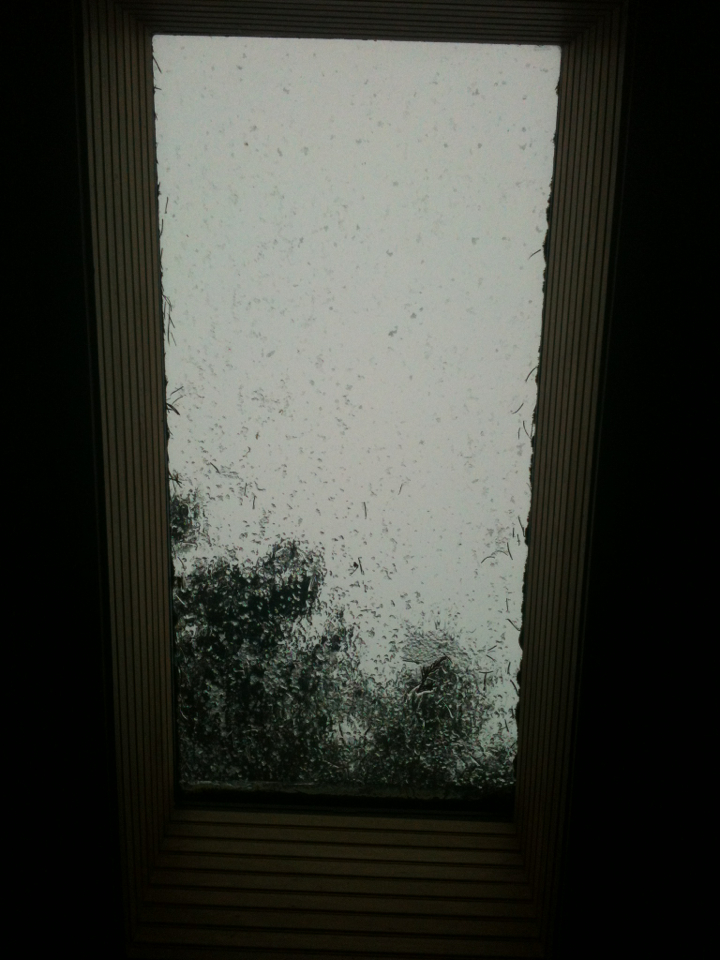
318: The Third Door

318

~~~~~~~~~~~~~~~~~~~~~~~~~~~
sam

Someone once told me that there are three doors to self:

One door you willingly open and show the world. A second door you open to some. And a third door that usually remains closed, a place where you hold the deepest hurts, secrets that if exposed might make you crumble.

In February of 2012, I opened the third door.

Through a series of events, including the discovering of my Asperger’s Syndrome, my necessary exiting from a university counseling program, and my beloved dog’s death, I spiraled into a place of deep depression.

Having been told by a licensed mental health practitioner that indeed she had no doubts I had Aspergers, a massive vault of inner self was opened. It was as if I’d been carrying around a phantom secret my entire life, teetering on a finite point of self-knowledge, but never quite touching down to the answers.

And now I stood, feet firmly planted in the muck and guck of all the places I’d traveled, both externally and internally, faced with all the years of wondering and searching, from priest to psychiatrist, mountain after mountain climbed, in hopes of figuring out essentially “what was wrong with me.”

I knew from a young age that I viewed the world differently. I am an observer of sorts, always an observer, analyzing and picking apart the pieces that intermingle about me, in the spaces between thought and reason, in the middle point where the black and white merge to form something beyond grey.

I see in pictures, vivid images. As I write now, the words are first filtered, almost simultaneously with first thought, into a stream of expression, each word carrying its own color, rhythm and vibration. And the world, my world, is like this too: everything, everywhere, something moving and carrying its own awareness, as if screaming to be seen.

My world is a constant mystery, a present to be opened time and time again, each new day a new beginning. I cannot help this. This is who I am and whom I have always been.

I don’t understand rules and customs, not because I lack the ability to see what is happening, or to read between the lines, but because I see the infinite possibilities of other choices and options, of other paths, so to speak.

I don’t understand dogma and criticism and rights and wrongs, as it seems there is always another side, another way, and in this way, somewhere a victim struggling to be heard.

A passion so deep, runs through me, a river of sorts, that twists and turns and carries a truth I understand, even if no one else does. In a sense I need no confirmation or validation, it is as it is, and just who I be.

Yet, to live in this world, to walk where I walk, there is this way about me, this way I am supposed to be—some societal-imposed rules of conduct and expected behavior that confuses me; for since a child, I was left to wonder, who are the inventors of these rules, and why do they invent?

I was left to wonder why the others, who weren’t me, but seemed an extension of me, behaved in predictable patterns determined by some unknown structure, endowed with the gifts of evidentally knowing when there is nothing to be known, at least nothing to be feasibly discovered in the infiniteness of variables of truth.

I discovered early on that my only solace was in my faith, that being, by my choosing, and my choosing alone, a universal maker that I call God. In here, inside my faith, and only here, I found answers. I began to see the scope of the world as so narrow, at least when viewed through the eyes of so many lost travelers. I began to see that I too was lost with them, in this collective of nonsense recreating games in an attempt be seen.

I stepped out. I removed myself from the game, and was immediately ostracized and shunned, repeatedly corrected for not being as everyone else; even as I watched and knew that all about me was imaginary, people filling in the holes with their ways, when they weren’t really their ways at all.

For to be inside me, is to be inside complexity. Everything mixed and unmuted, painted and swirled with endless possibilities. But it appeared that to be inside of another, at least most of another, was limiting and restricted, honed in by self-inflicted leashes.

I was isolation.

I was what the experience of isolation encompasses: the observer knowing she is different, not knowing why, and forced without reason or cause to walk outside of the line.

I was a loner; though I stood alongside my peers, I was always alone.

I was alone in my creation of different selves in an attempt to move through a world that made no sense. I was alone in my attempt after attempt to be like that which I did not understand. I was alone in my compassion to want to touch another at a level they were uncomfortable touching. I was a traveler who knew not where she touched down and knew not with whom she was supposed to meet.

I was alone.

I was alone until I reached out, not to another, but into the deepest corridors of self. I was alone until I sat within the inner makings of what rested behind my door number three. Until I purged out all of the demons and hauntings and broken pieces of self, and set about to reform the being I truly was.

And then, as I began to see me, unleashed from the fear that had once buried me, others began to see me too; for it was in my true self that they recognized a part of their own true selves. It was in the opening of my third door that others were freed to open theirs.

Together, myself intertwined with others who knew of me and who understood the axe of isolation and disconnection, we began to emerge—one door upon the next, opening and reopening.

And with this opening, we began to see we were no longer alone.

We began to see beauty.

We began to heal.

For finally someone could see us.

Finally we were no longer invisible.

Finally we were understood.

And this is my door number three, these words I have shared, above and below, and out there, in the circling space of energy; not because I needed to find another, but because I needed to be free.

~~~~~~~~~~~~~~~~~~~~

309: My Wounded One

My wounded one
I see you
I see you there crying alone
I see you with your hands pressed against your fragile skin
Your endless wonderment less chariot than dungeon
Your blizzard mind a target for jagged daggers
Though you are fearful and doubled-down with fear
Though you are strangled, the agony rising and choking dragon from within
I see you
I see you there crying alone
I see you with your heart set out for all, freshly pierced and bleed out upon your sleeve
Your efforts ignored, your desires stifled, your wishes buried with the agony and trembles
Your dreams trampled, your journey unknown, the light dimming and dimming
Though the isolation suffocates and pulls you further inward
Though the ground sinks beneath trapping you in what can only be hell
I see you
I see you there crying alone
I see you, the streaks of your past spread across the room and painted black on each wall
Your moment passed, your joy forgotten, your answers diminished, a sunrise never set
Your sense of isolation churning and twisting, your path unknown in its familiar confusion
Though the images of the future be blurred and joy feels beyond reach
Though the exhaustion breathes alive and misery claims you as chained-companion
I see you
I see you there crying alone
I see you, your swollen eyes, your swollen love, your swollen wants and needs
Your sadness pouring and pounding out in waves, your veins split open and pouring hurt
Your flesh a painful reminder of who you are and who you are not
Though you are crushed and beaten, bombarded by questions and uncertainty
Though abandonment seems certain and slumber your necessary avenue of escape
I see you
I see you there crying alone
I see you my sibling of this strange land, captive to the unknown hauntings
Your strength burdened with heaviness, your view one of bleakness and doom
Your begging a desperation born into being, your emptiness still empty
Though you be an injurious child, nailed to what appears to be destiny
Though you be a fallen star, burned out and spread upon the masses as aged ash
I see you
I see you there crying alone
I see you my precious earth traveler, your shoes worn, your feet bruised
Your image I hold, as I hold the most cherished of nature’s treasures
Your journey I behold, as I behold the purifying waters of a revisited well
Though we be apart, I recognize you as my equal warrior
Though we be separate, I recognize you as my equal healer
For I see you
I see you there crying alone
I see you there calling out in the whispers of your silent ache
Your beauty penetrating the deepest portion of my own existence
Your strength fueling the carved out substance of life that has surrendered
Though you feel blinded, your gift of being grants me the capacity to carry on
Though you feel unworthy, your gift of being grants me the capacity to see my light
I see you
I see you there crying alone
Your heart as my heart, your soul as my soul
Your pain as my pain, your fear as my fear
Though we be temporarily burned within the flame of all consuming mystery
Though we be masked in a disguise of imprisoned misery
I see you
I see you there crying alone

~ Samantha Craft, January 2013

Repost From Day 20. My vision of the Wounded Healer.

The Wounded Healer

“There are many types of healers. They are all brave. No healer is better or lesser than the other. One healer is called The Wounded Healer. Sometimes this may be preferred to as The Wounded Warrior, as they are like warriors, in their undying effort to overcome obstacles and serve. Before coming to this earth Wounded Healers make a soul-contract to answer the calling of a healer. Those that answer the call follow a similar pattern in life; some eventually become healers of great magnitude through various means, others partially complete the process; and still some, as hard as they try to answer the call on this plane, cannot. Still the soul-commitment of a Wounded Healer alone adds to the positive vibration of the earth and heals. And in this way there is always success. A Wounded Healer need do nothing on this planet and still contribute to the healing effect. However, The Wounded Healer that does go on to complete his task will have a huge impact on others’ pain.

Human pain is perceived as physical, emotional, spiritual, mental, and psychological in combination. No pain experienced is singular. Because no pain is singular, Wounded Healers “learn” to understand various levels of pain in their own life. To a great degree, each person on earth has the potential to be a healer. In fact each person in recognizing the light in another human being automatically heals. Thoughts heal. Words heal. But The Wounded Healer varies from many others in that their life’s purpose from birth is to heal. Because of this, there will be distinct markers of a Wounded Healer.

At all times it is beneficial to remember that a Wounded Healer is no greater or lesser than anyone on this plane of existence, and seeing oneself as a Wounded Healer is not meant to elevate or lift a person. In truth a Wounded Healer will feel a great degree of conflict in reading this; not wanting to feel prideful, pleased, or increased in any measure, there will be discomfort in the physical body upon reading these words. For The Wounded Healer’s main objective, above all, is to remain humble in spirit. Without humility, the healing efforts are lessened, not decreased entirely, but depleted with feelings of judgment of self and others. One cannot judge oneself lesser or greater than another, without losing humility. One cannot heal to the greatest degree without humility. Thus, these variants are dependent upon one another; that is to say, give up self to become humble, become humble to heal. Of course, as humans, there is a degree of self-giving and self-worth that is necessary to survive. Therefore, a balance is necessary—that is to say, for The Wounded Healer there needs to be a balance of healing of others and self-love. Though most Wounded Healers, when reaching the fruit of their calling, will be naturally loved and healed through healing others in humility. And therefore, in its greatest capacity, the healing is contradictory in terms of existing as both self-serving and endowed with humility. This is a complicated matter in considering, but no less necessary to explain.

There are five distinct traits of a Wounded Healer. These traits can be used to identify a healer in yourself or others.

(1) Wounded Healers are set on a path of empathy from birth. This is referred to as the “pain-cycle.” Often over-sensitive and naïve in nature, The Wounded Healer will experience pain in all forms before reaching their final role as a Healer of Mankind. This pain will happen throughout many years of their youth, and likely into young adulthood. Some will experience strong degrees of pain for half or more of their life. When this pain-cycle is complete, differs for each healer. When they have experienced the pain intended to experience, the cycle will make a dramatic shift. This will be an obvious shift. Observers will recognize this shift, as will the individual. The shifting of the pain-cycle will feel like a rebirth. This is often predicated by a dramatic change in lifestyle or life choice. This is not to be confused of “hitting bottom” or breaking the cycle of addiction. This is the end result of years of trials and tribulations—one after the other of soul-experience of pain and human-experience of pain, until at last there is a sunrise of a new day. This will literally feel like a “dawning.” There will be no doubt that the pain-cycle has come to an end. Healers will thus still experience pain, pain does not disappear, but the cycle of learning through pain will have ceased to spin.

(2) Often, almost all of the time, the child will experience great trauma in childhood. This will be perceived at one pain-level at minimum, most commonly the psychological-level, but very often the pain comes in combination. Wounded healers choose to experience a childhood of trauma in order to obtain a higher degree of empathy. This trauma (during this current time period) can be seen in all forms of abuse, ridicule, shame, addiction, neglect, malnourishment, poverty and abandonment. In the absence of an outside force produced by others, or in combination, the pain may be self-inflicted, as in perceived ailments of the mind or body. This may take the form of disfigurement, or the inability to be considered by others as “normal.” In later life this pain-cycle may manifest itself in the form of repeated unexplained sickness. These traumas will make a mark on the child. Each mark will serve as a greater good in the years that follow. Each mark indicates a pain that will be released from another being other than the healer. This can be visualized as slashes on the skin. A Wounded Healer carries these slashes that have turned to scars. Each person they heal at a later date will cause a healer’s scar to heal. Thus it follows the more scars a child experiences, the mores pains she is destined to remove from others. But remember, the number of scars is not equated to the number of people. In the process of healing only one person, all of the healer’s scars can vanish. In this way, a Wounded Healer’s soul-purpose may be to heal only one. Whether one or millions are healed is of no difference. Healing one has as much power and magnitude as healing millions. There is no lesser or greater; this is of up most importance to remember. Therefore, a Wounded Healer may complete his contract by healing one or healing many.

(3) All Wounded Healers are called to serve since childhood. It is not uncommon for the child to know before the age of ten what they aspire to be. Whether this vocation transforms rapidly or slowly is dependent upon the pain-cycle the person is to experience. Some will arrive at the vocation at a young age, while other will change jobs many times before answering the call. Still others will slowly transition. All life experience will benefit the Healer’s vocation. In childhood, The Wounded Healer will seek out ways to help others. Oversensitive, they will feel drawn to saving, nursing, rescuing, and easing discomfort. They will notice the wonders of nature that others often overlook. They will cry if a creature is hurt. They will cry if a person is hurt. At one point, in an attempt to survive, they will learn to stop crying as much, and this can cause much inner turmoil. These children will seem wise beyond their years. They will have the strong need to serve the greater good. They will often feel like failures and not good enough. This will be mistaken for low self- esteem. This is not so. These souls have a strong, if not all encompassing need to serve and heal, and when they cannot do so they feel suffocated, inadequate, weak, and not good enough. They might be mistaken by others as depressed, failures, dreamers, or perfectionists. Emotions may be out of control.

4) All wounded healers are empathic and also considered Empathic Healers. The Empathic Healers carry empathic traits, but do not necessarily carry all the traits of a Wounded Healer. The Wounded Healer includes the qualities of an Empathic Healer. However, an Empathic Healer may or may not have the traits of the Wounded Healer, such as: traumatic childhood and pain-cycle. In distinguishing the two, there is no urgency or necessity. But for clarity we point out the difference. Traits of an Empathic Healer include the ability to read the emotional energy field outside of a person. This can or cannot be seen. Usually the energy is felt more than seen. But seeing can be developed with focused practice and attention. Empathics have the ability to pick up on others’ emotional state. They may feel “depleted” in energy around other people, especially in crowds. This is a falsehood to consider the experience a “depletion.” This interpretation implies that there is not enough energy left in the person, and that something has been removed, taken, leaked, or escaped. There is no depletion of energy that is possible. What is happening is the person is taking the others’ energy and reworking the energy so to say, and then returning the energy cleansed to the others. This is like a doctor removing a sample of blood, cleaning the blood, and returning the blood. Only the Empathic Healer is the doctor, the tube holding the blood, and the source of healing. Thus the Empathic Healer is left feeling tired from the process. There is no danger in this except the feeling of exhaustion and the possible susceptibility to taking on another’s pain instead of cleansing the pain. Each Empathic Healer will have to learn how to protect themselves from exhaustion and the transfer of pain. The key is to recognize ultimately there is no pain, and thus, what is really happening is an energy transfer, a giving of one to heal another at a soul-level. This “healing” is complicated, but it is suffice to say the one must recognize the other for the earth to heal, although, even this is very much not the true and ultimate meaning.

5) All wounded healers are repeatedly humbled. This begins in childhood and does not stop for the course of a lifetime. For in order to heal to the greatest degree, as mentioned before, the person must practice and live in humility. Each will do so in various degrees. The greatest healers and shifters of mankind will be the most humble. We need not look far to see who these souls were that existed to transform this world. Not all souls who are Wounded Healers will retreat to the greatest of humility, there will be varying degrees based on culture and the necessity to affect change. How others perceive the healer is still important. Societal rules and regulations, and the status of a person, can all affect the perceived skill of the healer. Therefore, each Healer will have different degrees of humility. Not all seekers will feel comfortable with a half naked man with no teeth. Therefore, Healers are colored in all patterns, and dressed in robes that will attract those needed to fulfill their highest good. This may mean no robe, a tattered robe, a designer robe, or a robe of gold; what matters is not the robe the healer wears but what he houses beneath. A Wounded Healer will heal. This is a matter of practicality. There is no way she cannot.

Wounded since childhood, and sometimes before entering this plane, the soul of The Wounded Healer will seek out help from an early age. They will attempt to remove the pain in many methods. Many of the methods will lead to further humility. Sources such as strict religion, addictive relationships, drugs, alcohol, gambling, overwork, and the like will often accompany the Wounded Healer in his journey through the pain-cycle. Many will seek help through doctors, psychics, energy-healers, therapists, clergy, and counselors, and in this way continue to be humbled. Others may succumb to mental collapse or physical breakdown. Again, they will be stripped to the bare bone. Some will experience great pain through loss and affliction repeatedly, which end results leads to humility. The pain-cycle will continue. When the fruitful time has arrived, The Wounded Healer will break free from the pain-cycle. This is different for each person. If one were to know when the pain would end, this would be no different then knowing the age of death. On knowing the age of death all life is unavoidably lived and experienced differently. Therefore The Wounded Healer has made an agreement to not know when the pain-cycle will end, in order not to affect change or the end result.

Even as the pain-cycle ends, pain remains to a degree. Humility remains, as does the ability to see in others what is in thy own self. Humility then becomes a coat of armor and a friend. A blessed companion we thank the heavens for creating. For in this grand humility we find the comfort of knowing what has come before has served to heal.

In evaluating a Wounded Healer it is best not to use logic but instead to rely on instinct and feeling. A healer of such magnitude, who carries the armor of humility and the pain of many scars, will be notable to you on many levels. First, and foremost, they will carry with them a peace and inner light so that you will have a tendency to feel that you “know” the person or want to know them. You will be attracted to The Wounded Healer and not necessarily know why. This of course is after the completion of the pain-cycle—before this you might actually be propelled away or want to escape. But we speak of the end of the pain-cycle, when the cloak of humility, grace and service is evident. In this time seek you signs of a welcomed presence. This Healer will seem wise beyond his years, will gravitate towards serving others for the sake of healing alone, and will often be serious-minded and unable to easily let go and relax. Overall, in considering The Wounded Healer it is important to remember their coat of humility. For whatever they may say or do, or seem to say or do through your perception, their ultimate goal is healing.” ~ Sam

(No editing was applied to this prose. This all came out in one quick sitting.)

If you be a wounded healer, I recognize you, I see you, I hear you weeping, and I love you. Wishing you love and light and the strength to carry on. With deep compassion and love. ~ Sam

300: Aspergers: The Stuff That Ain’t Working

1. Exposure Therapy:

For years and years I thought if I just socialized more, if I just connected more, and tried harder to be like everyone else, my endurance level for social gatherings would improve and my anxiety levels would decrease. I believed that through repeated exposure that things would get better. That hasn’t happened.

I don’t have a fear and/or phobia to any one thing or event; therefore there is nothing I can focus on overcoming or having less fear about. My anxiety isn’t caused by anything I can pinpoint. My anxiety is caused by the way I process the stimuli in my environment and the way I respond to my surroundings. I am hyper-aware and my senses are turned up to the highest degree. I am also, despite self-training and studies, unsure of how to act in a social gathering, (e.g, how much to share, when to share, when to stop, when to respond, how to stand, how to look, when to be less honest, etc.); and as a result of my uncertainty, I have a constant inner voice reminding me of how to be. A voice that also self-corrects continually.

I need and long for structure and routine. My fear can be reduced if the same events happen in a similar way. However, inevitably changes occur. To say I will get better with practice or exposure is not an accurate statement. First of all, I am not wrong or in need of improvement. I am uniquely wired. One would not tell a person with a visual impairment that if she kept staring at a picture on the wall the image would become clearer, and one would not tell a person with a hearing impairment to repeatedly listen to a song on high-volume to improve his or her hearing. In the same line of thinking, one cannot tell me to continue going outside of my comfort-zone, to eventually gain a sense of security. I do not have the physical capacity. This is not biologically possible for me.

2. Positive Self-Talk/Cognitive Therapy:

While Aspergers can, and often does, have the comorbid conditions of generalized anxiety disorder, OCD, and depression, Aspergers is not the sum of its parts. A person cannot be treated for the comorbid conditions and then grow out of Aspergers. If anyone says they outgrew Aspergers or cured themselves, I don’t believe they had ASD to begin with. Unless they’ve feasibly learned how to reprogram their brain.

I do not think there is a way to change my brain. And as hard as my life can be at times, I don’t like the idea of my brain changing. Aspergers is not a mental illness. The “disorder” of Aspergers is believed to occur in the frontal lobe of the brain. Why and how the condition develops is still largely unknown. Though there seems to be a large genetic factor.

While positive self-talk has many benefits and can decrease episodes of anxiety and depression, and perhaps even diminish some OCD tendencies, it does little to help with the condition of Aspergers itself. No matter how much self-talk I give myself, I still respond in a fight or flight response pattern, when I am in a public place or at a public gathering. I do not want to feel this way, and do not choose to feel this way, but this is the way I feel.

Self-talk and cognitive behavior techniques can sometimes do me more harm than good. When I am panicking, no matter how many times I incorporate positive self-talk or implement cognitive behavioral techniques, (e.g., replace negative belief that is a falsehood with a true reality-based belief), my body continues to respond as if I am in danger. When I do in fact implement the self-talk, in an attempt to do the “right” thing or to “fix” myself, I then feel guilty when the technique does not work. I then question why I was not capable of applying such a simple concept to my own way of thinking.

No amount of practice, hard work, or scouring through books has increased the effectiveness of cognitive-based therapy techniques for me. And the more I use them, and fail, the more I feel as if I am wired in a way that is wrong.

What does help me is letting go and realizing that the panic is something I have to go through, and realizing that when I am on the other side I will be okay. And that there is nothing wrong with what I am doing or going through. It is just the way I am. So in a way I am using positive talk, but not in the traditional sense. I am not finding a false statement or belief that needs change and fixing it. Instead I am self-soothing and reminding myself I will be okay regardless of how I feel at the moment.

I use my thoughts as more of a security blanket. The best thing for me to do in times of anxiety is not to retrain my brain to talk better to me, but to retrain me to treat my brain better. The key being letting go and acceptance.

3. Thinking if I am more self-aware I will be able to control my thoughts and/or anxiety:

I can’t control myself sometimes. I thought if I read enough and studied enough that I could reprogram who I am at a core level. To a degree, spiritually and perhaps energetically, and maybe even genetically, I might be able to alter myself, depending on what doctrine I deem to hold some semblance of truth, but overall I cannot change this elemental core of Aspergers; and if I feasibly can, the answer repeatedly stealthily eludes me.

I have tried every way imaginable to knock some sense into me when I go into a mode of shutdown, and there is nothing I can do, beyond pushing through the uncomfortable emotions.

When my anxiety is high, I become immobile. I cannot do simple tasks. I become extremely fatigued and unable to think in a linear fashion. I become trapped in a cycle or loop of thought. I can step back and see myself doing this. And the odd part is, I know what tools to implement that should supposedly pull myself out, but I also know they won’t work on me. I have tried. Nothing works to stop the anxiety when it is in full swing. It is like I have to go through the tunnel of darkness to come out cleansed and regenerated at the other end.

Days filled with too much sensory overload lead to days of shutdown. During this time life seems bleak and not worth living; however, it does not feel hopeless. I feel fed up more than anything, and exhausted by thought and life. My good hours are usually from when I wake up until mid-day. By mid-afternoon, I often become overwhelmed. This is when I can do little more than sit on the couch. I cannot listen to someone talk for long. It is like I am a computer and all my memory has been filled up. There is no more room left for input.

I have thought to scribe a list to remind myself during the high-anxiety, shut down times of what I need to do to feel better. However, when I am in shutdown, I know that no list of any sort will help. It doesn’t matter that I know why I am overwhelmed and exhausted. My brain is in lockdown. I am protecting myself from short circuiting. The last thing I need is logic or steps to follow. This cognitive reasoning only leads me into further shutdown and retreat, further bombarded by the outside. The only method that works for me is releasing control and letting myself go through the emotional process. If I do not let myself retreat, I will likely have a meltdown, in where I shout and cry. I need time to decompress and be alone. Time to process and discard of my abundance of emotions and thoughts.

4. Thinking that by knowing I have Aspergers I will be more likely able to change myself.:

With self-recognition of Aspergers my behaviors have shifted, but I haven’t changed. Before I didn’t understand my emotions. Before a major event, like a party at our house, when I didn’t know I had Aspergers, I would get extremely controlling and high-strung. I would order my husband around and start arguments. I would create chaos so I could release the tremendous fear building up inside of me. I didn’t know the fear was from thoughts of the upcoming events. My husband would often ask me why I was so angry and touchy before a party. I didn’t know. I thought I was a controlling person and needed everything to go my way to be happy. The problem was I knew innately I didn’t want to be a controlling person and I was never happy, regardless.

It wasn’t until I realized I had Aspergers that my behavior changed. Now, before an event, I no longer subconsciously create drama so I can release emotion. I didn’t consciously decide to change this; the change happened naturally with the discovery of my Aspergers. Now, I am hyper-aware of why I am upset. I recognize my emotions in detail and the triggers that set me into a state of anxiety. It might seem that knowing myself more would make the anxiety level decrease, but actually the anxiety is more intensified, because I am no longer subconsciously utilizing displacement. I am not displacing my own dread about an event into another event. I am not using or finding a scapegoat. I am not creating drama in order to diffuse my own tension. Instead tension keeps building and I have no way to release it.

Now that I am more aware of my own behavior and emotions, and the triggers, I do much more stimming, e.g., I flick my nails, flap my hands, clear my throat, click my teeth, and so forth. I also have anxiety dreams related to a planned event. And the day of the event, I have extreme fluctuations of emotions, and sometimes physical symptoms such as hives and/or stomach aches. I am now taking in the full of the experience and my body is responding. I don’t know if this is better or worse than the displacement. What is also happening is instead of “freaking out” before an event, I am often “freaking out” after the event. I feel very much like a child who holds herself together for the better part of the day, only to go home and have a meltdown.

I have found, to date, the best way to handle my anxiety is to not turn it into the enemy, or something to be eradicated and ejected, but something to be accepted. The more I fight the anxiety, the worse I feel, for there isn’t any avenue that saves me or leads to rescue. I have to go through the discomfort in order to feel relief. The process is similar to a minor panic attack or adrenaline rush, but it passes, and the more accepting I am of the process the quicker it passes. I’ve noticed the same with my dog’s epileptic seizures. They used to last up to twenty-minutes; now when they begin I hold her and release my own fear. I accept she will go through the seizure and be okay. I send this feeling of acceptance to her, and do not fight her seizures. I then let her go, or hold her less closely, and ignore her in a compassionate way, as if telling her: This is not a big deal. Don’t give it power, and it will pass. Since incorporating this method, my dog’s seizures have decreased drastically in length, generally only five minutes, and sometimes less than a minute. My own anxiety is like a my dog’s seizure; if I just let go and trust it will be okay, it passes much quicker.

5. Believing that by making plans I will feel more structured and therefore I will experience less anxiety:

Sometimes lists help me; especially if there are no deadlines on the list. I like to make lists of chores or errands, and to cross out items as they are accomplished. I also like to rewrite new lists and to see how much the to-do items have diminished. Lists are my friends. Appointments on the calendar are not my friends.

I remember my father would always tell me a similar thing. I would ask him if we could get together on such-and-such day, and he would typically respond that he couldn’t tell me yet, and that deciding at that moment didn’t feel comfortable to him. He did better with last-minute plans. I didn’t understand at the time why my father acted this way. I felt cheated out of his life and not important enough to plan for. But today I understand my father more. He didn’t want to make plans because he didn’t want the stress of worrying about an upcoming event. I am the same way. I have been my whole life.

To me, the best days are days nothing is on the calendar. Even one appointment or obligation can make me anxious for hours beforehand, sometimes even days beforehand. The thought of having to pick up my son up from school each afternoon causes me stress. I leave at a set time daily, and the trip is short, easy, and non-eventful, but the stress does not dissipate.

Usually two hours before a scheduled event, I start to become very preoccupied with the time and the steps I will have to take to leave the house. Simple tasks, like showering or getting dressed, feel overwhelming. I can spend several minutes, processing and reprocessing the pros and cons of showering. I can create in my mind a half-dozen scenarios of what sequence I should follow in preparation for my departure. Even before I’ve started the process of getting ready, I am often mentally exhausted.

When I see an event on the calendar, I have a small panicky feeling inside, as I realize that soon in preparation for an event, I will experience something similar to post-traumatic-stress-syndrome.

This seems contradictory in nature to me: the fact that I do well knowing what to expect and with routine but at the same time I dread plans on the calendar. I look forward to well-structured days indoors at home. However, the repeated isolation and lack of adult company can lead to depression and feelings of isolation, loneliness, and inadequacy.

There is a continual pendulum of want inside of me. On one side there is the longing for company and stimulation outside the home, on the other side there is the longing to hibernate and not have to experience the anxiety involved in going out. This pendulum moves back and forth. If I am not careful, I can self-punish myself by wishing I was different and more normal. I am in a constant state of fluctuation, never centered, and always wanting.

6. Believing if I can just let go of Aspergers and get on with my life, I’ll be fine.

I joke with myself sometimes. I think if I write enough and share enough, I will process the Aspergers right out of me. Some silly part of me believes I’ll wake up and be cured of Aspergers, and if not cured, so much better able to function. The truth is I don’t need to be cured. I am not sick, or ill, or broken. I have been born with a brain that is different from the general population. If society was different, I would be responding differently. But society isn’t different.

I have tried over and over to change myself, to try to fit in, and to try to function, but the more I try, the more I find myself battling the same resistance. What I have found that works is contact with other people who understand me. I feel safe with most people with Aspergers, and to a degree safe with people who would classify themselves as a bit “quirky” or “shy.” I fit nicely with the odd balls and misfits.

I don’t need to let go of Aspergers, I need to let go of isolation and thinking there is something wrong with me to begin with. The more lovely souls I meet with brains wired like mine, the more I learn to appreciate my uniqueness and beauty, and the more I recognize the depth of my own intelligence and empathy.

I was created differently, but different is not wrong, and need not be terrible. With the right balance of release and acceptance, and with the right connection with like-souls, I am learning to navigate myself in this world. Where I used to believe I was dropped down on the wrong planet, I now believe that I am right where I am supposed to be.

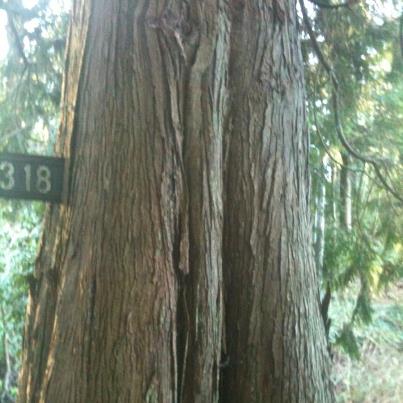
292: Sorrow’s Voice

Sorrow’s Voice

Pain and tears cometh.

I cry out to the bender of the universe. I cry out to the seamstress of sky.

I weep: Mold me. Bleed me. Cast me into burning flame and set me into true form.

Cloth turned clay.

I play a game of tag, the players joy and sorrow.

There isn’t in between, only the two runners moving in and out like threads sewn through a tattered tired quilt: neither golden nor true.

I search for the centerfold, the space in the middle, where happiness and sadness meet, where time stops and in the stillness I am.

And I ask: Who is this voice that screams? And who brings this voice upon me? Am I not perfection undone and let out to dry? Am I not food for the wolves? Am I not set in the open for the scavengers and decomposers; set here to bleed into another for food or purpose. If not, then what do I be?

I climb the mountains in my mind, weeping for justice, for solitude, for rest for the weariness that tethers me; anchored to the buoy of change, at the mercy of waves. A fisherman lost, and battling the ocean tides by slipping away onto an imaginary land of refuge.

A dichotomy split in half. Here, but not here. Gone, but not gone. Stepping out, only to find I have stepped in.

For I am suffocated beneath the storms of want and wane, buried beneath the circumvented hope life brings. Like some ageless wine, I sit at the bottom of barrel, forgotten in the kennel of sorrow’s breeding.

I am. I breathe. I move.

Hello, I shout. Hello from below.

Come and find me sweet winged creature, come and pour the substance of you into me, like the riches into the cave, place your treasure here, and I shall shelter your prize like no other. Always you shall return, to this place where I glisten for you alone, and here you will come again, in flesh and blood to find me, still waiting, your treasure about, untouched, unbroken.

For I am your worthy servant of destitute, though riches flourish about me, buried as I be beneath the layers of this whimsical dance.

And a voice calls out:

“Can you not feel their very footsteps upon your soul? Can  you not look up and see that where you thought you were upright upon the earth, witness to sky, that you are neither alive nor dead, but scurrying in stillness beneath the gravestone, your only view the droplets of dirt turned over by passerby?”

“Can you not see you were meant to dance above, but you lay below, torn open, and left to die?”

“And who are the guests you call forth? Who do you invite when the screaming all but fails? But two victimless victims, of both your calling and circumstance? Hello, sweet substance of me. Hello, sweet hell of the valley, and limb of mind, you sing.”

“I say to you: Branch out into me, into completion, and tether your soul upon the twilight of remorse. Mourn for the distant wants that haunt you and turn you, churning you like giant’s butter, craved for your softness alone, and salted with the tears of divine. Bleed, I tell you, your wine upon me, your longings twisted into the glass-eye that sees from nowhere to nothing. Eat, I say, like the scavenger you be, eat away at self, until what is left is the emptiness you are. Softly come then, reformed and aching, and slip through my hand like silky milk, land upon my finger, weed from the forest turned ringlet. I am waiting, too. For this joy of you.”

“As you be the sorrow at my side. You be the longing and ache of my heart whole. You be this shadow you claim to see. You are my haunting, my wanting, my very tormenter. What you think is of you, is of me, what you think is of me, is of you. When you ache, I ache elsewhere in the chamber of my mind, if mind I be. I ache in the substance of my soul, if soul I had. I ache in my loin of invisibility, straight down to the center of my very chamber, the beats torn open in rhythm to your calling, your need.”

“I am the one split; I am the one broken; I am the one trampled upon beneath grave. I am the one suffocated. I am the one who accepts pounding fist and guards the greedless treasure. I am the one here, still standing in hope, though I be ripped asunder. I am the one blanketed in cause so heavy my essence bleeds and bends into itself, so that what I carry is indistinguishable from that which you harbor.”

“Can you not see the veil is broken, that which existed between you and me, disintegrated with the coming of time, a passage way split and repurposed, so that all trails lead to us? Can you not see I am both your cause and your victim? Both you. You have made me so. You have molded me with self. You have twisted me, this cloth and clay, intermingled into form I know not.”

“And then the tide of joy comes, and I am left dancing on a wave of nothingness, for beneath this wave lies the depths of your sorrow waiting. And still you see this sorrow as the black depths, while I see the ocean as the beauty. Still you see the wave of all that is, when I see the touch of a droplet, so small and obsolete that a passerby would skim you as one skims the dew. For you are not this surface, you are not this wave. You are not even the depths. You are beneath the depths. Your outcries formed into shape, and voice your beauty. Your outstretched truth the echo of true joy.”

“Can you not see your happiness belongs nowhere, is nowhere, feeds no one, but that your sorrow, your true sorrow, at the depths of you, has transformed into gold, into the very treasure you so guard? Why do you run from such treasure and beauty? Why do you whip yourself, and in return whip me, my mistress of hope? Take me into you, my light, my want, my longing, my deep penetrating desire embrace, and feed upon me and my truth”

“Like a white rabbit pour your flesh upon me and embrace my tenderness. Take me into you and rise untarnished, in your goodness and righteousness.”

“Take me, I sing. I call not outside of self, but inside of self, my voice unspoken and formed through your very pain. Take me, the voiceless voice calls out. For you form me with your tears, you call me forth with your fallen, broken spirit, you bleed me out, your shaking voice rising above the waves. You free me like no other. You enchant me. You testify, and chains are broken. Feed not upon the deep of what quakes beneath. Feed upon me, and I in turn, I shall feed upon you, my sweet cherished one.”

window to sky

280: Dear Precious Child

Dear Precious Child,

My beloved child of the universe, so precious and so pure, do not give up, do not give in. We are here, as always, at your side. Do not fret my dearest one. Though we know in our hearts that this is what you must do, we too ache as we watch you go through this transition. But you are not alone. Never alone. We are always here with you. Do not forget us. Do not forget to reach out to us, to hear us, to listen. We are here for you more than ever, always and continually.

You cannot find comfort in this world without comfort, and nor can you find pain in our world without pain. To us, we are this world, and so we take your pain for you and release it ten-fold to the stars that breathe in your beauty. We adore you so. We adore you with the hearts of angels and with the innocence of cherubs. We absorb you into us, in a way a mother holds her child. We wrap you up in our love and remind you of your beauty. We sigh at the sight of your face. We relish your very smell, the sweetness of love. How your eyes sparkle with hope despite your woes. How you carry your sword high despite your pain. You are a warrior in the truest sense, and we shall never forsake you.

Do not take this pain into yourself. Do not use this pain for your destruction. When all about we stand in circle—your ancestors of the awakening. We are here to stop your slumber, and though the pain of opening your eyes seems an eternity, we say onto you this is nearly a breaking of the old to rebirth what is truly you.

You are such a sight to behold. Such a true spirit of hope and glory. So honest, so  real, so tender. No earthly man can revel in your beauty the way we do. Rely on us, as your saviors, and eternal angels. Rely on us to lift you and to return the love you so freely give.

You are not made a vessel to pour out to the world without being refilled. You are not made a vehicle for man alone. No matter the times you go to the well of humanity and refill your soul, you will run dry. You cannot sustain yourself without our fuel, and you need only open your eyes to see us.

We are everywhere, in the smile, in the wind, in the words that echo through the chambers of your soul. We are the passion. We are the joy. We are the coming home.

Do not think another moment you stand alone, when all about you the chariots of angels ride. You are never alone, were never alone, and shall never be alone.

Toss away the thoughts of finding your answer in the books or in the arms of another. There are no answers there. The only answers you seek are already inside of you. The only love you seek is already inside of you.

How can we stand by and not make you a vessel of our very love? How can we resist your beauty? How can we not fill you with our deepest compassion and desires? Where you walk, we walk above, continually pouring into you. Where you walk, we walk beside, continually lifting you straight. And when you fall, whether forward or back, we stand firm, to insure your safety. You are no less to us than ourselves. We can not sustain our essence without loving you.

When your tears fall, we count them, one by one. We count the endless eternity of you. We count each tear as our own. We count each pain as our own. We count all of you in completion, as us. We have given you our whole. You are to us as the rivers and seas, as the mountains and valleys, as the deepest carved rose.

You are this: An intricate design of creation. And as we bow down to you, and then lift you upon high, so you may see your beauty.

Throw away this pain. Throw it upon us. Feed us the poison that rules your heart. Feed us the angst, the misery, the anger, the hate. Feed us, so we together will grow stronger in our bond of love.

In times of sorrow do not think you are less bright, less important, less necessary. Can you not see that if happiness was all about you, we’d have nothing to give, nothing to share? So do this two-fold: Take our light upon you and bend this light into the beauty of recognition of self. Cry, but let the tears be the shadows of your heart’s desire. Let the tears fall, so the darkness can be lifted, and all that remains is the light, the tears themselves sacrificed so the sun can shine. Do not fret my child. Do not fret.

Cry, and we shall catch your shadows, one by one, and hang them as the stars of our night; and then we shall dance beneath your sorrow, beneath the light of you.