Thirty-Seven: 10 Myths About Females With Asperger’s Syndrome

Hello All.

I hope you are well during these challenging times.

I am writing to provide a few updates (2020) for anyone who happens upon this homepage.

My third blog is a bit hard to find, since I changed the domain name. Here is the direct link to Everyday Autistic. My artist’s blog is Belly of a Star.

Here is the Autistic Trait’s List.

Here is my company website Spectrum Suite LLC, which includes 100s of resources and our services page.

Here is a link to one of my Linkedin Articles that will bring you to my profile and some articles there!

My new works include much advocacy for Universal Design in the Workplace, which equates to true inclusivity, where all employees are given opportunity to the same support measures and community engagement, such as the same best-practices interviews, job coaches, support team; not just one marginalized minority, e.g., autistic individuals.

I am working on a book on empowerment on the autism spectrum.

I am my waving from afar, and wishing you so very well! I cannot believe it’s been 8 YEARS!

I now call myself a ‘neuro-minoriy’ (coined by Judy Singer) and consider myself a neurodivergent-blend (coined by me!). I am neurodivergent-blend because of my autistic profile, gifted-intellect diagnosis, dyslexia, dyspraxia, OCD, etc. etc. etc.

Feel free to connect on twitter or Facebook.

I’m on the bottom right, in the photo below, speaking at the Stanford Neurodiversity Summit. You can find out what we’ve been up to on the website. Here is a 10 hr.+ video of Day 2 at the Summit!

My book is now available around the world in paperback! Check out Barnes and Noble or Amazon.

Everyday Aspergers is an unusual and powerful exploration of one woman’s marvelously lived life. Reminiscent of the best of Anne Lamott, Everyday Aspergers jumps back and forth in time through a series of interlocking vignettes that give insight and context to her lived experience as an autistic woman. The humor and light touch is disarming, because underneath light observations and quirky moments are buried deep truths about the human experience and about her own work as an autistic woman discerning how to live her best life. From learning how to make eye contact to finding ways to communicate her needs to being a dyslexic cheerleader and a fraught mother of also-autistic son, Samantha Craft gives us a marvelous spectrum of experiences. Highly recommended for everyone to read — especially those who love people who are just a little different.”~ Ned Hayes, bestselling author of The Eagle Tree

10 Myths About Females With Aspergers

1. Aspergers is Easy to Spot

Females with Aspergers are often superb actresses. They’ve either trained themselves how to behave in hopes of fitting in with others and/or they avoid social situations. Many grown women with Aspergers are able to blend into a group without notice.

2. Professionals Understand Aspergers

No two people are alike. Professionals have limited experience, if any experience, with females with Aspergers. Professionals have limited resources, limited prior instruction and education, and little support regarding the subject of Aspergers. Comorbid conditions with Aspergers are complex. Females seeking professional help are often overlooked, and sometimes belittled or misdiagnosed.

3. An Effective Diagnosis Tool Exists for Females with Aspergers

There is no blood or DNA test for Aspergers. No one knows what causes Aspergers or if Aspergers is actually a condition, and not just a way of looking at the world differently. The diagnostic tools, such as surveys, are based on male-dominant Aspergers’ traits that do not take into account how the female’s brain and the female’s role in society differs from the male experience. Diagnosis is largely based on relatives’ observations and individual case history, and is determined by professionals who often do not understand the female traits of the syndrome.

4. People with Aspergers Lack Empathy

Females with Aspergers usually have a great deal of empathy for animals, nature, and people.  A female’s (with Aspergers) specific facial features, body language, tone of voice, laughter, and word choice might result in an observer misjudging a female’s (with Aspergers) thoughts, feelings, and intentions. Women and girls with Aspergers are often deep philosophical thinkers, poets, and writers—all traits that require a sense of empathy. Females with Aspergers usually try very hard to relate another’s experience to their own experience, in hopes of gaining understanding.

5. People with Aspergers are Like a Television Character

Many individuals have learned not to compare an ethnic minority group to a character on television, because such comparison is a form of stereotyping and racism. However, people are comparing male fictional characters on television to females with Aspergers. This happens usually without intention to harm, but out of a desire to understand. People with Aspergers aren’t living in a sitcom. There is a need for a greater degree of understanding beyond observing an entertainer.

6. Aspergers is No Big Deal

People with Aspergers often face daily challenges. There is no magic pill to make an Aspergers brain think differently. People with Aspergers see the world in another way than the majority. Females with Aspergers are not different in a way that needs to be improved. They are different in a way that requires support, empathy, and understanding from the mainstream. Aspergers is a big deal. The diagnosis can bring varying degrees of grief, acceptance, depression, confusion, closure, and epiphany. Here are just a few of the conditions a female with Aspergers might experience: sensory difficulties, OCD, phobias, anxiety, fixations, intense fear, rapid-thinking, isolation, depression, low self-esteem, self-doubt, chronic fatigue, IBS, shame, confusion, trauma, abuse, bullying, and/or loss of relationships.

7. Aspergers Doesn’t Exist

Aspergers does exist. There is a subgroup of females all exhibiting and experiencing almost the exact same traits. If there is no Aspergers then something dynamic is happening to hundreds upon hundreds of women; this something, whatever one chooses to label the collection of traits, requires immediate evaluation, understanding, support, educational resources, and coping mechanisms.

8. There are More Males than Females with Aspergers

In regards to comparing females and males with Aspergers, just like our history textbooks, more males are in the spotlight than females. Males are typically the doctors, professionals, and researches of Aspergers—males that do not have Aspergers and who obviously aren’t females. Thousands of females with Aspergers remain undiagnosed. Hundreds of women are searching social networks and the Internet daily for answers, connection, and understanding about themselves and/or their daughters.

9. Females with Aspergers Don’t Make Good Friends

Females with Aspergers are all different. Just like everyone else, they have their quirks and idiosyncrasies.  Many females with Aspergers are known for their loyalty, honesty, hard work ethics, compassion, kindness, intelligence, empathy, creativity, and varied interests and knowledge base. Females with Aspergers, like anyone, have the capacity to make fantastic friends, coworkers, and spouses, if, and when, they are treated with respect, love, understanding, and compassion.

10. Aspergers isn’t Something that Affects My Life

More and more children are being diagnosed with Aspergers. Adult males and females are realizing they have the traits of Aspergers Syndrome. The rise in Aspergers is a financial strain on the educational system and medical system. There isn’t adequate information, support, and resources available to assist people with Aspergers and their families. There is probably someone in your local community who has Aspergers Syndrome. You can make a difference. Just share your knowledge and understanding. Pass on this list of myths or other resources.

Ten Traits of Females with Aspergers link

Taken by Sam Craft


Day Thirty-Four: A Lonely, Heart-Broken Pillow

Day Thirty-Three’s post was a superb example of me strung out on coffee. I’m assuming that the majority of viewers scanned down the entirety of the post, mumbled, “Crap, this is long,” and got the heck out of dodge. Or, they stopped right around the time I was rambling on and on about how I’d posted a video clip.

Now I’m tempted to copy and paste the bottom portion of Day Thirty-Three (awesome number 33 is, by the way), because the content, in my not-so-humble opinion, is very interesting, like the part when I express how I feel sorry for isolated globs of toothpaste. You might want to see the last part of the post, at the very least. I wouldn’t want you to miss out on the gross-factor. Just saying.

I also am remembering my blog rules; and thought I should, (nasty sh word that it is), remind my readers (my friends, my good buddies, my pals) that there really are no rules in blogging. Just incase someone was thinking my powerful prose, I spat out while inebriated (smashed out) on coffee, was inappropriate in length. (Did you know coffee is not made from a bean but from seeds? Who knew?)

I love that there are no rules in blogging. Still I find myself doing what I always tend to do in walking life: analyze others’ style, breadth, subject matter, and quality. But then I reason, with LV (little voice in my head), that the act of Me breaking full force out of this self-inflicted mold, that of the Jell-O-mold of a fear-based conformist, is exactly why I am authoring this blog in the first place! (Now I’m picturing green Jell-O; now cellulite; now thinking I shouldn’t have had that apple fritter and cheese puff yesterday.)

For today, before I ramble on any further, or let Crazy Frog and Brain escort us on a three-hour cruise to cellulite land—as enticing as that sounds—I wanted to share a bit about my college experience. While you venture down melancholic lane, I’ll be heading upstairs to steal some sips of my husband’s coffee and watch the telly. (LV still has that whole British dialect going on from yesterday.) I’m wiping my tears after this one, so consider yourself forewarned.

A Lonely, Heart-Broken Pillow

Through the following seasons, the sharp point of fear worked its way into me like the microscopic barbs of a seed-bearing foxtail.  I was confused and greatly disappointed.  I believed with the coming of adulthood, by at last leaving my mother’s house and striking out into a different land, life would somehow get easier.  I expected the load I’d carried from my childhood to shed itself in layers, to ultimately fly away effortlessly, to disperse across the sky like the seeds of a dandelion… (The rest of the story is in the book Everyday Aspergers.)


Twenty-Nine: Blue By You

I’ve been thinking a lot about my childhood and how my actions reflected those of a child with Aspergers. I keep getting pulled back into a time period when I was about ten years of age. I was still rescuing animals then. Not that there was much I could do to help, but to love them.

One day the animal was a bird, near death, whose eyes were cold by morning. Another day a snail that had lost its shell. The one I remember the most is the butterfly. She was a monarch. I found her in the gutter on a rainy-walk home from school. Her wings were tattered, and she was nearly drown. I carried her home, cupped in the safety of my hands. I named her Jolie—for her beauty.

I placed her in a cleaned-out pickle jar and watched her in awe, as she stuck out her black tongue and lapped the sugar-water from a small lid. Her little wings were cast in masking tape. I watched her through the night; ever so often turning on the light and checking on her. I loved her. She survived a full day in the warmth of my affection. When she  passed, I buried her in the backyard under a fig tree and gave her a short sermon. This is the little girl I was, so remarkably sweet and hopeful. I wish to go back to her, to her room, to kneel down at her side, and say:

“I love you. I love you so very much. You are so beautiful. So kind. So thoughtful. And I am sorry that you carry such a burden. I know how painful it is to love with all of your heart. I know how painful it is to want to help and to not know how. But you are helping. You are helping more than you  know, my precious one. Look at me. Do you see what you have become. You are going to be a mommy someday, with your own family, and you are going to have what you need to take care of them. But precious child your journey into adulthood will be very hard. There will be times you want to give up. So many times. And you will take many years to find your way. But you will. You will. I promise you that. And when you do, so much will make sense. And you will cry, cry so very hard, like you are now with losing your beloved butterfly. But I will be waiting. I will be knowing that you will survive. That you will be strong. That you will love with all of your heart and get that love back ten-fold. You of all people, shall be loved. I will be here waiting on the other side of time, with my arms wide open. And when we meet again, in dream and in prose, I will embrace you, like no other. Thank you. Thank you for being you and going onward. Thank you for being so brave and so very strong. You are my living angel. And I breathe for you.”


Twenty-Eight: Giving a Child with Aspergers a Break


Giving a Child with Aspergers a Break

Be. Let the words pour out of the child. Let the busy thoughts escape the mind. Let him speak as long as he wants about whatever he wants. Set no time limits. Welcome the rambling, digressions, repetitions, and dissertations. Be present, without interjection or correction. Allow time periods with no communication rules, lessons, examples, rights, or wrongs. Let the child release the pressure in his mind. Take long walks and car rides together, and just listen. Let him be himself.

Retreat. Grant her a day of rejuvenation, a full day with no visitors, appointments, outings, sports, or any mandatory doings. Keep the day free of all restrictions, chores, and obligations. Stay in pajamas. Allow escape, isolation, and repetitive activities. Give her the chance to rebuild her stamina. Provide solitude and comfort. Stay home from school one day. Peel away the rules and regiment. Let her retreat.

Environment. Ask about sensory concerns in the environment. What causes you discomfort in this space? How are the lights? The chair? The sounds? The smells? The flooring? The pictures? How do your clothes feel? Your hair? Your skin? Where is there discomfort? How can I help? What does it feel like? Describe it. How is the shower? The bath? Do you hurt? Where do you feel the safest sitting? What is hard to tolerate? Do you need sunglasses? A pillow? Earplugs? Let him create a more comfortable environment for himself.

Active Interest. Show interest in her special interest. Don’t call it an obsession or fixation. Call it an interest or passion. Participate. Explore and collect. Be together. Establish a schedule. Make the special interest a priority. Place the passion in a spotlight of acceptance. Establish a blog, newspaper, journal, comic, drawing, song, rhyme, act, or other creative outlet to express the interest. Let the creativity blossom. Welcome the opportunity for connection. Let go of the need to control, fix, alter, or end the special interest. Replace objection with acceptance. Replace disinterest with interest. Celebrate new discoveries. Use the interest as a therapeutic tool. Allow him the freedom to escape from the challenges of his world.

aKnowledge. Acknowledge characteristics, talents, skills, and intelligence. List positive attributes. Don’t pretend anything is easy. Be a warrior and teach how to be a warrior. Don’t try to change the child. Imagine how scary his world is. Tell him he is very brave. Tell him he is not alone in the world. Share others’ stories. Find an adult with similar challenges who is an effective role model. Watch movies about Aspergers. Know the child wants nothing more than to be good, to do good, and to feel good. Explain that he is never a failure and always a success. Tell him you hope he tries his best, but on the days he doesn’t feel like he can try, that’s okay. Tell him he has a right to hurt and be scared. Tell him he is a gift and that there is nothing he can do to make you stop loving him. Tell him he is perfect. Tell him even though you aren’t him, you can imagine how hard life must be for him. Ask how he is feeling. Never minimize or discount. Never say it’s not that bad or things could be worse. Say you are getting stronger and wiser every day. Believe in him.


© Everyday Aspergers, 2012. Unauthorized use and/or duplication of this material without express and written permission from this blog’s author and/or owner is strictly prohibited. https://aspergersgirls.wordpress.com.  spectrumgirls@gmail.com
This article may be printed for  home and school use. Please keep the Everyday Aspergers© on the printed page. Thank you.

Twenty-Seven: Who Let the Frog Out?

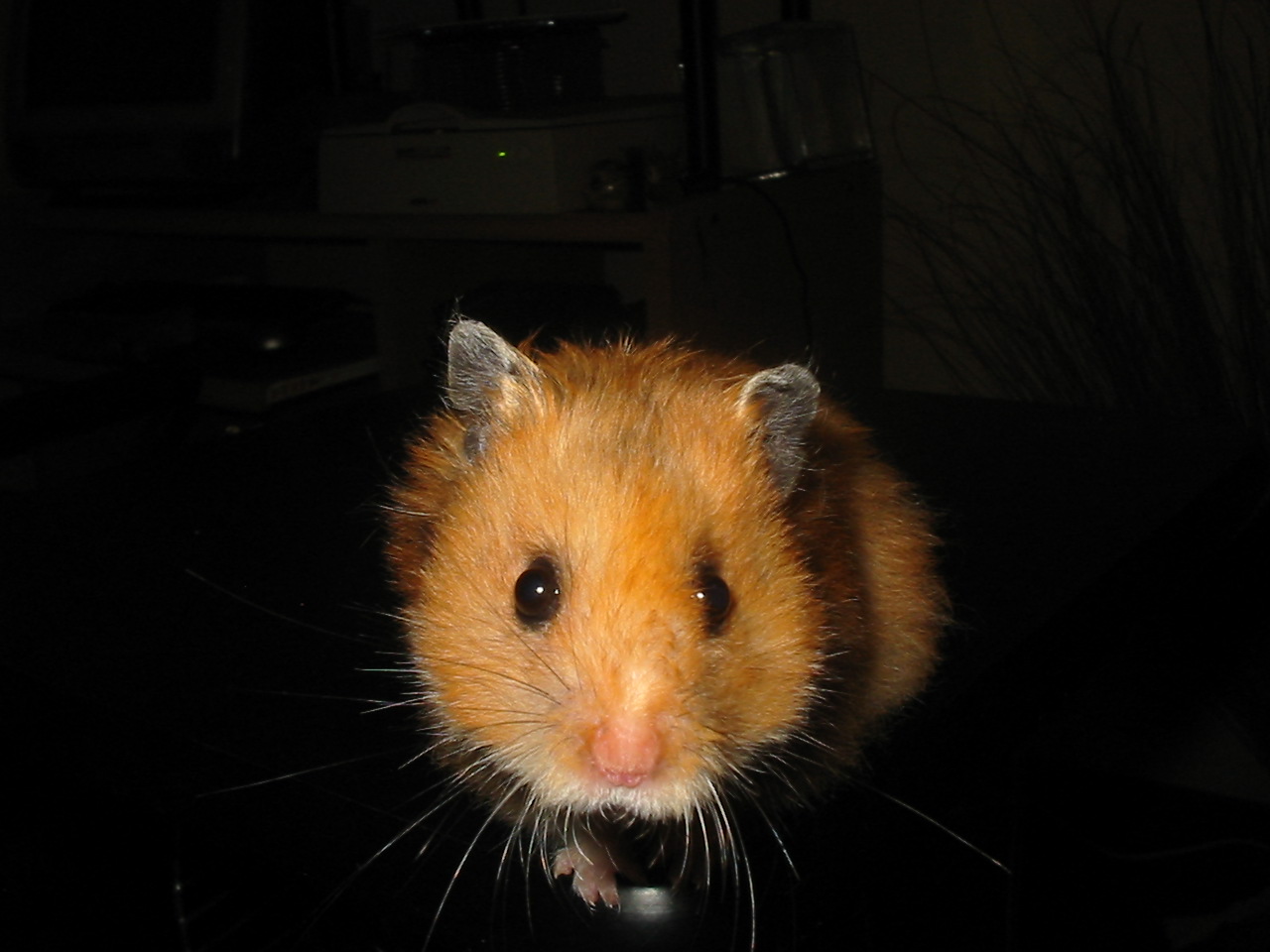
Don’t be fooled, this post is NOT about dogs or frogs or hamsters!

I tell you it never fails. I sit down to type, and everything I’d planned to say the night before, goes out the window. And mentioning the word window reminds me of the song How Much is that Doggy in the Window. Sir Brain is following that string again—completely off subject. Here’s a funny dog video, then I promise to get back to my post!


Okay folks. Looking to get rich? After viewing a dozen Doggy in the Window YouTube videos, I conjecture you can make a million by producing a quality Doggy in the Window quick flick.  Who is with me?

Oh, one more…. You have to blast this one! It will cheer you up! 


Last night I was up until one in the morning, again!

I was typing a letter, in that therapeutic fashion, with no intention of giving the letter to the recipients. I was planning on sharing the letter with you. Until I woke up this morning and decided the process of writing was healing enough.

And then I thought (that nasty th word again) to share another letter I wrote—which took about four hours—the letter that I will probably be sending to the dean of the university. It outlines in a professional and factual tone the demeaning words one of my professors said to me after class. I was very much an innocent in the situation, and I offer this fact with sincerity and clarity.  Even would swear on something, which is a ritual I don’t quite understand.

Nonetheless, sometimes there is a discrepancy in my mind, let’s say 99% of the time, and I can see the error of my ways, and how I most definitely contributed to an outcome. On the flipside, I can also recognize when I contribute something for the benefit of someone else. In this situation, with the professor, I was a victim. (Picturing a Salem witch trial and people without health insurance.)

I decided, in the end, not to present either letter, because I began to understand my motives. Something I try to be in touch with quite often: the whys of my words and actions. Which, in and of itself, the continual inner questioning, makes for a circus of self-criticism. Perhaps I shall develop a way to question without the critique. And let you know in the next millennium or so, how that pans out.

In questioning my motives to present the letters, I realized I wanted your empathy. I wanted your comments about how you felt so sorry for me, how outraged you were, how terribly sad and teary-eyed you were after reading my words.

And I thought, is that the vibe I truly desire to put out there: come hither; gather round my fire of sorrow and pity me. Support me. Lift me. Concur. Share in my sufferings. I’m shaking my head and squinting my eyes and mouthing, “No.”

Of course there are times when ranting and venting are therapeutic, and I don’t judge those who need to put the frustration all out there. I would say in the majority of cases, venting on a blog is probably a lot healthier than many alternatives—like having a heart attack or throwing a pan at your husband.

I’ll get through this event fine, just as I always do. I understand, to some extent, that my journey is a continual series of lessons. You know those sitcoms that reach 100 episodes and get duplicated in mass production on to dvd’s. Shows like Friends and Seinfeld; those shows you can always find broadcasting somewhere. In a way, my life lessons are somewhat syndicated, in the sense that my life lessons seem to be the same episodes over and over.

I joke that I’m one of those rascal spirits that stood in front of a board of wise spiritual advisors, before my birth, and presented a grand life plan. I was full of pride and accomplishment.

Upon review of my plan, the advisors all laughed hysterically in unison, proclaiming, “No way. Not approved. Too much learning.”

And me, I stood there, all brave like, with little wobbly knees, (as I image myself quite petite in the other realm), and responded, “Oh. Don’t worry. I can handle it!”

And they raised their brow and shook their heads, before waving me on with a sarcastic tone: “Good luck with that.”

Only, I didn’t understand sarcasm.

Then I figure, the door shut and they all had a good laugh.

The jokes on me! Ha! Ha! Ha! (Please insert a bratty-tone to my laugher.)

When situations get rough, as they often somehow seem to do—The Darn Plan is to blame. Often I stare up (or across, or somewhere) to the powers that be (that I purposely choose not to quantify, to avoid unnecessary defense and questioning from my readers), and say, “You were right. I made a mistake! I take it all back. Change the plan. I can’t take the heat!”

But no one answers. Except sometimes my spastic-colon dog, who thinks I screamed treat!

I think my super radical plan came with a contract, and that I signed off all rights for alterations after I took human form. Does anyone know of a life contract lawyer?

The good news is I’m about 200 times stronger than I was forty years ago. Because I figure I’ve been challenged by significant circumstances at least four to five times a year and that I gain one point for each challenge I overcome, which puts me somewhere between the vicinity of 160 and 200 growth points. (Multiplied 40 years by 4 or 5.) Just call me spitfire! ? Did you know that spitfire means: Highly emotional. Someone that is wild and free, without a care in the world. Considered strong and emotionally spiritually. Someone’s whose angry words are like fiery ice. A high-spirited out spoken female. Usually loud, lusty, lovely and pretty and untouchable. Typically a red head. ?

Okay, then, so I’m not a spitfire, but my alter ego is! And that weenie, who stood up to the board of advisors and thought this life was a manageable plan, was certainly, if not a spitfire, out of her mind.  (Which I’m thinking now is very accurate, because if she didn’t have a body—she would be out of her mind! I love the way I think. I really do. I’m a laugh a minute. There’s never a dull moment with LV (little voice in my head), Sir Brain (squishy ball), and Prophet in my Pocket.

I’m thinking….lol

…I’m planning on starting a dictionary for my blog, for inexperienced new readers, so I don’t need to keep explaining LV, Sir Brain, and Prophet in my Pocket. And, since I’m assuming, more characters in this fictional-like story of my life, will continue to surface, I ought to start the dictionary now, rather than later.

I want to include the word hamping.

Hamping is what I’m calling the loops that go on in my mind. Where I have a repetitive thought that I can’t dispel. You understand, I think…just imagine those times you’re on the couch and all you can hear is the chocolate calling you from across the room. “Just one more piece. Just one. What harm can it do? I deserve a little pleasure in my life. Gosh darn it, I’m getting myself a piece of chocolate.” And then you sit back down, after devouring half the bar, and all you can think about is the other half you placed up high on the top shelf so you couldn’t reach it without a lot of effort. And you’re wondering where you put the stepladder.

That’s hamping. I call it hamping, because I imagine a cute fuzzy hamster.  If I’m going to have repetitive thoughts, I might as well be adorable while partaking in the process. The hamster is in a cage on a wheel spinning round and round. He can’t help his little old self. Can’t get off, even though he knows he’s going nowhere and that the cat thinks he looks really stupid (and delicious).

Tomorrow I’d like to be able to post all these other stories I’ve been savoring. I have a whole list (in my head), such as my ghost encounter; the premonition of my childhood dog dying; the terrors of college. Wow! Now that I’m listing them all out, I’m thinking I savor the doom and gloom. Melancholic at it’s best!

Well folks, I’m off to go work on the Everyday Aspergers Dictionary now. Or hunt for chocolate. Probably chocolate. LV, Sir Brain, and Prophet are still dancing to Who Let the Frog Out!  As I listened to the song ten times while editing.  Oh! I just found a new character:  Crazy Frog—he’s the one that keeps me laughing.

* You can YouTube “Crazy Frog” for more upbeat music.