Day 65: Blue

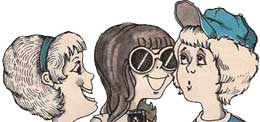
three womenhttp://www.youtube.com/watch?v=VILWkqlQLWk

Blue is the color for April’s Autism Awareness Month. Proud moms are coloring their hair blue. Kids’ pictures on Facebook are tinted blue. People are donning blue ribbons and displaying blue symbols. I thought this short story, entitled Blue, was fitting for the cause.

I wrote this piece several years ago, as part of a manuscript.  I have since broken the manuscript into several short stories. Some of which I share on this blog.

Learning to write took a lot of hard work and practice. In the beginning, I wrote every single day (but one day in April) for a year. I was still a terrible writer then, in my opinion, entirely obsessed with my works, and reading my prose to anyone who would listen.

After the first year of writing, I spent another year editing. Then another year rewriting. Then another rewriting, yet again. I calculate that I spent fifteen hours on each page of the two hundred fifty pages. My biggest hinderance to writing was  my dyslexia and difficulty seeing errors. Also, I had a tendency to mix up words and punctuation, and a habit of rambling. (Smiling.)

I hope you enjoy this story.

Blue 

Everything inside was blue—the seats, the ceiling, the floor, even the steering wheel.  I tugged on a string from the backseat cover, wrapping layer upon layer of blue taught around my finger.  This mid-afternoon it was my tiny index finger which turned a slight shade of indigo.

“Nothing to get hung about,” Mother sang out smiling happily, as if the coming rain had already washed away her worries.  She didn’t have a singing voice, never had, but the effort and soul were there, the wanting to sound good, and the need.  Inside the rearview mirror, her eyes the color of amaretto, glimmered, reflecting the narrowing sunlight. From the backseat I hummed along to Strawberry Fields Forever and jingled my clear-red plastic piggybank in the air, lifting him high and turning his gaze outside.

High atop the rolling grassy hills the enormous oaks stood like rows of fresh cut broccoli, rich and green—the bold color before the broccoli is boiled to a dull olive.  In the shadows of the day tall eucalyptus trees were sprinkled between the weathered fruit stands; their silvery leaves rustling, fluttering up and back, yielding to the autumn wind.  I winked one eye, then the next and then winked several times again to form patterns of gray, brown and green.  A gust of moist wind pushed in through the partially-opened side window, tossing Mother’s chestnut hair and bringing a sharp scent of diesel smoke and wet asphalt… (full story available in the book Everyday Aspergers)


© Everyday Aspergers, 2012. Unauthorized use and/or duplication of this material without express and written permission from this blog’s author and/or owner is strictly prohibited. https://aspergersgirls.wordpress.com

Day 64: All Things Feminine

I’ve named my new laptop Samantha Craft II. It’s not narcissistic, if that’s what you think, because Samantha Craft is my blogging name. Which only makes me pseudo-narcissistic.

I’m reporting to you from the comfort of my living room couch. I’ve removed myself from the dungeon of our study—a box-of-a-room with no windows, set in the center of our daylight basement. Daylight is not literal. I live in Washington State.

Don’t get me wrong. I’m happy to have the office space, and a room that is entirely dedicated to computers, books, and piles of mundane paperwork. But with the surfacing of my vampire-like traits, (since moving here), my windowless office exaggerates my radically pale complexion and morbid (but intriguing) thoughts of luxury coffins.

I will be visiting my huge iMac computer (that I adore) soon. But for now, I write in blissful comfort. Truth be told, I do, in a slight way, feel like I’m cheating on my virtual iMac boyfriend. Though, I think I’d like to make my laptop a girl, only because we need more female energy in this house; and my laptop could feasibly be my new “Get up and go Gal,” since my best friend, who lived the next door over, moved to Connecticut!

I’m still suffering from abandonment issues. Sigh.

I am officially a lounge lizard. My tongue feels longer. I thought of posting a photo of my tongue, because it is substantially long and I can almost touch the tip of my nose. But who knows what type of weirdos are out there, what they might conclude. I don’t want anyone thinking I have a big, long nose!

(When I first wrote the sentence above, I accidentally substituted knows for nose. I crack myself up to no end.)

I sense Crazy Frog popping in with his quirkiness—something about wanting to make the laptop an actual female lizard and his potential mate for life.

I do sense this laptop has feminine energy. Although, I’m noticing the word feminine bothers me. Mainly because I’ve been indoctrinated with all of those feminine napkin commercials and advertisements since birth! Anyone else harbor word-issues as a result of massive advertisement campaigns?


I’ve discovered I’m not so strange after all! According to Live Science in cooperation with Scientific America, people are prone to assign a gender to inanimate objects and people see odd numbers as male and even numbers as female. Take that! You mental health professional of the past who raised a brow at the fact that number three IS a male! Seems I’m not such an odd duck after all. Or rather we are all odd ducks together.

By the way, if you Google feminine napkins, a lot of information about Cooties shows up!

Disposable menstrual pads grew from Benjamin Franklin’s invention designed to save soldiers with buckshot wounds.” Who knew!

This YouTube has an inappropriate word at the end. I just pretended I was at a comedy show.

My feelings aren’t so far off the mainstream when the whole feminine napkin icky-feeling-word is concerned.  In a research study, mentioned in Psychology Today, when a package of cookies in a shopping cart was touching a box of feminine napkins, participants viewed the shopping cart significantly less desirable, when compared to the other participants who had viewed the cart where the two packages were not touching.

More on Feminine:

While learning French in high school, and again in college, I was fascinated that the English language does not use gender nouns; and more so in awe that other languages do have gender nouns. By the way, I can only speak ten French words now and translate the one English sentence “I only eat the vegetables” into French.

In English all nouns are neutral and the gender is shown through the form of the word. However, in a quick review of some gender-based nouns, I’m realizing that oftentimes the female counter part is not used at all or implies a derogatory statement.

Take these for example:

actor – actress          (Actor is used often for both.)

bachelor – spinster    (Spinster…such a nice word.)

billy – nanny             (Have you ever hired a billy?)

bull – cow                (We eat the cow.)

dog – bitch               (No explanation needed.)

leopard – leopardess (Is that the sexy term for leopard?)

peacock – peahen     (I’ve been calling all those females peacocks!)

Le champion des dames (detail), 1451.
Martin Le France (1410-1461), Public domain. From: W. Schild: Die Maleficia der Hexenleut, 1997.

According to Maxson J. McDowell,

(Is that a cool name or what? Oh! That’s my iMac’s name! Yes, it is. Starting now.)

According to Maxson J. McDowell, trolls and witches represent repressed or split-off feminine.

That’s encouraging. (Sarcasm). Does that mean when I lose aspects of my feminine self I become a witch or troll? If that is the case, then I am firmly sticking with Princess Vampirette Abyss. Watch out ladies. Keep painting those fingernails, dying that hair, buying those push up bras, plucking those brows, shaving those pits—don’t turn into a troll.

My idea of feminine? On the Internet I found images of big busts, hour-glass figures, Marilyn Monroe, flesh, flowers, pale-skin, big lips…

Personally I like the YouTube I found of feminine burping collection. Although now, I swear my coffin-study, that I’ve now returned to, smells like pickles and beer.

Don’t blame me! You signed up for this!

Day 63: People Are Strange

For the 4-Play of my writing today, I watched cheesy videos on the Internet and learned:

59 million people have listened to a lady repeat the phrase “sitting on the toilet” about sixteen times. I played it twice and tried to count, and gave up. It ends with a flush.

19 million watched a “fat kid on rollercoaster” for 57 seconds. Who posts that?

35 million people watched a ninja baby for 36 seconds. That one was sort of cute.

10 million watched “young girl drops c-word on national TV…Twice.” It was on the Today Show.

Now I’m watching something called “Extreme Face Omelet.”

Each day I live, I become more confused by culture.

It’s been about an hour, and I’ve yet to find something I’d actually want to share with you. Except for the fact that my husband thinks I’m stranger than ever.

After watching freaky eaters, strange addictions, soggy flappy faces in slow motion, and Weird Al, and the like, I am quite worried that if alien life forms have access to human’s video clips, they’ll choose to extinguish the entire human race.

I’ve concluded: People are Strange.

At least we’ll always have the Brady Bunch.

My husband wanted me to remind you that the Brady Bunch lost to the dog act when they did their Keep on Movin’ dance scene.

Today, I was planning to share a story about how I was beaten with a board by strangers when I was a little girl. Now, after my introduction, I’m laughing and realizing child abuse just doesn’t fit with the feel of this post. So I’m keeping with the Strange Theme.

Unverified Strange Facts About People

Unverified because I’m not in college anymore, and I do not want to back things up with research ever again! Please keep in mind, my idea of strange is subjective and may not accurately represent your idea of strange.

  1. Some people let snakes slither on their backs for a snake massage. The treatments are said to ease migraines and soothe sore muscles.
  2.  In a sleep study researches discovered dreams prevent psychosis.
  3. Charles Dickens slept facing North. He believed this act would improve his writing.
  4. There are more collect calls on Father’s Day than any other day of the year.
  5. Thomas Edison was afraid of the dark.
  6. In a survey Americans revealed banana was their favorite smell.
  7. Married men change their underwear twice as often as single men.
  8. On average 100 people will choke to death on ballpoint pens each year.
  9. On average a person farts 14 times a day.
  10. The earth could be repopulated to its current population level by the number of sperm that could fit in an aspirin capsule!
  11.  You are actually reading what I write in detail.

*Important side note: The colder the room you sleep in, the better the chances are that you will have a bad dream. That’s why I’ve had so many bad dreams since moving to Washington State.

Famous People With Autism (Unverified but cool!)


For those of you who need more:

Weird Laws Around the World

Top Ten Festivals for People to Throw Things


Day 62: Females with Asperger’s Syndrome (Non-Official) Checklist

I invite you to take a look inside of my book Everyday Aspergers.

Take a look here.

(I just deleted an entire paragraph explaining why I am uncomfortable with self-promotion. I’ll spare you the details!)

Hello All.

I hope you are well during these challenging times.

I am writing to provide a few updates (2020) for anyone who happens upon this page.

My third blog is a bit hard to find, since I changed the domain name. Here is the direct link to Everyday Autistic. My artist’s blog is Belly of a Star.

Here is the Autistic Trait’s List.

Here is my company website Spectrum Suite LLC, which includes 100s of resources and our services page.

Here is a link to one of my Linkedin Articles that will bring you to my profile and some articles there!

My new works include much advocacy for Universal Design in the Workplace, which equates to true inclusivity, where all employees are given opportunity to the same support measures and community engagement, such as the same best-practices interviews, job coaches, support team; not just one marginalized minority, e.g., autistic individuals.

I am working on a book on empowerment on the autism spectrum.

I am my waving from afar, and wishing you so very well! I cannot believe it’s been 8 YEARS!

Feel free to connect on twitter or Facebook.

I’m on the bottom right, in the photo below, speaking at the Stanford Neurodiversity Summit. You can find out what we’ve been up to on the website. Here is a 10 hr.+ video of Day 2 at the Summit!

My book is now available around the world in paperback! Check out Barnes and Noble or Amazon.

Everyday Aspergers is an unusual and powerful exploration of one woman’s marvelously lived life. Reminiscent of the best of Anne Lamott, Everyday Aspergers jumps back and forth in time through a series of interlocking vignettes that give insight and context to her lived experience as an autistic woman. The humor and light touch is disarming, because underneath light observations and quirky moments are buried deep truths about the human experience and about her own work as an autistic woman discerning how to live her best life. From learning how to make eye contact to finding ways to communicate her needs to being a dyslexic cheerleader and a fraught mother of also-autistic son, Samantha Craft gives us a marvelous spectrum of experiences. Highly recommended for everyone to read — especially those who love people who are just a little different.”~ Ned Hayes, bestselling author of The Eagle Tree

https://www.book2look.com/book/KRksrIxTxr

Females with Aspergers Non-Official Checklist

By Samantha Craft of Everyday Asperger’s, March 2012

This is a non-official checklist created by an adult female with Asperger’s Syndrome who has a son with Asperger’s Syndrome. Samantha Craft holds a Masters Degree in Education. Samantha Craft does not hold a doctorate in Psychiatry or Psychology. She has a life-credential as a result of being a female with Asperger’s Syndrome and being a parent of a child with Asperger’s Syndrome. She has created this list in an effort to assist mental health professionals in recognizing Asperger’s Syndrome in females.

Suggested Use: Check off all areas that strongly apply to the person. If each area has 75%-80% of the statements checked, or more, then you may want to consider that the female may have Asperger’s Syndrome.

Section A: Deep Thinkers

1. A deep thinker

2. A prolific writer drawn to poetry

3. Highly intelligent

4. Sees things at multiple levels including thinking processes.

5. Analyzes existence, the meaning of life, and everything continually.

6. Serious and matter-of-fact in nature.

7. Doesn’t take things for granted.

8. Doesn’t simplify.

9. Everything is complex.

10. Often gets lost in own thoughts and “checks out.” (blank stare)

Section B: Innocent

1. Naïve

2. Honest

3. Experiences trouble with lying.

4. Finds it difficult to understand manipulation and disloyalty.

5. Finds it difficult to understand vindictive behavior and retaliation.

6. Easily fooled and conned.

7. Feelings of confusion and being overwhelmed

8. Feelings of being misplaced and/or from another planet

9. Feelings of isolation

10. Abused or taken advantage of as a child but didn’t think to tell anyone.

Section C: Escape and Friendship

1. Survives overwhelming emotions and senses by escaping in thought or action.

2. Escapes regularly through fixations, obsessions, and over-interest in subjects.

3. Escapes routinely through imagination, fantasy, and daydreaming.

4. Escapes through mental processing.

5. Escapes through the rhythm of words.

6. Philosophizes continually.

7. Had imaginary friends in youth.

8. Imitates people on television or in movies.

9. Treated friends as “pawns” in youth, e.g., friends were “students,” “consumers,” “soldiers.”

10. Makes friends with older or younger females.

11. Imitates friends or peers in style, dress, and manner.

12. Obsessively collects and organizes objects.

13. Mastered imitation.

14. Escapes by playing the same music over and over.

15. Escapes through a relationship (imagined or real).

16. Numbers bring ease.

17. Escapes through counting, categorizing, organizing, rearranging.

18. Escapes into other rooms at parties.

19. Cannot relax or rest without many thoughts.

20. Everything has a purpose.

Section D: Comorbid Attributes

1. OCD (Obsessive Compulsive Disorder)

2. Sensory Issues (sight, sound, texture, smells, taste)

3. Generalized Anxiety

4. Sense of pending danger or doom

5. Feelings of polar extremes (depressed/over-joyed; inconsiderate/over-sensitive)

6. Poor muscle tone, double-jointed, and/or lack in coordination

7. Eating disorders, food obsessions, and/or worry about what is eaten.

8. Irritable bowel and/or intestinal issues

9. Chronic fatigue and/or immune challenges

10. Misdiagnosed or diagnosed with other mental illness and/or labeled hypochondriac.

11. Questions place in the world.

12. Often drops small objects

13. Wonders who she is and what is expected of her.

14. Searches for right and wrong.

15. Since puberty, has had bouts of depression.

16. Flicks/rubs fingernails, flaps hands, rubs hands together, tucks hands under or between legs, keeps closed fists, and/or clears throat often.

Section E: Social Interaction

1. Friends have ended friendship suddenly and without person understanding why.

2. Tendency to over-share.

3. Spills intimate details to strangers.

4. Raised hand too much in class or didn’t participate in class.

5. Little impulse control with speaking when younger.

6. Monopolizes conversation at times.

7. Bring subject back to self.

8. Comes across at times as narcissistic and controlling. (Is not narcissistic.)

9. Shares in order to reach out.

10. Sounds eager and over-zealous at times.

11. Holds a lot of thoughts, ideas, and feelings inside.

12. Feels as if she is attempting to communicate “correctly.”

13. Obsesses about the potentiality of a relationship with someone, particularly a love interest.

14. Confused by the rules of accurate eye contact, tone of voice, proximity of body, stance, and posture in conversation.

15. Conversation can be exhausting.

16. Questions the actions and behaviors of self and others, continually.

17. Feels as if missing a conversation “gene” or thought-“filter”

18. Trained self in social interactions through readings and studying of other people.

19. Visualizes and practices how she will act around others.

20. Practices in mind what she will say to another before entering the room.

21. Difficulty filtering out background noise when talking to others.

22. Has a continuous dialogue in mind that tells her what to say and how to act when in a social situations.

23. Sense of humor sometimes seems quirky, odd, or different from others.

24. As a child, it was hard to know when it was her turn to talk.

25. She finds norms of conversation confusing.

Section F: Finds Refuge when Alone

1. Feels extreme relief when she doesn’t have to go anywhere, talk to anyone, answer calls, or leave the house.

2. One visitor at the home may be perceived as a threat.

3. Knowing logically a house visitor is not a threat, doesn’t relieve the anxiety.

4. Feelings of dread about upcoming events and appointments on the calendar.

5. Knowing she has to leave the house causes anxiety from the moment she wakes up.

6. All the steps involved in leaving the house are overwhelming and exhausting to think about.

7. She prepares herself mentally for outings, excursions, meetings, and appointments.

8. Question next steps and movements continually.

9. Telling self the “right” words and/or positive self-talk doesn’t often alleviate anxiety.

10. Knowing she is staying home all day brings great peace of mind.

11. Requires a large amount of down time or alone time.

12. Feels guilty after spending a lot of time on a special interest.

13. Uncomfortable in public locker rooms, bathrooms, and/or dressing rooms.

14. Dislikes being in a crowded mall, crowded gym, or crowded theater.

Section G: Sensitive

1. Sensitive to sounds, textures, temperature, and/or smells when trying to sleep.

2. Adjusts bedclothes, bedding, and/or environment in an attempt to find comfort.

3. Dreams are anxiety-ridden, vivid, complex, and/or precognitive in nature.

4. Highly intuitive to others’ feelings.

5. Takes criticism to heart.

6. Longs to be seen, heard, and understood.

7. Questions if she is a “normal” person.

8. Highly susceptible to outsiders’ viewpoints and opinions.

9. At times adapts her view of life or actions based on others’ opinions or words.

10. Recognizes own limitations in many areas daily.

11. Becomes hurt when others question or doubt her work.

12. Views many things as an extension of self.

13. Fears others opinions, criticism, and judgment.

14. Dislikes words and events that hurt animals and people.

15. Collects or rescues animals. (often in childhood)

16. Huge compassion for suffering.

17. Sensitive to substances. (environmental toxins, foods, alcohol, etc.)

18. Tries to help, offers unsolicited advice, or formalizes plans of action.

19. Questions life purpose and how to be a “better” person.

20. Seeks to understand abilities, skills, and/or gifts.

Section H: Sense of Self

1. Feels trapped between wanting to be herself and wanting to fit in.

2. Imitates others without realizing.

3. Suppresses true wishes.

4. Exhibits codependent behaviors.

5. Adapts self in order to avoid ridicule.

6.  Rejects social norms and/or questions social norms.

7. Feelings of extreme isolation.

8. Feeling good about self takes a lot of effort and work.

9. Switches preferences based on environment and other people.

10. Switches behavior based on environment and other people.

11. Didn’t care about her hygiene, clothes, and appearance before teenage years and/or before someone else pointed these out to her.

12. “Freaks out” but doesn’t know why until later.

13. Young sounding voice

14. Trouble recognizing what she looks like and/or has occurrences of slight prosopagnosia (difficulty recognizing or remembering faces).

Section I: Confusion

1. Had a hard time learning others are not always honest.

2. Feelings seem confusing, illogical, and unpredictable. (self’s and others’)

3.  Confuses appointment times, numbers, or dates.

4. Expects that by acting a certain way certain results can be achieved, but realizes in dealing with emotions, those results don’t always manifest.

5. Spoke frankly and literally in youth.

6. Jokes go over the head.

7. Confused when others ostracize, shun, belittle, trick, and betray.

8. Trouble identifying feelings unless they are extreme.

9. Trouble with emotions of hate and dislike.

10. Feels sorry for someone who has persecuted or hurt her.

11. Personal feelings of anger, outrage, deep love, fear, giddiness, and anticipation seem to be easier to identify than emotions of joy, satisfaction, calmness, and serenity.

12. Situations and conversations sometimes perceived as black or white.

13. The middle spectrum of outcomes, events, and emotions is sometimes overlooked or misunderstood. (All or nothing mentality)

14. A small fight might signal the end of a relationship or collapse of world.

15. A small compliment might boost her into a state of bliss.

Section J: Words and Patterns

1. Likes to know word origins.

2. Confused when there is more than one meaning to a word.

3. High interest in songs and song lyrics.

4. Notices patterns frequently.

5. Remembers things in visual pictures.

6. Remembers exact details about someone’s life.

7. Has a remarkable memory for certain details.

8. Writes or creates to relieve anxiety.

9. Has certain “feelings” or emotions towards words.

10. Words bring a sense of comfort and peace, akin to a friendship.

(Optional) Executive Functioning   This area isn’t always as evident as other areas

1. Simple tasks can cause extreme hardship.

2. Learning to drive a car or rounding the corner in a hallway can be troublesome.

3. New places offer their own set of challenges.

4. Anything that requires a reasonable amount of steps, dexterity, or know-how can rouse a sense of panic.

5. The thought of repairing, fixing, or locating something can cause anxiety.

6. Mundane tasks are avoided.

7. Cleaning may seem insurmountable at times.

8. Many questions come to mind when setting about to do a task.

9. Might leave the house with mismatched socks, shirt buttoned incorrectly, and/or have dyslexia.

10. A trip to the grocery store can be overwhelming.

11. Trouble copying dance steps, aerobic moves, or direction in a sports gym class.

12. Has a hard time finding certain objects in the house, but remembers with exact clarity where other objects are.

This list was compiled after nine years of readings, research, and experience associated with Asperger’s Syndrome. More information can be found at https://aspergersgirls.wordpress.com © Everyday Aspergers, 2012 This non-official checklist can be printed for therapists, counselors, psychiatrists, psychologists, professors, teachers, and relatives, if Samantha Craft’s name and contact information remain on the print out.

Other Useful Links by Sam Craft:

116 Reasons I Know I have Aspergers

Another Important List of Traits 

1o Myths About Females With Aspergers
Day 60: Why People Read Blogs

Why am I here? Everyday Aspergers.

The Geek Posse got together and established a list of probable reasons why humans read blogs.

Why People Read Blogs (55 Reasons Humans Stare at a Screen)

1. Some are attracted to braggadocio and aggrandizement, and are prone to puffery.

2. Some are freedom-of-speech fans empowered by rebel-rousing topics.

3. Some want to know what contemporaries are thinking.

4. Some are dumbfounded and jealous-ridden, working tediously to uncover the truth behind the author’s large blog-following.

5. Some enjoy the adrenaline rush that accompanies provocative, offensive, and/or highly debatable subject matter.

6. Some are clueless as to why they keep coming back.

7. Some are stalkers, the age of twelve, or recently retired.

8. Some are scared to stop.

9. Some read out of courtesy and guilt.

10. Some are trying to promote their own blogs through the utilization of like buttons and commentary boxes.

11. Some followed a link from a search engine or social network, and still aren’t sure where they are.

12. Some are wisdom-gatherers from the forest of over-achieving, obsession, or boredom.

13. Some are paid to read; it’s part of their job description.

14. Some hate their job.

15. Some believe the author could easily transition from an online friend to a real world friend.

16. Some believe the blogger will give them an autographed copy of a soon-to-be published book.

17. Some are attracted to affective exchange.

18. Some are members of government, educational, or psychology agencies partaking in information gathering.

19. Some are entertainment junkies.

20. Some are in the process of making purchasing decisions.

21. Some are tense-issue seekers.

22. Some have empathetic listening ears.

23. Some dare to know themselves through others.

24. Some are bloggers who want to know their audience.

25. Some are victims of the bandwagon effect.

26. Some find relevance.

27. Some were pulled in by the ‘about me’ page.

28. Some are waiting to find relevance.

29. Some make connections with interactive readers.

30. Some are delighted by the unordinary and unexpected.

31. Some know that crazy people make great bloggers.

32. Some read what they could never say.

33. Some are adding a good laugh to their day.

34. Some like photos.

35. Some are fascinated by all things foreign.

36. Some are stay-at-home moms (mums) avoiding dishes and diapers (nappies).

37. Some long for ‘real’ friends.

38. Some read solely for enjoyment.

39. Some are voyeuristic lurkers.

40. Some want to hear the little voice in their head squeal again: “Yes! I know exactly what you mean.”

41. Some consider blogs online diaries.

42. Some are huge fans of geeks.

43. Some applaud brutal honesty and the raw truth.

44. Some are glimpsing into the ordinary.

45. Some are nosey gossips.

46. Some think the author is a ‘lovely’ person.

47.  Some people are curious about how others handle life.

48. Some are seeking direction.

49. Some want to get to know the writer.

50. Some appreciate fresh perspectives on ordinary facts and events.

51. Some love people who over-share.

52. Some abhor rubbish and repetition.

53. Some recognize talent.

54. Some need proof that normal and sane are nonexistent.

55. Some to know they are not alone.

Do I dare ask why you are reading?

© Everyday Aspergers, 2012. Unauthorized use and/or duplication of this material without express and written permission from this blog’s author and/or owner is strictly prohibited. https://aspergersgirls.wordpress.com

This list brought to you from Sam Craft’s brain. Like this list? Here are more.

Losing your Mind?

Blog Rules

Reasons I know I have Aspergers