Day 85: You’ve Got a Friend in Me!

Photo found at http://endeavortodiscover.com/scienceportal.html

My friend that I have known for almost twenty years visited me this weekend from out-of-town. Here is a list of some of the things I learned about proper etiquette during our weekend together.

You’ve Got a Friend in Me

1. Don’t take your vegan friend to dinner at a seafood and steakhouse restaurant, even if the place has a very nice water view.

2. Don’t forget to put a hand towel in the guest bathroom for hand drying.

3. Don’t forget to buy a box of Kleenex, so you don’t have to hand your friend a roll of toilet paper when she is crying.

4. Don’t give your friend unsolicited advice about her relationship with her siblings, especially if you are an only child.

5. Don’t interrupt your friend in the middle of her serious talk by leaning across the dinner table, tugging gently on her long blonde hair, and saying, “You have such pretty hair! You look like Rapunzel.”

6. Don’t accept a wrapped present from your friend, examine the shape of the gift, and before unwrapping, proudly ask, “Is this a framed photo?”

7. Don’t interrupt your friend in the middle of a joke with the punch line, even if you are super excited that you figured out the end.

8. Don’t tell your friend that the guest bedroom gives you the creeps a little bit; she might have trouble sleeping in there.

9. Don’t tell your friend that the previous owner of the house you live in filled the guest bedroom with wall-to-wall china dolls, because your friend might insist you sleep in the guest room with her.

10. Don’t tell your friend you’ll sleep in the same bedroom as her to make her feel safe and then quietly tiptoe out when she falls asleep.

11. Don’t tell your friend your son sees the ghost of your dog in the guest bedroom and that you think it might be a portal to another universe; because your friend will opt to sleep on the couch, despite the new pillow and new sheets you bought for the guest bed.

12. Don’t lean in real close and ask your friend if she can see the small zit you feel growing on the tip of your nose.

13. Don’t read ten posts of your blog in a row at midnight to your friend, even if she is laughing hysterically.

14. Don’t ask your friend if she could please listen to one more blog post, after she has yawned and said she is falling asleep.

15. Don’t show videos that you posted on your blog as an alternative to reading more posts, your friend will become more tired and her eyes will begin to shut.

~ Love you “L.” You’ve got a friend in me!


Artist:Randy Newman & Lyle Lovett
Movie:Toy story

You’ve got a friend in me
When the road looks rough ahead
And you’re miles and miles
From your nice warm bed
Just remember what your old pal said
Boy, you’ve got a friend in me
You’ve got a friend in me
You’ve got troubles, well I’ve got ’em too
There isn’t anything I wouldn’t do for you
We stick together and we see it through

You’ve got a friend in me

Some other folks might be
A little bit smarter than I am
Bigger and stronger too
Maybe
But none of them will ever love you the way I do
It’s me and you
And as the years go by
Boys, our friendship will never die
You’re gonna see
It’s our destiny
You’ve got a friend in me

20 Things Not to Say to a Person on the Autism Spectrum

Image found at takealeftatthemoon.blogspot.com


This is tailored to adults who were diagnosed with Aspergers, but the list can apply to many ages and many conditions other than Aspergers Syndrome.

20 Things Not to Say to a Person on the Autism Spectrum

1. Everyone feels like that sometimes.

2. Everything happens for a reason.

3. You’re fine. They have too many labels nowadays.

4. That reminds me of me. I wonder if I have that too.

5. Things could always be worse.

6. At least you don’t have autism.

7. Don’t worry. Be happy. Think Positive.

8. That’s no big deal.

9. You’re too serious. Get out of your head and help others.

10. Everyone has problems. Stop analyzing yours.

11. I never would have guessed. You seem so normal.

12. Are you sure? Maybe you need a second opinion.

13. Why do you think that?

14. That’s weird. Good luck.

15.  Aren’t you glad you found out?

16. That’s so trendy. Everyone thinks they have that.

17. Did you get an “official” diagnosis?

18. I’m uncomfortable with people classifying themselves by a diagnosis.

19. My cousin’s neighbor has Aspergers.

20. Well, now that you know, stop focusing on it, and get on with your life.


15 Beneficial Approaches 

1. Offer a warm smile and nod. Listen and comprehend.

2. I’m on your side. I’m here for you. You are not alone. I am here to stay.

3. Where can I find more information?

4. You are a strong person. I love you for being you.

5. Make a friendly call or send a friendly text or email.

6. What can I do? Tell me specifically. I want to help anyway I can.

7. Ask the person on a long walk, a picnic, or other excursion.

8. Hold a space for processing what that means to the person.

9. Do you need my support? How can I support you specifically?

10. Go to a matinee or rent a movie about autism or Aspergers.

11. Sincerely compliment the person.

12. Validate. This is a big deal!

13. Read personal accounts about living on the autism spectrum.

14. Thank you for confiding in me and trusting me. I am honored to know you.

15. If you are comfortable, can you tell me more about your experience?

© Everyday Aspergers, 2012. Unauthorized use and/or duplication of this material without express and written permission from this blog’s author and/or owner is strictly prohibited. https://aspergersgirls.wordpress.com Original title was 20 Things Not To Say to A Person with Aspergers.

Sam’s new book can be found at myspectrumsuite.com and on Amazon internationally.

Search for Everyday Aspergers.


Thirty-One: Y’all Come Back, Now!


If you missed Day Thirty’s post, it was a doozy (something extraordinary and bazar)! I had to include the definition. My post was extraordinary in that non-boasting way—out of the ordinary for me. Not so much bazar. Did you know Doozy is an Americanism. I am full-on stopping myself from wandering off and researching Americanism, and what words are Americanized; but if you get an itch, I say scratch it!

I always thought doozy came from the word bulldozer, because a bulldozer picks up an extraordinary amount of dirt, and dozer is similar to doozy. I was wrong.

Just last year, I learned that nosey neighbors do not partake in ease-dropping, they eavesdrop. I thought they eased their way into a conversation—that makes so much more sense than standing under the eaves so one can be in close proximity to overhear a conversation. Imagine trying to explain that one word of eavesdrop to a room full of second-language students. I used to teach second-language students. I would fail.  I can’t draw an eave. And don’t get me started on old wives’  tale….seriously? How about my lifelong version: old wise tale. Better, isn’t it?

My mom used to make a celery at her job (salary). I partook in a friendly game of chest (chess), until I was in my early twenties.  My boyfriend at the time found me simply hilarious. Hamburgers were ham-buggers. As in one of my favorite words: bugger-butt—it’s a term of endearment, in my book.

There is actually another human in the world besides me that Googled: when did the word bugger occur.  Oh my, I can’t share the origin here! Probably shouldn’t use it as a term of endearment anymore. No wonder I stopped eating meat. What’s another word for digress? (Laughing.) Digress also means ramble! Who would have known?

Before I so trade-markedly steered off tangent, Day Thirty’s post was the topic. Yesterday afternoon, I was confronted once again with the injustices of the world in regards to the treatment of my son with Aspergers. Pausing.

It’s so hard to write about this, when Crazy Frog is doing the Mexican hat dance in my head.

After the melancholy (but necessity, I might add) of Day Thirty’s post, Crazy Frog is making up in oddity, double-time. He still is trying to figure out where he was when Elephant plunged through. (If you haven’t looked at my lingo, yet. No doubt I’ve lost you. LINGO BUTTON.) There’s an awesome music video on the lingo page

See what I mean: I wrote this line for this post: “My heart was aflame in grief.”

My heart was. It really was. But not now! ‘Cause Crazy Frog is laughing at my words.

This is what Crazy Frog thinks is ridiculous: 

Melancholic Little Me Wrote in reflection of Day Thirty’s post: “As I wrote those words yesterday, a voice rose and spun up from the depths of me like a steel bristle brush. As it moved upwards, the brush swirled round and scraped off all this goop and gunk that had collected and stuck like barnacles to the symbolic-flesh of my very soul. The words excavated, don’t do the experience justice. I don’t know where this new part of me had been hiding, but I reckon she’s a part that was pushed down right about the time I was four years of age. She’s a feisty thing, all done up, like a strong and mighty male elephant, with a silky-sweet interior. She’s the one hiding behind the curtain. “

Here’s where Crazy Frog stepped in to avoid me going into deep emotional, opposite-of-bliss state. Notice how my voice and inflection change: “Anyhow, this voice, she was mighty powerful, and as I think about her I get an odd Southern dialect mixed in with some back-woods cowboy. Crap? Is backwoods cowboy offensive? Oh! It is. In-bred rednecks. Interesting. It’s actually racist; and I didn’t even know. Is it okay to use the words still, since my relatives have the last name McCoy and lived on a farm near the woods with over twelve children? No offense intended to any in-breeds out there. Or to my family. I guess?? I’m getting flashbacks of when I used the term…(omitted) Oops! I reckon I best be stopping myself right there.

Life is hard, when I can’t even get through a paragraph without worrying about burning someone’s britches. Oh, that doesn’t make sense. I used burning britches the wrong way. I give up. I did find a neat article about eavesdropping and its origin, but I can’t include the link, because the poop-head (LV’s two cents; LINGO BUTTON) that wrote the article included some inappropriate jokes at the end. Seems to me that author has a bit of digression issues herself.”

I think that brief description  illustrates nicely the difference between Little Me (melancholic) and Crazy Frog.

And my point? I spent all day thinking about yesterday’s post—the meaning, the release, the seriousness—until I realized a part of me had resurfaced, one I hadn’t connected with in a very long time. So I’m adding Elephant to my lingo list, and letting Crazy Frog teach Elephant how to dance. (Remember he appears as a him but is a girl inside the elephant suit.) Wow! Real life is stranger than fiction.

I think I’ll take Little Old Me and join Crazy Frog and Elephant now, in that dancing. (Tipping my hat.) And  just let the dust settle from yesterday’s post. See what’s left behind in the dirt, after this backwoods cowgirl rides out into the sunset. Buenos noches. Y’all come back, now! You here.

Thirty: I am Elephant!

Days like today I want to find the highest mountain and shout in my loudest voice, “I am Elephant!”

I want to charge forward with my tusks at a massive pile of hay. Stab and stab with all my might, until no barrier is left, only scattered remnants that the animals can feed upon, digest, and carry away.

I hate, if I ever were to hate anything, the aspect of being misunderstood. I hate that my son is being misunderstood. I hate that I am misunderstood.  I feel as if we, as an Asperger’s “species,” have been set up for failure. As if we are supposed to make ourselves less genuine and honest, in order not to threaten others’ norms.

I understand we represent the unknown that exists outside the comfort box of many individuals. And when we surface, stand there face-to-face in conversation, the anomaly, if you will, is seen as a threat, an oddity, a discomfort; and we are made into this perceived entity that requires some degree of change or adaptation on our part.

I question what is it about the way I think and function that requires fixing and change. What if the way I think and function is ideal? Why is it that the majority believe their way is the right way, when all about them the world is falling apart from war, famine, lies, manipulation, blackmail, disease, hatred, bigotry, and poison? These named leaders play these games using their tricks. Wherein I, coming from a place of honesty and genuineness, am perceived as a threat.

Is the feeling of threat erupting from others’ insecurity or perhaps from the uncomfortable feelings that arise when one’s foundation of what is believed to be the right way is confronted?

Perhaps the way communication is currently played out is from a very limited and self-centered scope. Wherein there is this unspoken dance where I am expected to filter what I say, how I say it, when I say it, and how much I say, as to not risk causing discomfort to someone else.

Assuming I am reasonably self-aware, which I am, and I have no intention of ill will or harm, which holds true, and that I have generally mastered the basic social norms of avoiding insult or rudeness, then what other rules must I add?

It seems to me the other rules include this basket of techniques, sayings, buffering, limitations, and balancing that enable the recipient to feel better about him or herself, or at least not any worse. It seems to me a game where the first priority is to not make waves, to win the person over, to sound strong, and to sprinkle evidence of high intellect and likability, in order to allow the other person to feel comfortable enough to maybe begin to trust me.

Why is it that if I accurately and purposely reflect what the other person wishes to hear and see, that they embrace me and wrap the tentacles of interest around me; but other times, when I am entirely authentic, and I share without pretense, plan, or caution, I am questioned, perhaps even distrusted, judged, singled-out, ridiculed, or admonished? Why is it some human beings want to converse with clones of themselves and make me into their egocentric mirror, instead of knowing me?

Communicating is like driving down a dangerous road where there are warning signs at every turn. Beware!  Make sure your words are continually reinforcing the other person’s identity, perception, and worthiness. Avoid offending, weakening, or threatening a person’s idea of truth. Know that complete honesty triggers alarm in people. Understand that ultimately most people you approach already don’t trust you and you have to build and build trust before they will. Even then, know there will be people who will never trust you.

Why is it when I speak my truth some question my intention, my motive, my want, my need, my desire, my expected outcome, my reasoning, my life, my identity, my self-worth, my perception, my judgment, and/or my personhood? Are these seeds I need to plant seeds of dishonesty?

What if I am not the anomaly? What if my son is not the anomaly? What if the teenagers persecuting him with their bullying and snide remarks are the anomaly? What if my son is the teacher? What if Aspergers isn’t a syndrome or a disorder? What if Aspergers is a new mirror: a mirror that reflects back truth and honesty, and genuineness of spirit?

If communication is to based on a scale dependent on levels of trust, then a person sitting across from me in conversation is continually establishing how much they know me and trust me in order to decide what to share about him or herself, or his or her perception, facts, or experience. How do I decide which parts of me to hide?

Why isn’t communication the opposite of distrust? Why don’t people strip themselves of protective layers and speak their truth? Aren’t we all in search of love and attention? Companionship and sharing? Why don’t we all wear T-shirts that read: Love Me, Please. Isn’t that what we crave? Why is it so hard for someone to walk up to a stranger and say, “You look sad and lonely. I’m sad and lonely, too.”? Why is it people say so easily, “It’s a beautiful day” instead of “You’re a beautiful being”?

Strangers ask me, “Why are you being so nice? How did you become so kind?” or say “No one ever asked me that. Thank you so much for taking an interest?” And yet I am the one who knows not how to communicate naturally?

If withholding information is the norm, then I question the integrity of the establishment who dictates such norms. If one is to say to me, “Impossible; if we all spoke are truth the world would fall apart,” then I ask: “Is the world not already falling apart?”

The majorities’ opinion of what counts as the correct mode of communication style appears backwards and disproportionate. This fear-based approach contradicts the doctrines of many spiritual and religious foundations of unconditional love. I don’t understand this barometer I am supposed to carry into conversation—this inner dialogue, gut-feeling, or what have you, that informs me of what to withhold.

I understand to avoid crudeness, rudeness, defensiveness, argumentation, blame and downright meanness—as I see those derivatives of communication equally fear-based as the self-regulating barometer that predisposes the mind to beware of each and every encounter with another human being.

I do not understand the harm in sharing my authentic self and true feelings, if intention to harm and do ill will are abstracted, and what remains is the representation of the true being. Isn’t this what human race is striving for—the disrobing of falsehoods? Don’t people long for genuineness? If so, then why do I feel so oppressed? Why since my youth have my peers and authority continually been trying to snuff my light? Why do I feel as if I am to be locked in some prism of isolation, left alone with my thoughts, so the world outside doesn’t have to fear my reflection?

I am not bold, I am not brave. I am me! But so many people can’t see me.

I crave purity and truth. I abide by these elemental necessities. Yet, I am continually punished for not partaking in a ritual game, of following some unspoken norms of what is supposed to be. When everywhere I look around me the world is falling apart because of all the unspoken lies, manipulation, greed, and trickery.

This dictated “right” way to communicate, the fear-based approach where people say what is expected, and what the other person probably wants to hear, in order to get at some unspoken goal, appears manipulative, preplanned, and superficial.

Why in society is there a limit to what we are supposed to reveal? I understand donning clothing to conceal the taboo of the naked flesh. I can abide by this norm by simply cloaking my body. But to understand the taboo of sharing the naked spirit—I can find no such cloak. I do not know what to cover my truth in so that a person will listen without their ears first burning or their anger first churning. I do not know how to persuade someone to my side. I see no need, have no want of these things. And for this, again, I am lacking.

I watch as those that conform pass untouched in the night. While I remain oppressed because of my nonconformity. Why must I become an untouchable in order to walk freely? Why must I stay hidden in order to be accepted? As many times as I’ve been crushed and hurt, debased and stabbed in the back for sharing myself, I cannot learn another way to walk in this world. It as if the legs that carry me can walk no other way than the way in which my spirit intends. I am made to be silent or to remain in constant affliction. I am imprisoned by my own desire to be.

This is such a lonely and unspeakable place of pain and shame. And all about me professionals with man-invented degrees are claiming their “truths” of what I am, when they do not even know how to even see who I am. They are aliens dissecting me with their eyes, though they wear spectacles with blackened and tarnished glass. They can see nothing but their own imaginings and what has been told to them by others; others whom had things told to them; whom in turn had things told to them by others, with the origin residing in some theorist, who himself was likely twisted in his views and perception by his need to conform.

In my view, I am an elephant. Being an elephant, I know myself as an elephant. I know how an elephant eats, sleeps, dreams, and walks. And I know other elephants who walk in the same way. Who think in the same way. Yet, I have hyenas all about me telling me what an elephant is like. How an elephant should look and be. Who listens to a hyena to know what the elephant is, when an elephant is standing right beside?

Something must change. That is why I shout, “I am Elephant!”
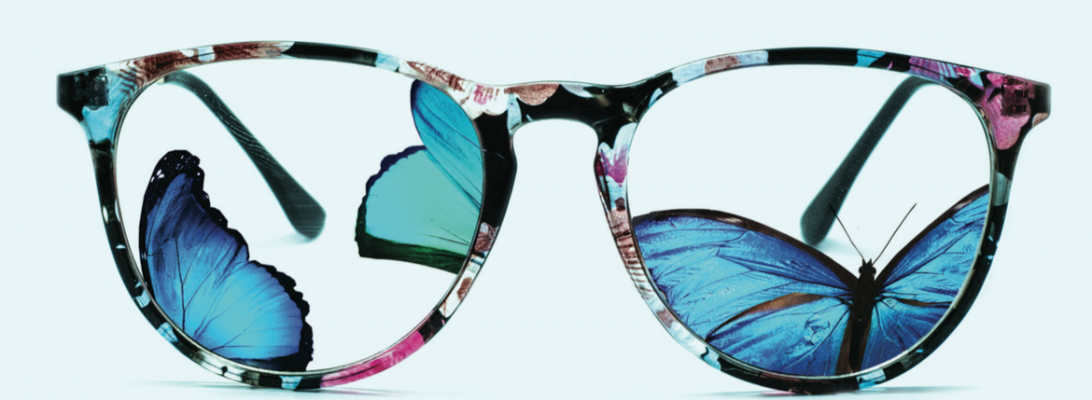
Twenty-Eight: Giving a Child with Aspergers a Break


Giving a Child with Aspergers a Break

Be. Let the words pour out of the child. Let the busy thoughts escape the mind. Let him speak as long as he wants about whatever he wants. Set no time limits. Welcome the rambling, digressions, repetitions, and dissertations. Be present, without interjection or correction. Allow time periods with no communication rules, lessons, examples, rights, or wrongs. Let the child release the pressure in his mind. Take long walks and car rides together, and just listen. Let him be himself.

Retreat. Grant her a day of rejuvenation, a full day with no visitors, appointments, outings, sports, or any mandatory doings. Keep the day free of all restrictions, chores, and obligations. Stay in pajamas. Allow escape, isolation, and repetitive activities. Give her the chance to rebuild her stamina. Provide solitude and comfort. Stay home from school one day. Peel away the rules and regiment. Let her retreat.

Environment. Ask about sensory concerns in the environment. What causes you discomfort in this space? How are the lights? The chair? The sounds? The smells? The flooring? The pictures? How do your clothes feel? Your hair? Your skin? Where is there discomfort? How can I help? What does it feel like? Describe it. How is the shower? The bath? Do you hurt? Where do you feel the safest sitting? What is hard to tolerate? Do you need sunglasses? A pillow? Earplugs? Let him create a more comfortable environment for himself.

Active Interest. Show interest in her special interest. Don’t call it an obsession or fixation. Call it an interest or passion. Participate. Explore and collect. Be together. Establish a schedule. Make the special interest a priority. Place the passion in a spotlight of acceptance. Establish a blog, newspaper, journal, comic, drawing, song, rhyme, act, or other creative outlet to express the interest. Let the creativity blossom. Welcome the opportunity for connection. Let go of the need to control, fix, alter, or end the special interest. Replace objection with acceptance. Replace disinterest with interest. Celebrate new discoveries. Use the interest as a therapeutic tool. Allow him the freedom to escape from the challenges of his world.

aKnowledge. Acknowledge characteristics, talents, skills, and intelligence. List positive attributes. Don’t pretend anything is easy. Be a warrior and teach how to be a warrior. Don’t try to change the child. Imagine how scary his world is. Tell him he is very brave. Tell him he is not alone in the world. Share others’ stories. Find an adult with similar challenges who is an effective role model. Watch movies about Aspergers. Know the child wants nothing more than to be good, to do good, and to feel good. Explain that he is never a failure and always a success. Tell him you hope he tries his best, but on the days he doesn’t feel like he can try, that’s okay. Tell him he has a right to hurt and be scared. Tell him he is a gift and that there is nothing he can do to make you stop loving him. Tell him he is perfect. Tell him even though you aren’t him, you can imagine how hard life must be for him. Ask how he is feeling. Never minimize or discount. Never say it’s not that bad or things could be worse. Say you are getting stronger and wiser every day. Believe in him.


© Everyday Aspergers, 2012. Unauthorized use and/or duplication of this material without express and written permission from this blog’s author and/or owner is strictly prohibited. https://aspergersgirls.wordpress.com.  spectrumgirls@gmail.com
This article may be printed for  home and school use. Please keep the Everyday Aspergers© on the printed page. Thank you.