Day 50: The Illusion of Normal

The idea of this concept called Normal is one of the grandest illusions of our time.

There is no normal.

Normal doesn’t exist.

All definitions of normal are debatable—as are the definitions of typical, average, and ordinary.

And what’s wrong with atypical, above average, and extraordinary, anyhow?

Normal, apparently, means behaving like most behave. But who are these most? And how do they behave? Show me the model. And PLEASE don’t point to a television program.

The definition of normal is particularly alarming, and highly debatable, when considering the Diagnostic and Statistical Manual of Mental Disorders (DSM), a guidebook for mental-health professionals. (Often referred to the mental-health clinician’s Bible.)

All mental-health practitioners in America categorize and diagnose millions of people by referring to the Bible of Abnormal—my word for the DSM.

No surprise that the definitions of normal changes with each publication of the DSM.

The new 5th edition of the DSM comes out in 2013, with newly proposed disorders and changes made to other disorders. It has been rumored that children tantrums will be a new disorder.

What about adult tantrums? Because I feel one coming on!

I’d like to see a Bible of Normal. I mean, if a whole thick book can list non-normalcies than shouldn’t the opposite book be available? Of course there is probably no profit to be made in a book on normal behavior, especially if the book were based on fantasy and trickery and not attached to a drug to cure normalcy.

No big surprise considering the times we live in to discover the DSM is driven by the machinations of the pharmaceutical business.

In fact, more than half of the experts who compile the DSM have ties to the pharmaceutical industry. (Published in the journal of Psychotherapy and Psychosomatics.) And other experts have other financial ties, such as research monies.

Thusly, the current idea of normalcy is a spawn of the introduction of psychoactive drugs in the 1950’s.  Hmmmm? I’m thinking I don’t particularly agree with how this normal came about. How about you?

There is a direct relationship: Psychoactive drugs were introduced to treat the DSM definitions of Mental Disorders and Illness.

A mental illness can be defined as: A psychological pattern reflected in behavior that disrupts a person’s thinking, feeling, mood, ability to relate to others and daily functioning. The illness cannot be overcome by willpower, and is not related to a person’s character or intelligence. In the majority of cases, mental illness usually strikes people in the prime of their life.

Rather ambiguous.

The pharmaceutical companies would like everyone to believe that many people have a mental illness, but that FORTUNATELY the illness is a highly treatable condition; by (buy) their drugs, of course.

Too bad the direct relationship isn’t: The Food Pyramid, Employment Opportunities, Community Support Systems, Herbal Remedies, Acupuncture, Massage, and other healthy alternatives were introduced to treat the DSM definitions of Mental Disorders and Illness.

http://www.wellsphere.com/wellpage/semi-vegetarian-food-pyramid
Image found at above web page.

You do know the powers that be in America do hope we get sick and fat so we will buy more drugs?

Beyond the tantrum I just had over the injustice of the world, I am also a wee-bit confused about the DSM’s definition of Asperger’s Syndrome. The limiting definition is based on only male subjects. I’m a girl last time I checked. The definition is not based on a great degree of research. Yet, these DSM collaborators (insert any word here you want) feel confident and comfortable enough classifying Aspergers.


In considering the definition of Aspergers Syndrome:

People are born with Aspergers.

It doesn’t just appear in the prime of one’s life.

People with Aspergers do have high intelligence.

I’m confused about this reclassification of Aspergers coming out in the new (and improved) DSM-V.  Asperger’s might be classified as a social disorder. Please!??

So the people who act like everyone else are the ones without a disorder, the so-called normal ones?

People who don’t express strong convictions are normal?

People who suppress their quirks?

People who are social conformists?

People who blindly follow the plutocracy? (government lead by the wealthy)

People who blindly follow the presumed authority figures?

If the definition of normal means to function in most areas of life successfully, what are these so-called areas? What is most? What does function mean?

Do I function, if I come across as the norm? Feel like the norm? Believe in the norm?

And please, please tell me what is success.

If we could gather  Gandhi, Mother Teresa, Martin Luther King Jr., Jesus, and other wise people, and ask them to explain their definition of success, I bet their success wouldn’t resemble most of what is portrayed in America’s normal media, advertisements, and entertainment.

I’m done following the DSM’s and pharmaceutical companies’ yellow brick road of normalcy. It leads to the man behind the current stuffing his sacs with money.

I’m happy with my own path. The path that leads to extraordinary!


Armless Piano Player YouTube

The Artist with No Eyes. Esref Armagan


Articles Related to The Illusion of Normal Below

Illusions of Psychiatry

What is Normal

A Comparison of DSM-IV and DSM-5 Panel Members’ Financial Associations with Industry: A Pernicious Problem Persists

Undue Pharmaceutical Influence on Psychiatric Practice: Steps That Can Reduce the Ethical Risk
Day 44: The ABC’s of Discrimination: I will not be made to feel ashamed of Aspergers!

Many of you know that I’ve held off on describing what I experienced recently while I was a student in the counseling program at the local university. I believe waiting  was a beneficial decision.

Today, I have arrived at a place of closure, over the events that have transpired. I cannot say I am at peace, but I am definitely thinking more clearly and feeling more centered than I have in weeks.

I believe now I have the capacity to share my experience with clarity and without undertones of self-pity and pain. I share primarily to expose the discrimination that can occur towards individuals with Asperger’s Syndrome. Please keep in mind I was a successful teacher for many years, earning the highest marks, and that I was never subjected to unjust criticism or unsolicited advice. No one knew I had Aspergers when I was a teacher. Not even me.

Yesterday I met with the Dean of Education, whom I found to be forthright, careful, and kind. She listened patiently as I lamented about my experiences with the professors. I cried for the entirety—a good thirty-minutes. Because of the position she holds at the university, there wasn’t much she could offer in terms of condolence or her opinions.

She did state, in so many words, that the group of professors heading the counseling department at the university tend to have “their views,” but that their views don’t represent everyone, of course.

Their views meaning the family system theory view.

Their views meaning: Asperger’s Syndrome is created and perpetuated by family members’ words, actions, subconscious drives, and by family dynamics. In other words Aspergers is not the result of brain functioning, environment, and/or genetics.  And Aspergers is definitely not a different way of looking at the world or high intelligence. Aspergers is a syndrome created by family members.

I can’t see myself striving in an environment where close-minded teachers are compartmentalizing individuals based on their own narrow and biased theories. Where they are desperately lacking in current theories and personal accounts regarding Aspergers. Where they have no interest at all to know how Aspergers manifests itself in individuals. Where I wasn’t once asked: What’s that like?

A place where I was queried by a licensed mental health therapist with a PHD in psychology, my professor: “Are you happy you have pronounced to the world your brain and your son’s brain are broken?”

A place where I was told that I had “likely manifested my own Asperger’s Syndrome in order to be closer to my son.”

A place where I was accused of taking my child to a psychiatrist, “so you (I) can put him on medication and not have to deal with the real issues.” (Not that it matters, but my son isn’t on any medication.)

A place where I received the following email from a professor after I professionally disputed a grade, because I was very aware the professor had not kept accurate records of student work: “Another faculty concern is tone and professionalism when communicating conflict. This is very important when requests are made both here in school and in your future work. You yourself, if you become a counselor, will need to remain calm and non-defensive in dealing with many clients who are upset and dysregulated.”

She prefaced this email with the assumption that since I had told her I had Asperger’s Syndrome that I was open to any of her advice.

There is more I could share, but I think this paints a clear picture.

In leaving the university yesterday, I carried away two of the dean’s statements:

1)   Based on everything you have told me I think it is best you don’t continue in the program.

2)   It is probably best if you don’t tell professionals you have Aspergers. It’s not the appropriate environment. They aren’t your therapists.

I am left perplexed and unsettled. I am concerned that this faculty will continue educating hundreds of counseling students. I am concerned that the dean is not instigating change.

And I have been turning over and over in my mind why Aspergers is something I was cautioned to hide.

Yes, I understand that by telling my professors I had Aspergers that I was treated differently, some would conjecture harshly. But is the solution for me to remain quiet and in hiding?

Is that what minorities have done in the past to be heard, to be seen, to achieve fairness, equity, and justice?

Is Aspergers such a widely misunderstood condition that I should retreat in shame?

This morning I came across this comment: “My son has just been diagnosed with Asperger’s Syndrome. My husband and I both sadly agree that we would rather that our son have diabetes.” (Paraphrased from a comment found on an online chat room.)

How is keeping my Aspergers hidden going to help this ignorance?

Here are more stereotypical views about people with Aspergers:

Negative

Pessimistic

Self-defeatist

Mindset of a child

Self-centered

Lack people skills

Only see the world through their narrow point of view

Difficulty expressing emotions

Insensitive

Lack empathy

Come across as know-it-alls

Behavioral problems

Fake their feelings

Poorly equipped to thrive

Benchwarmers

Geeks

Annoying

Stupid

Here is the truth of Aspergers

The REAL ABC’s Of Asperger’s

These attributes describe some of the wonderful qualities people with Aspergers possess:

A: Apologetic, Admit fault, Avoid superficial conversation, Accepting of quirks

B: Brilliant in chosen field of study

C: Capable, Caring, Complimentary, Creative, Clever problem solvers

D: Detail oriented, Driven, Devoted, Dauntless in Interests, Dependable, Deep Thinkers, Don’t Discriminate, Don’t have hidden agendas, Defend the weak

E: Enthusiastic, Exhibit Exceptional Endurance, Entertaining, Enlightened

F: Fact Finders, Forthright, Forgiving, Free from prejudice, Fruitful

G: Genuine, Good memory for facts and details

H: High-level of Integrity, Honest, Highly Focused

I:  Intelligent, Imaginative, Idealists, Ingenious, Instructive

J:  Justice seekers, Just

K: Knowledgeable, Kind

L: Loyal, Look for goodness and genuineness in friends, Listen without judgment

M: Memory can be exceptional, Memorable conversationalist

N: Not bullies, Not manipulative, Not deceptive, Not game players, Not inclined to lie and steal

O: Original thinkers, Open to new information, Outstanding, Optimistic despite setbacks

P: Puzzle solvers, Pattern finders, Pragmatic, Philosophical thinkers, Poetic, Passionately Pursue interests

Q: Quick learners, Quick thinkers, Question “truths” and opinions

R: Reliable, Regard others for their personhood, Routine establishers, Rule followers

S:  Sincere, Solution finders, Speak their mind, Strength in endeavors, Strong moral code, Sensitive to Sensory Stimuli

T: Talented, Trusting, Think in Pictures, Truth Seekers

U: Unique perspective and outlook

V:  Valiant, Vigilant, Advanced Vocabulary

W: Word interest, Witty humor, Wonderful Work ethics

X:  Non-Xenophobic

Y:  Youthful-outlook, Yearn for truth

Z:  Zestful, Zealous

I don’t know about you, but I think the world could do with a few more people like this!

Please share this page if you are inclined. I don’t know what my role is in all of this is, but I know I won’t stand in silence. I know the difference between right and wrong.

In love and peace ~ Sam Craft

© Everyday Aspergers, 2012. Unauthorized use and/or duplication of this material without express and written permission from this blog’s author and/or owner is strictly prohibited. https://aspergersgirls.wordpress.com

10 Traits of Aspergers

10 Myths about Aspergers

I am Elephant: Speaking up For Me

The World Needs People With Asperger’s Syndrome By Temple Grandin

Day Forty-One: To Blog or Blob? That is the Question.

The Blob Lives!

People with Aspergers incorporate different coping strategies in order to feel more comfortable. This post, I am pleased to report, is a fine example of such coping strategies, including:

  1. Humor
  2. Data Organization
  3. Tangents
  4. Analysis of Self
  5. Correction/Editing of Self
  6. Analysis of Others
  7. Research
  8. Interconnection of Data
  9. Data transformed into New Information

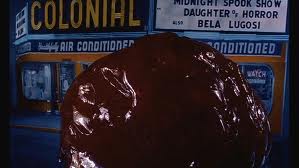
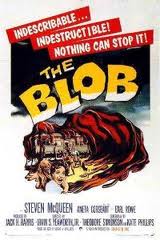
My original intention today was to report on how my blog has become a mind- and time-devouring entity, closely resembling the indistinct, formless entity from the movie The BLOB.


But, instead I deleted an entire, page-long list that had words such as: obsession, fixation, ice pack for shoulder pain, eyestrain, fear, and extreme anxiety. And replaced this here posting with the land of the blob. Which I know, and you know, has a much higher fascination-factor than a post about obsessive blogging.

Unfortunately, I planned on writing for only 30 minutes today, and instead I am further made blurry-eyed and pain-ridden. Once again, I was sucked in and consumed by my BLOG! The HORROR!

At this moment as I am typing, I have my computer in split-screen mode, and I’m watching the 1958 horror flick The Blob. If you are in the X Generation, there is a high probability that The Blob, (which was originally titled the Glob), rates in the top ten of all time horror flicks.  In the movie, an alien life form consumes everything in its path. As the blob devours, it continues to grow in size, until it resembles one massive lump of blood-red Jell-O. When the movie ends, the blob is dropped into the Arctic. Then a big question mark (?) appears on the screen, leaving little kids from the 1960’s and 1970’s to wonder forever, if the blog is in fact living in bedroom closets, streets, under beds, and in toilets.

Just think: if those Generation Xers had been told the blob was only a modified weather balloon and colored silicone gel, we’d have saved a lot of money on mental health therapy.

The movie makes me think of the words heebie-jeebies and jeepers-creepers, both words that Louis Armstrong has perfected, by the way.

I’m still watching the movie, and finding the scenes rather dull. Waiting for the blob to show up.


Here are some conclusions I reached from the data I collected from BLOB research.  

1. People who saw the Blob were scared shi*less!

I’ll need to buy tons of ice and fire extinguishers before I’ll ever feel safe again.

I saw this movie about 30 years ago, but was so scared that I ran out of the cinema before I could see the end!

I used to wonder about the question mark. I saw tons of horror movies when I was a kid, but seriously, not one of them scared me half as much as this one.

I wouldn’t call myself lucky. This movie scared the crap out of me so bad that I had to sleep with my mommy!

I was 5 years old and it knocked me out. I had nightmares for two weeks.

I saw this movie when I was a child and alone with my brother. I was so scared. I’m still having nightmares.

Saw it on TV way back in 1975 ,scared the crap outta me too! What can kill it?

I remember this movie scaring the crap out of me when I was a kid. And it was almost 30 years old by the time I saw it.

Omg, I remember this movie used to scare the hell out of me.

This movie scared me to death when I was a kid. After seeing it I couldn’t eat cherry Jell-O for weeks.

Well, for people back then, it was creepy as hell.

I think if it were real those people would run away and crap their pants.

When I saw this movie on the tv as a kid, it literally scared the piss out! of me. I woke up screaming and peed my nightgown.

2. People don’t like older men playing teenagers, even if the guy is sexy.

Looks like he’s pushing 30 and he has to sneak out of his parent’s house?

Yeah, Steve McQueen is the oldest looking ‘teenager’ I’ve ever seen.

Steve McQueen is supposed to be 17 in this movie and he was 27!

He hangs around with these teenage boys and he looks like their uncle!

McQueen is the sexiest man in history of men.

He’s supposed to play a teenager in this movie? They could have chosen someone who didn’t look 50 years old.

I like way they keep calling Steve a crazy Kid!!!.Shit he is as old as the old.

Steve McQueen was and still is ‘The Man’!

The old guy is so damn cute.

Are there nude photos of Steve?

3. People reminisce when they see old movies from the 1950’s.

In those days boys had good manners and girls behaved like well children.

Back then, when you missed something on TV that was it, until you caught it again.

Wow, 1950’s, I wish to see that day and die in the 50’s.

Remember when there was a vibrant healthy middle class and anyone notice the COLORFUL clothing and cars? Look at how many people wear black today and drive gray cars. And go down any Main Street USA today and see the poverty and boarded up windows…

4. People side with or personify Blob.

If I were an alien from another planet and I had an ignorant old piece of white trash poking me with a stick, I’d devour him, too!!

What kind of an idiot goes outside and pokes at a lugee?

This music leaves me with the impression that the Blob’s a suave, fun-loving guy who’d stop eating towns if you just got him a cigarette and a nice cocktail.

That Blob sure is a cool cat!

My sister had a girl friend she called the blob.

5. People theorize about the future of the Blob.

“As long as the arctic stays cold,,,” Ha ha, it’s like they we’re already setting up a sequel to be released whenever global warming thawed the arctic.

I still wonder why there was a question mark at the end.

Well, even if the ice caps were to melt, the arctic would still remain too cold.Then again, the blob could just float like a big ice-cube and drift out towards warmer waters in the sea.

Imagine that thing in the water eating whales and big, big things in the sea. It will be unstoppable.

Shit! Global warming is gonna set the blob free and it’ll either start with the Scandinavians, the Russians or the Canadians…

(These are all quotes I found under comments beneath the video clips on YouTube.)

Last thought. My Giant Question Mark:

1. I’m wondering if the search term crap will bring people to my blog now. And I’m thinking: Oh, Crap!

Thirty-Seven: 10 Myths About Females With Asperger’s Syndrome

Hello All.

I hope you are well during these challenging times.

I am writing to provide a few updates (2020) for anyone who happens upon this homepage.

My third blog is a bit hard to find, since I changed the domain name. Here is the direct link to Everyday Autistic. My artist’s blog is Belly of a Star.

Here is the Autistic Trait’s List.

Here is my company website Spectrum Suite LLC, which includes 100s of resources and our services page.

Here is a link to one of my Linkedin Articles that will bring you to my profile and some articles there!

My new works include much advocacy for Universal Design in the Workplace, which equates to true inclusivity, where all employees are given opportunity to the same support measures and community engagement, such as the same best-practices interviews, job coaches, support team; not just one marginalized minority, e.g., autistic individuals.

I am working on a book on empowerment on the autism spectrum.

I am my waving from afar, and wishing you so very well! I cannot believe it’s been 8 YEARS!

I now call myself a ‘neuro-minoriy’ (coined by Judy Singer) and consider myself a neurodivergent-blend (coined by me!). I am neurodivergent-blend because of my autistic profile, gifted-intellect diagnosis, dyslexia, dyspraxia, OCD, etc. etc. etc.

Feel free to connect on twitter or Facebook.

I’m on the bottom right, in the photo below, speaking at the Stanford Neurodiversity Summit. You can find out what we’ve been up to on the website. Here is a 10 hr.+ video of Day 2 at the Summit!

My book is now available around the world in paperback! Check out Barnes and Noble or Amazon.

Everyday Aspergers is an unusual and powerful exploration of one woman’s marvelously lived life. Reminiscent of the best of Anne Lamott, Everyday Aspergers jumps back and forth in time through a series of interlocking vignettes that give insight and context to her lived experience as an autistic woman. The humor and light touch is disarming, because underneath light observations and quirky moments are buried deep truths about the human experience and about her own work as an autistic woman discerning how to live her best life. From learning how to make eye contact to finding ways to communicate her needs to being a dyslexic cheerleader and a fraught mother of also-autistic son, Samantha Craft gives us a marvelous spectrum of experiences. Highly recommended for everyone to read — especially those who love people who are just a little different.”~ Ned Hayes, bestselling author of The Eagle Tree

10 Myths About Females With Aspergers

1. Aspergers is Easy to Spot

Females with Aspergers are often superb actresses. They’ve either trained themselves how to behave in hopes of fitting in with others and/or they avoid social situations. Many grown women with Aspergers are able to blend into a group without notice.

2. Professionals Understand Aspergers

No two people are alike. Professionals have limited experience, if any experience, with females with Aspergers. Professionals have limited resources, limited prior instruction and education, and little support regarding the subject of Aspergers. Comorbid conditions with Aspergers are complex. Females seeking professional help are often overlooked, and sometimes belittled or misdiagnosed.

3. An Effective Diagnosis Tool Exists for Females with Aspergers

There is no blood or DNA test for Aspergers. No one knows what causes Aspergers or if Aspergers is actually a condition, and not just a way of looking at the world differently. The diagnostic tools, such as surveys, are based on male-dominant Aspergers’ traits that do not take into account how the female’s brain and the female’s role in society differs from the male experience. Diagnosis is largely based on relatives’ observations and individual case history, and is determined by professionals who often do not understand the female traits of the syndrome.

4. People with Aspergers Lack Empathy

Females with Aspergers usually have a great deal of empathy for animals, nature, and people.  A female’s (with Aspergers) specific facial features, body language, tone of voice, laughter, and word choice might result in an observer misjudging a female’s (with Aspergers) thoughts, feelings, and intentions. Women and girls with Aspergers are often deep philosophical thinkers, poets, and writers—all traits that require a sense of empathy. Females with Aspergers usually try very hard to relate another’s experience to their own experience, in hopes of gaining understanding.

5. People with Aspergers are Like a Television Character

Many individuals have learned not to compare an ethnic minority group to a character on television, because such comparison is a form of stereotyping and racism. However, people are comparing male fictional characters on television to females with Aspergers. This happens usually without intention to harm, but out of a desire to understand. People with Aspergers aren’t living in a sitcom. There is a need for a greater degree of understanding beyond observing an entertainer.

6. Aspergers is No Big Deal

People with Aspergers often face daily challenges. There is no magic pill to make an Aspergers brain think differently. People with Aspergers see the world in another way than the majority. Females with Aspergers are not different in a way that needs to be improved. They are different in a way that requires support, empathy, and understanding from the mainstream. Aspergers is a big deal. The diagnosis can bring varying degrees of grief, acceptance, depression, confusion, closure, and epiphany. Here are just a few of the conditions a female with Aspergers might experience: sensory difficulties, OCD, phobias, anxiety, fixations, intense fear, rapid-thinking, isolation, depression, low self-esteem, self-doubt, chronic fatigue, IBS, shame, confusion, trauma, abuse, bullying, and/or loss of relationships.

7. Aspergers Doesn’t Exist

Aspergers does exist. There is a subgroup of females all exhibiting and experiencing almost the exact same traits. If there is no Aspergers then something dynamic is happening to hundreds upon hundreds of women; this something, whatever one chooses to label the collection of traits, requires immediate evaluation, understanding, support, educational resources, and coping mechanisms.

8. There are More Males than Females with Aspergers

In regards to comparing females and males with Aspergers, just like our history textbooks, more males are in the spotlight than females. Males are typically the doctors, professionals, and researches of Aspergers—males that do not have Aspergers and who obviously aren’t females. Thousands of females with Aspergers remain undiagnosed. Hundreds of women are searching social networks and the Internet daily for answers, connection, and understanding about themselves and/or their daughters.

9. Females with Aspergers Don’t Make Good Friends

Females with Aspergers are all different. Just like everyone else, they have their quirks and idiosyncrasies.  Many females with Aspergers are known for their loyalty, honesty, hard work ethics, compassion, kindness, intelligence, empathy, creativity, and varied interests and knowledge base. Females with Aspergers, like anyone, have the capacity to make fantastic friends, coworkers, and spouses, if, and when, they are treated with respect, love, understanding, and compassion.

10. Aspergers isn’t Something that Affects My Life

More and more children are being diagnosed with Aspergers. Adult males and females are realizing they have the traits of Aspergers Syndrome. The rise in Aspergers is a financial strain on the educational system and medical system. There isn’t adequate information, support, and resources available to assist people with Aspergers and their families. There is probably someone in your local community who has Aspergers Syndrome. You can make a difference. Just share your knowledge and understanding. Pass on this list of myths or other resources.

Ten Traits of Females with Aspergers link

Taken by Sam Craft


Thirty-Five: Lost in the Masquerade

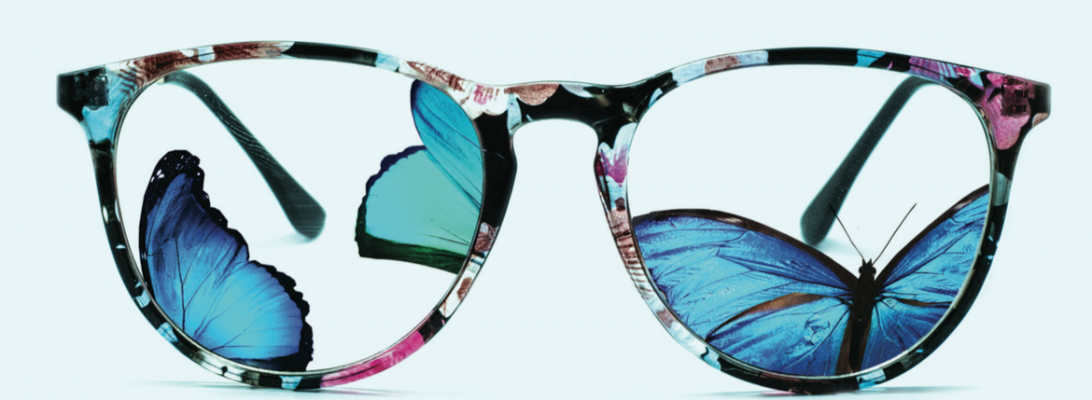
Okay. Day thirty-five and I’ve finally doused my fire of vanity! Yes, I’ve donned my reading glasses, and zoomed in on the font on my computer screen. Maybe I won’t have a raging headache today. What I goof-head I am. I can actually read the words I’m typing now, without squinting.

This morning, I have a lot of deep, philosophical jargon pinging around in Sir Brain. LV is in her pleated secretarial skirt, pacing about, taking notes, while wearing her studious glasses and practical shoes; (you might want to press my lingo button).

I was holding out for Crazy Frog this morning, but I think he is still away with the fairies, which leaves Little Me pretty much holding down the fort. Which is a bit scary, as this new form of thought has been emerging that I cannot quite pinpoint, but that seems liken to a black-caped, masculine-feminine entity, that hides in the dark behind trees, wears a mask, and carries various weapons of Sir-Brain destruction.

She’s more of a female but with a tomboy attitude. She despises feminine aspects in all forms, but yet finds herself a female. A difficult position to be in, I imagine. Anyhow she’s lurking somewhere within, and doesn’t have a lot of beneficial, high-energy words to offer me or other individuals. I imagine she is hurting somewhere deep, deep inside of her being, but that most people would try to bomb her before giving her the time of day. I can’t blame her for hiding. As I fear her myself, and wish to destroy her. Even as she whispers, “I am your teacher.”

I don’t have a name for her, but I think she’s the aspect of me that is responsible for explosive negative thoughts, that send me stumbling down the hole of self-destruction—the one who tells me I’m stupid for writing a blog, for exposing myself to the dangers of anything and anyone outside myself, and for thinking I have anything of substance to offer anyone. She is the barrier in the road, the stop guard with the automatic weapon that warns me to get out of my vehicle and stop moving, or she’ll shoot. I don’t know what she has to gain from acting the way she does. But there must be some motive.

She was with me most of the day yesterday. To the point I didn’t feel I had my footing in reality anymore. She was satisfied with the amount of time I’d been hiding in the house, refusing the act of even going to the grocery store or of taking a walk with my dog.

She isn’t depression. Depression doesn’t feel like an entity. Depression feels like a mass of fog that settles down upon me and leaves me temporarily disoriented and blinded, momentarily stunted in my ability to move.

No, she, this entity, that I shall name Phantom Eknow (eee-no)—for Entity unKnown—is definitely more than a feeling or fog. She is there somewhere, always waiting and watching, even in my happiest moments. She’s been there since I was a little girl. I remember laughing in my youth, and enjoying my day, while all the while wondering when the pain would resurface, the misery, the fear.

It is an odd sensation, talking about her with anyone. Especially as she is surfacing just as I am writing these words. I almost feel shameful, but not entirely shameful, because I’m holding out thinking someone will understand, and maybe be able to see their dark-caped entity, too.  That makes this seem worthwhile, this confession and sharing of sorts, the knowing that I am reaching out from this small place in which I live and breathing words into another human being in hopes of contact, connection, and shared understanding.

Part of the human isolation happening in the world right now is because of the fear of sharing our whole selves. So much is fear-based, that the very thought of being anyone but who someone else wants an individual to be is paralyzing the masses. So many are looking for a leader, a guide, a way, the answer, without taking the time to go within.

The fact that I almost feel shamed in sharing a darker element of myself is proof enough for me that a real oppression of authenticity exists. There seems to be two polar extremes in our world; all I have to do is tune into a reality show; which I don’t do, to view the extremes. There are always the crazed people doing terribly disturbing acts or the fake people dressed in garbs imitating idols.  It appears, many are immolating their inner being and light out of a fear of not being seen. When in actuality, the representation they are showing other beings is not a clear representation of who they are to begin with.

I wonder how many of us have PHANTOMS that we hide? Phantoms that are all caps, all capital letters, lurching inside, that we go on pretending aren’t there. I wonder if we brought them into the light and listened, what we would learn. Here is my Phantom. Here she is. Here I offer, to you, Phantom: the substance of what some people label my imperfections.

Why is it so many are trapped in this game of showing all their high cards, in hopes of recognition, while burying all their low cards in the dirt? What is it that makes a person trust another when they show their high cards, but makes them want to run away when exposed to the low cards? To me, the trust is found in showing what is hidden, not sharing what has been shared a thousand-times over. If I dig up everything and expose what was once hidden in the darkness, then what is left to fear in me? What is left for others to fear? If I am first and foremost authentic and genuine, and have nothing left hidden, then where can fear hide?

There is nothing to fear in being me, but this fear would like me to think so. The fear would like me to fret the plausible pains of exposing my true self, so that the fear can perpetuate its very own existence.

So many people talk about change. So many point fingers and blame. Yet, so many forget to look within—to take out the Phantom, to take out the power, to sit with the fear-based entity and listen to his or her story.

No wonder, that to me, and many others, the world often appears one giant masquerade ball—with the bug-filled wigs, restrictive corsets, and elaborate masks. For that is what the world is, at times, the majority seemingly set out in a dance of deception, where their true fear remains buried, and the pretend, disguised entity continues to twirl round and round.

I imagine a ball without the masks, where I am spinning with my phantom, twirling and twirling, and with each turn decreasing Phantom in size, until she becomes so small and obsolete that she returns happily into the unknown from whence she came. I imagine an endless room full of people spinning with their Phantom, until we are all left without a partner, and have no choice but to join hands together, and at last truly dance.

* I have to laugh, my original post (dyslexia) said Lost in the Mascaraed—which means lost in the eye makeup. Crazy Frog returns!

This Masquerade – George Benson

Are we really happy here
With this lonely game we play
Looking for words to say?
Searching
But not finding understanding anyway
We’re lost in a mas–masquerade

Both afraid to say
We’re just too far away
From being close together from the start
We tried to talk it over
But the words got in the way
We’re lost inside this lonely game we play

Thoughts of leaving disappear
Ev’ry time I see your eyes
No matter how hard I try
To understand the reasons
That we carry on this way
We’re lost in this masquerade

Both afraid to say
We’re just too far away
From being close together from the start
We tried to talk it over
But the words got in the way
We’re lost inside this lonely game we play

Thoughts of leaving disappear
Ev’ry time I see your eyes
No matter how hard I try
To understand the reasons
That we carry on this way
We’re lost in this masquerade

http://www.youtube.com/watch?v=T8eXCdjdSHE&feature=related